
Leonardslee
Meeting date: 26 July 2023
(Leader: Elliot Chandler)
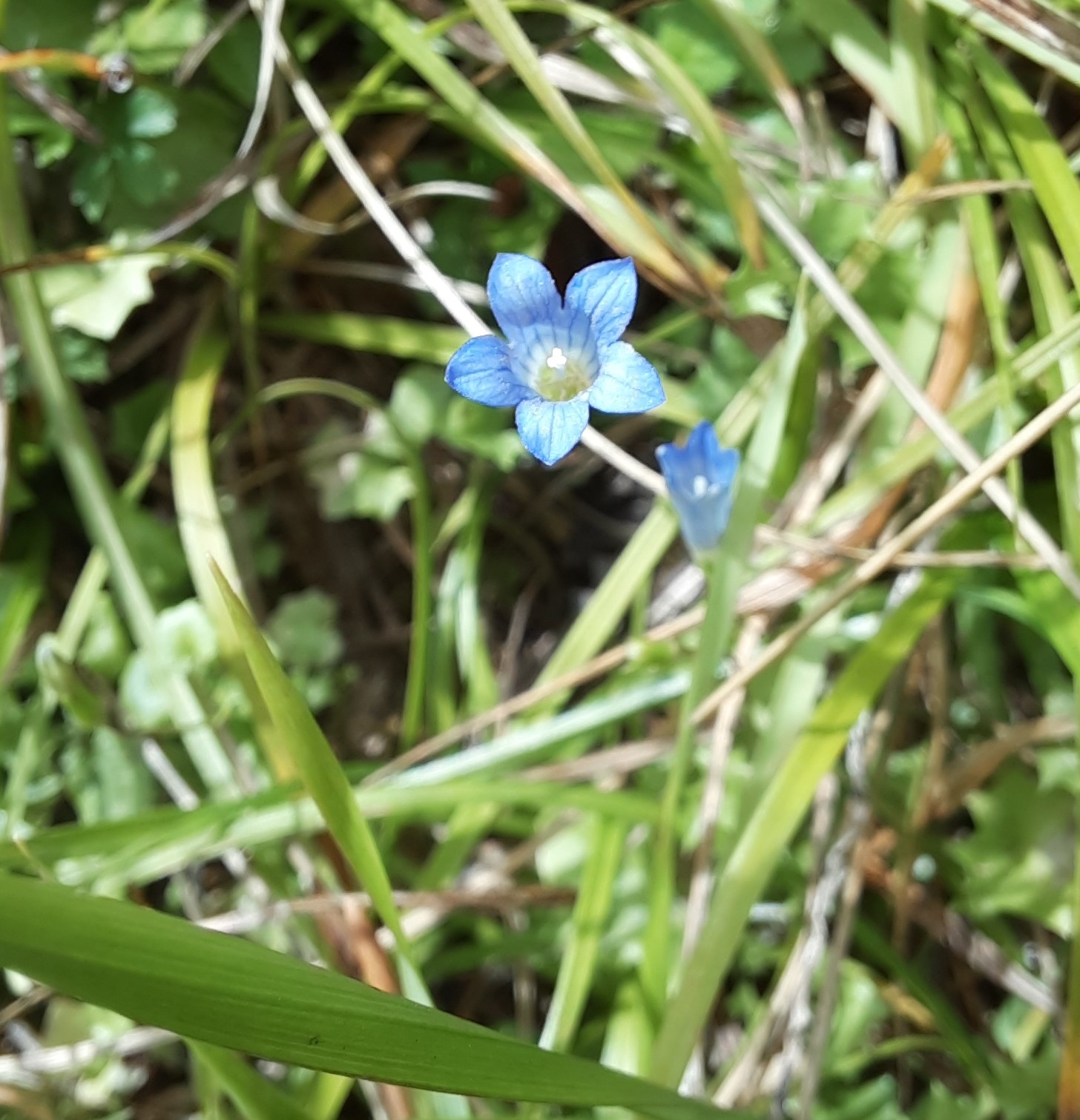
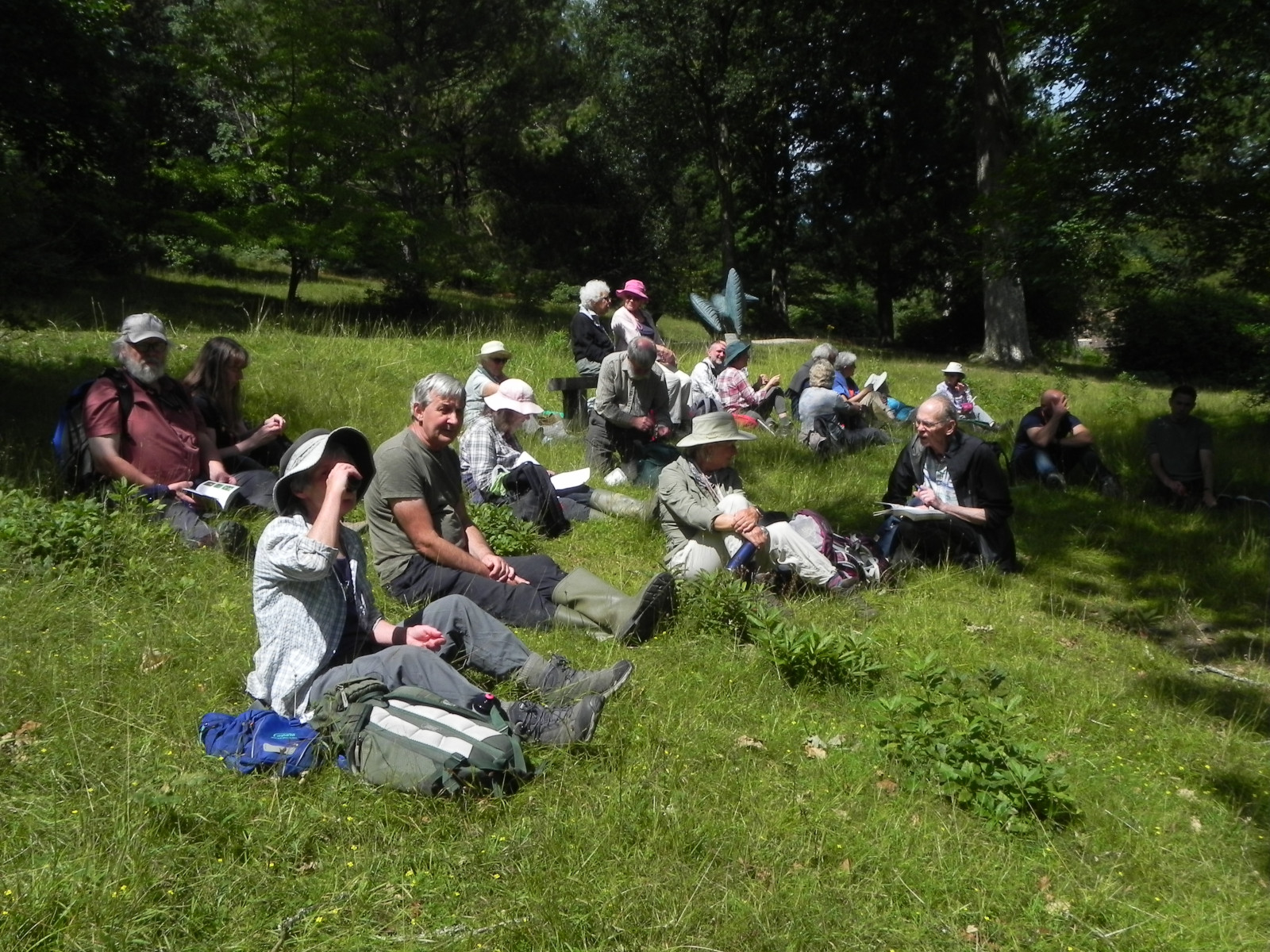
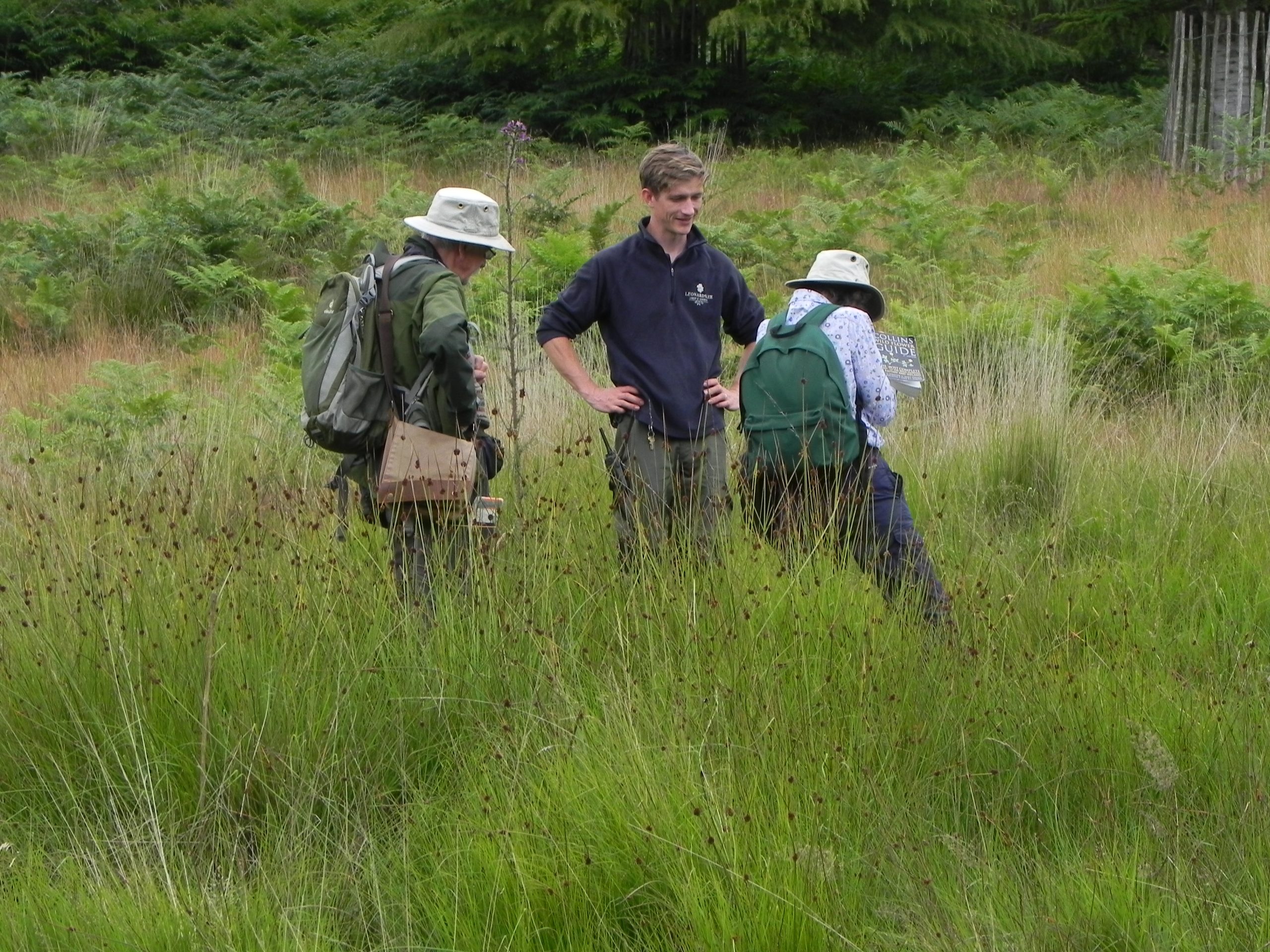
At a little past 3.30 in a small boggy flush leading down to the far end of the last lake, some of the party remarked upon the superficial resemblance at a distance between the blue flowers of Scutellaria galericulata (Skullcap) and Wahlenbergia hederacea (Ivy-leaved Bellflower). It was a fitting climax to a spectacular day in the field and it is not possible in this necessarily brief account to sketch in more than the highlights – which started at the very beginning with some clumps of Epipactis purpurata (Violet Helleborine) under shrubs near the main building. Our guide, Leonardslee’s own Elliot Chandler, had planned the occasion to perfection, the only barrier to fulfilment being the hopelessly unbiddable party of 23 members who from the outset were very difficult to propel in any forward direction. They were clearly enchanted by their surroundings and the author himself did not help by being diverted by specimens of interest – often while hurrying back to hurry others onward! Elliot departed from script by acceding to a request to show Mentha requieniii (Corsican Mint), which is established in the gardens, but eventually all converged upon the patch of Equisetum sylvaticum (Wood Horsetail) which was the leader’s goal. This was the first of a number of species seen on the meeting which are very scarce in Sussex, their records thus being important for the Rare Plant Register.
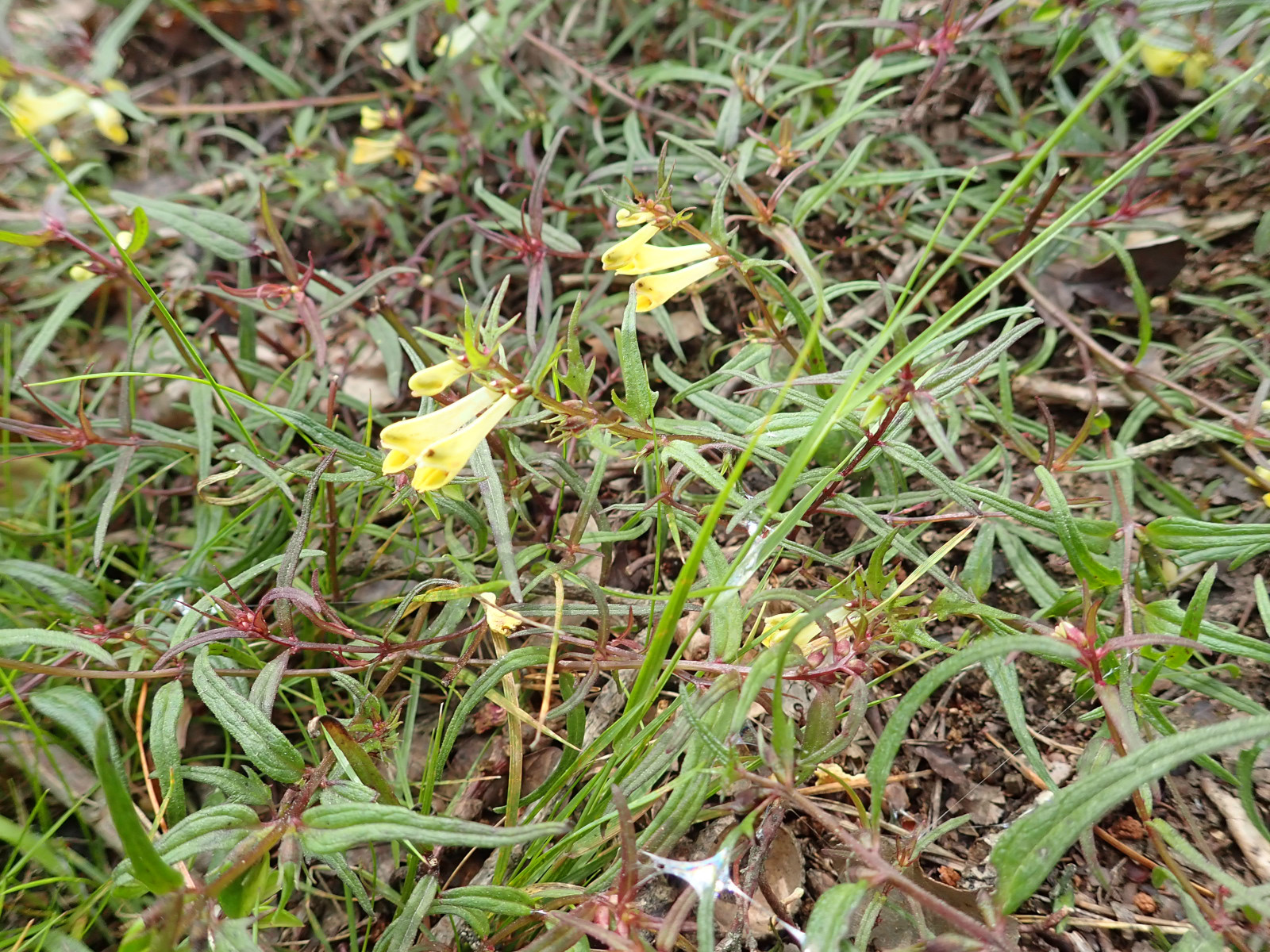
And so the morning was spent in the gardens enjoying the mix of exotic plantings and semi-natural areas which makes the Leonardslee experience so delightful. We wandered down to the valley bottom with its chain of ponds and added aquatics to the card; we admired the statuary and we had a pleasant feeling of being at our leisure. We had missed the carpets of Conopodium majus (Pignut) and the Primroses (Primula vulgaris) which are a feature earlier in the season but the first glimpses of Wahlenbergia were more than compensation, as was Melampyrum pratense (Common Cow-wheat), a species apparently not much seen by the attendees.
Although we fell a little short of our lunchtime target of the Deer Park in the next monad, the lakeside chosen for our picnic was again embellished with Wahlenbergia and we noted Lathyrus linifolius (Bitter-vetch), another species apparently not too familiar to a number of the group.
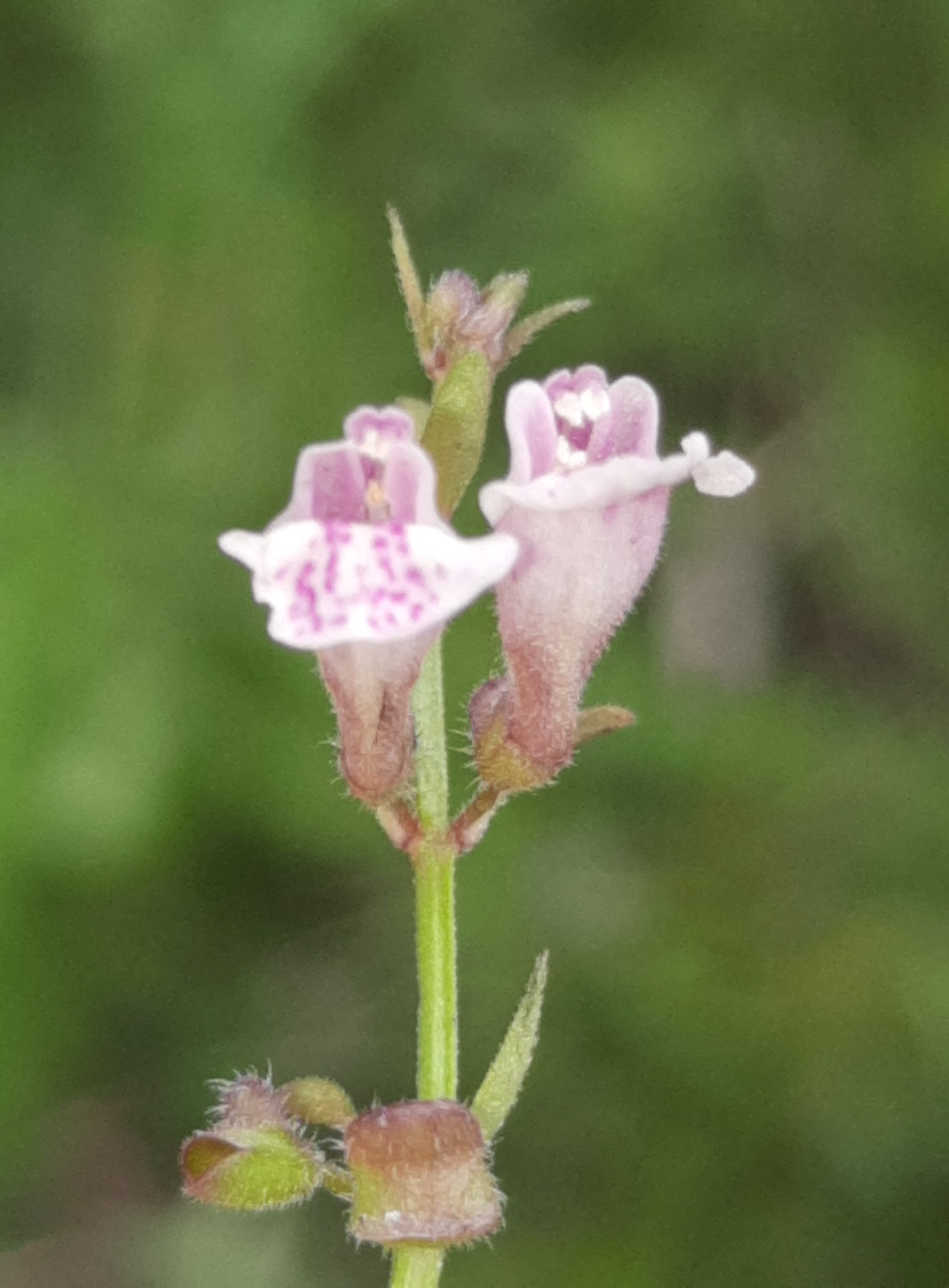
In the early afternoon, however, we reached the Deer Park and here some Thymus pulegioides (Large Thyme) was carefully keyed out and those of a more graminological inclination savoured the Danthonia decumbens (Heath-grass) and Nardus stricta (Mat-grass). The latter was a feature of the flushes running down from the gently sloping hill which broke by our track to form miniature damp cliffs – ideal conditions for Anagallis tenella (Bog Pimpernel), Scutellaria minor (Lesser Skullcap) and yet more Wahlenbergia. Sedges were also well represented, particularly Carex laevigata (Smooth-stalked Sedge), but the prize was C. pulicaris (Flea Sedge) which was present in several flushes above the track. Here we had two other Sussex rarities, Hypericum elodes (Marsh St John’s-wort) and Myrica gale (Bog Myrtle), the latter not currently known anywhere else in the county. And so eventually we found ourselves in that small boggy flush noted at the beginning of the account. Here further scarce Sussex species presented themselves in the form of Epilobium palustre (Marsh Willowherb) and Ranunculus omiophyllus (Round-leaved Water-crowfoot), while for the connoisseur there was the subtle pleasure of Isolepis setacea (Bristle Club-rush). Bliss!
See also: Sue Rubinstein, ‘Flowery Flushes and Mossy Mires’, Sussex Bryophytes, 2023 https://sussexbryophytes.wordpress.com/2023/08/10/flowery-flushes-and-mossy-mires/