Black Down
Meeting date: 6 August 2025
Leaders: Sue Denness & Helen Dignum
This meeting was inspired by the thought of revisiting a site recorded in 2014 by the SBRS on a meeting led by Bruce Middleton. Seventeen botanists found their way along narrow lanes to the Tennyson’s Lane car park and walked up to a footpath where we found flowering clumps of Melampyrum pratense (Common Cow-wheat) and then Sanicula europaea (Sanicle). Our path reached the old Pen-y-bos track, the ancient Celtic way over Black Down.
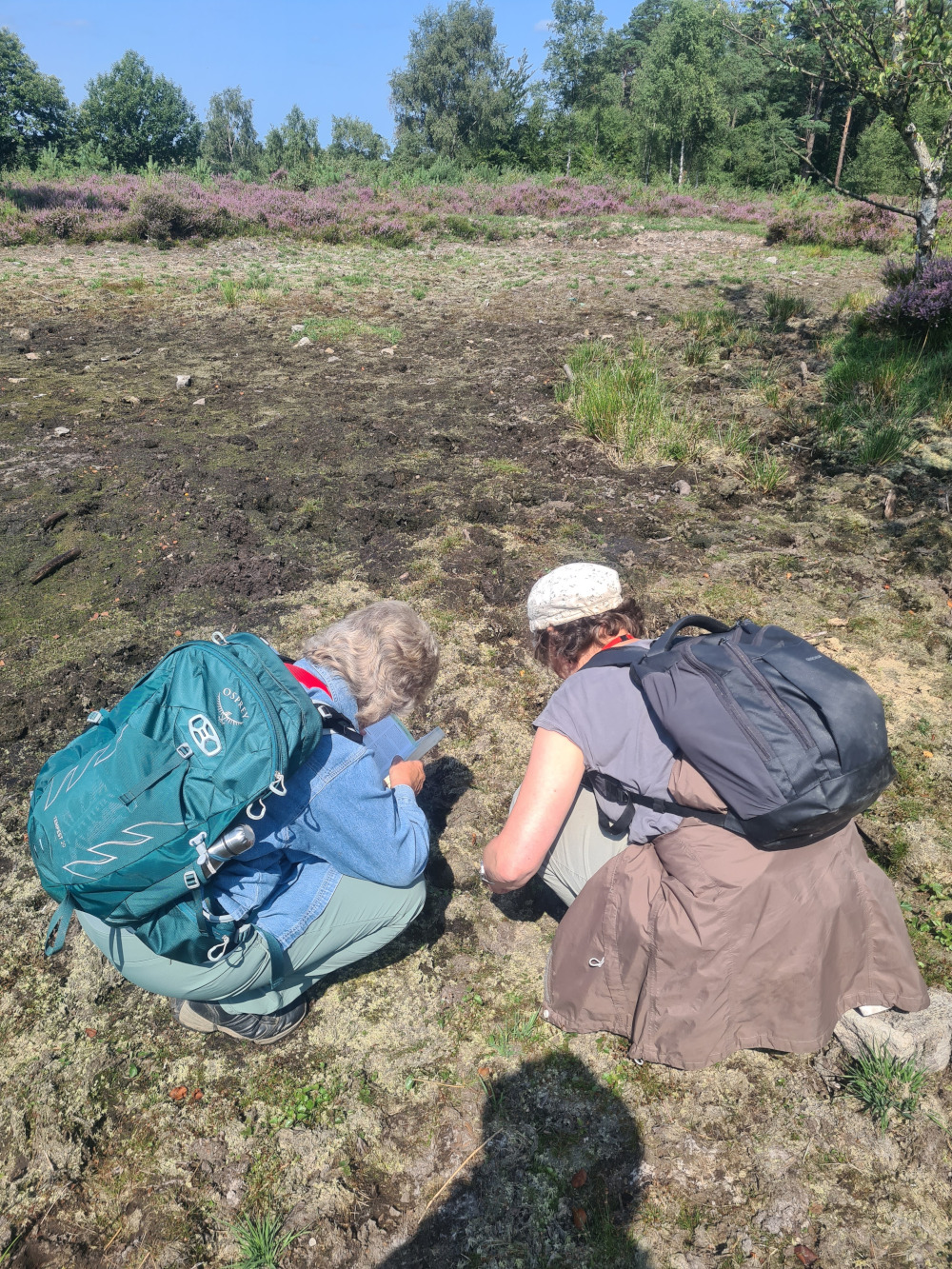
The track took us from woodland out onto open heathland where we followed a line of Sorbus aria (Whitebeam) with a profusion of Vaccinium myrtillus (Bilberry) still with a few berries. We were drawn towards two ponds on the heathland, finding quantities of Juncus bulbosus (Bulbous Rush) and also recording Hydrocotyle vulgaris (Marsh Pennywort). The pond water levels were very low following the summer drought. On the tracks were Juncus squarrosus (Heath Rush) and also Verbena officinalis (Vervain). Ulex minor (Dwarf Gorse) was distinctive, being in flower in August unlike the mainly spring-flowering U. europaeus (Gorse). All three Sussex species of heather were found: Calluna vulgaris (Heather), Erica cinerea (Bell Heather) and E. tetralix (Cross-leaved Heath).
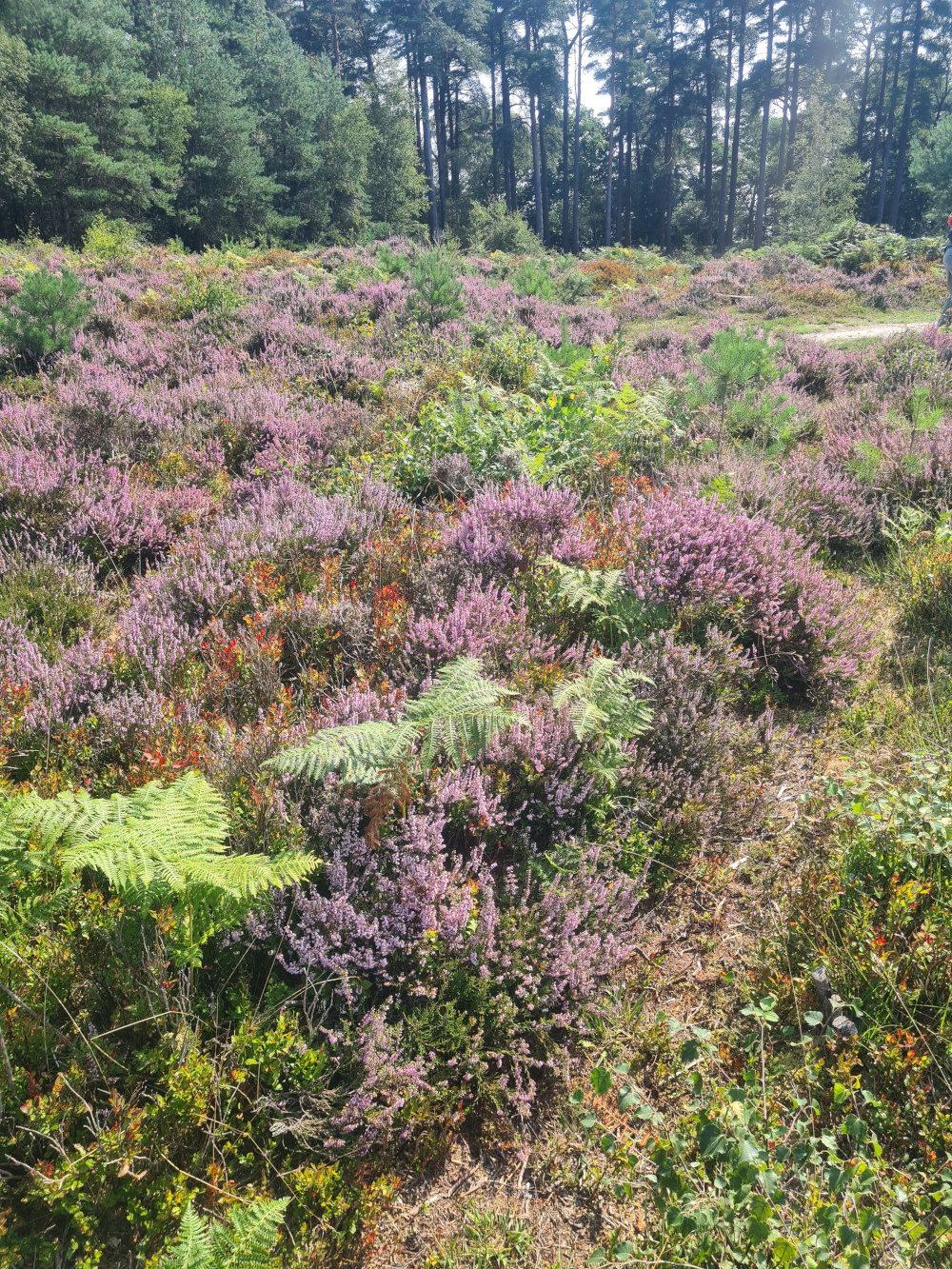
The group enjoyed a walk through the heathland and some fine views of the wider landscape, but we noted that the there was a significant regrowth of scrub since its former clearance, despite cattle grazing. Cattle had trampled the pond edges and had heavily grazed the few plants of Eriophorum angustifolium (Common Cotton-grass), leaving just a few inflorescences for identification. Our route followed the Sussex Border Path to more heathland ponds where we recorded Eleogitan fluitans (Floating Club-rush) and Lythrum portula (Water Purslane).
The track went through woods where there was Epipactis helleborine (Broad-leaved Helleborine) on a grassy verge. The final plant of interest was Quercus petraea (Sessile Oak).
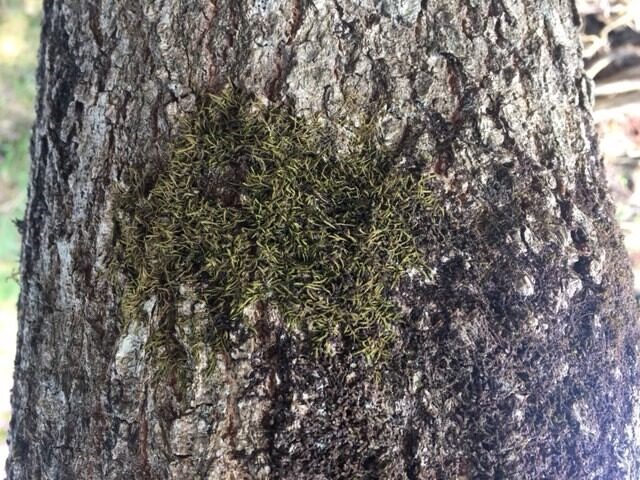
See also: Sue Rubinstein (2025) ‘Hot Moss’, Sussex Bryophytes: https://sussexbryophytes.wordpress.com/2025/09/01/hot-moss/