
Tunbridge Wells
Meeting date: 3 August 2023
(Leaders: Elaine Boot & Geoffrey Kitchener)
This was a joint meeting with the Kent Botanical Recording Group. Thirteen members of a combined Sussex and Kent contingent met in a leafy lane on the southern side of Tunbridge Wells. The weather was warm and bright with some sunshine. Our walk started along this residential road, in the Sussex tetrad, with Brad peering at bryophytes. St. Mark’s churchyard yielded Polygala serpyllifolia (Heath Milkwort), Danthonia decumbens (Heath-grass)and closely mown Calluna vulgaris (Heather). An unusual moss was found under a holly tree in one corner. This was later identified as Pleurozium schreberi, a heathland species.
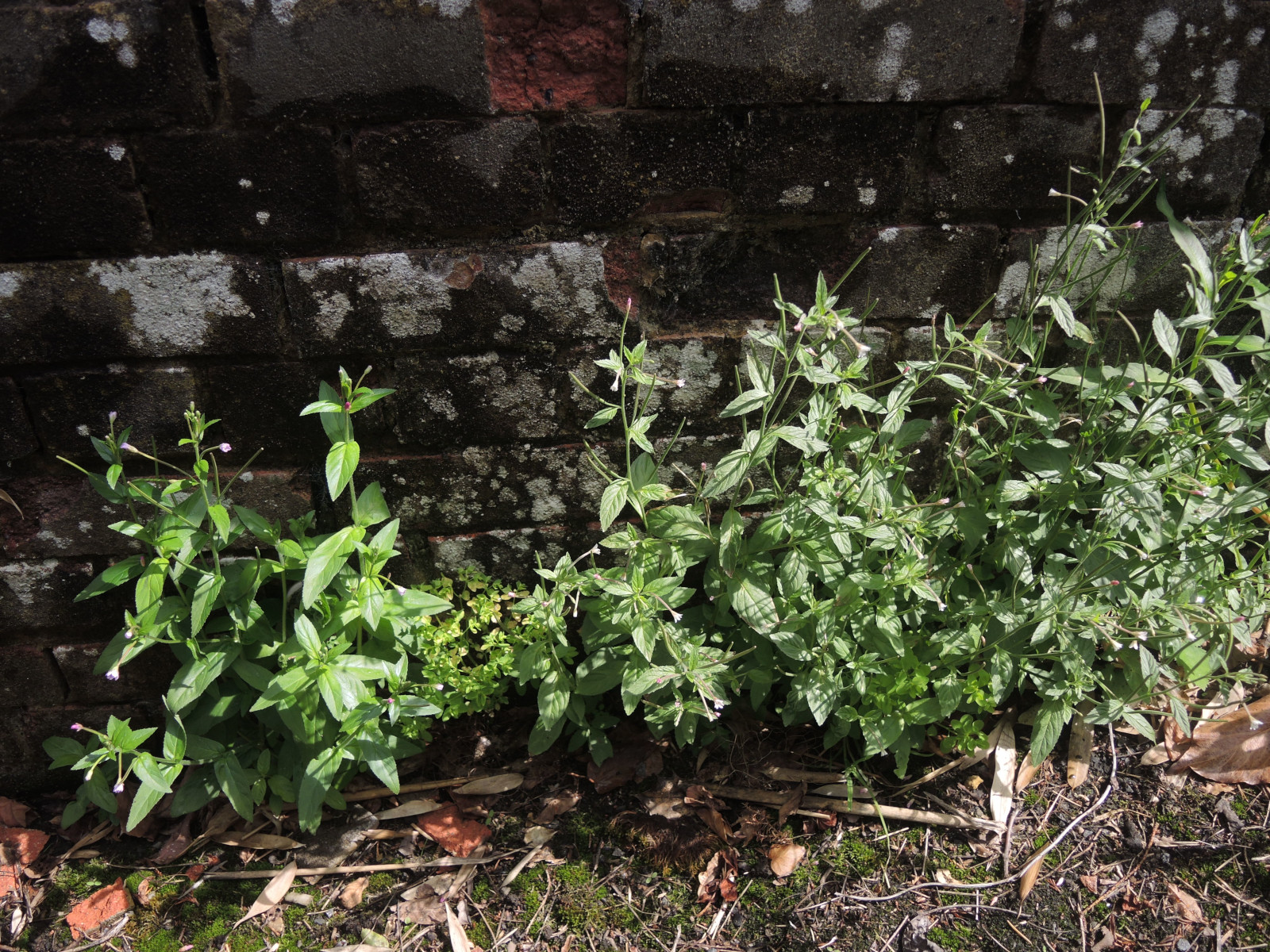
A steep path led down behind houses and was home to Epilobium roseum (Pale Willowherb) and E. ciliatum (American Willowherb). Geoffrey found hybrids between these two. There was also an impressive stand of Persicaria maculosa (Redshank).
Further on, in a derelict car park we found two species of Fleabane together with a possible hybrid. A short walk under a bridge with Asplenium ruta-muraria (Wall-rue) led us into Kent territory Walking up through the wooded Tunbridge Wells Common we came to damp ground with a pond with Lycopus europaeus (Gipsywort), Ranunculus flammula (Lesser Spearwort), Myosotis scorpioides (Water Forget-me-not) and Juncus x surrejanus, the hybrid between Sharp-flowered Rush (J. acutiflorus) and Jointed Rush (J. articulatus). There was also Solidago virgaurea (Goldenrod) and Persicaria hydropiper (Water-pepper). Reaching a junction with the road we progressed on to a grassy triangle with a colony of Hypericum maculatum (Imperforate St John’s-wort). Here we were met by the local Ranger for the Common, who had been warned of wandering botanists. He was interested to know what we were finding so that the maintenance regimes could be adapted to favour the plants.
On the path down towards Brighton Pond Geoffrey pointed out Rumex x dufftii, the cross between R. obtusifolius (Broad-leaved Dock) and R. sanguineus (Wood Dock). Both parents were present within about three metres. The hybrid is sterile and the empty fruits had already dropped away.
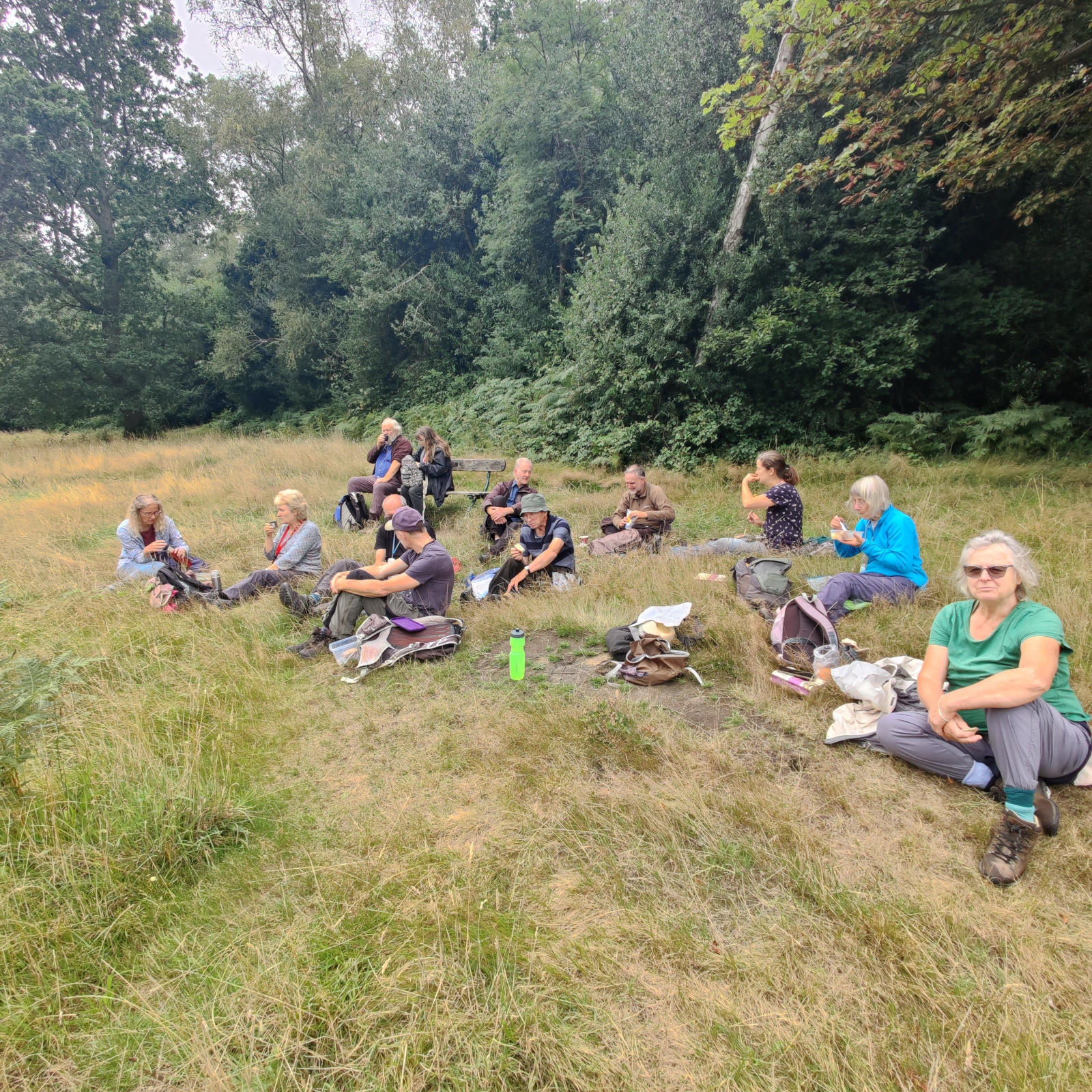
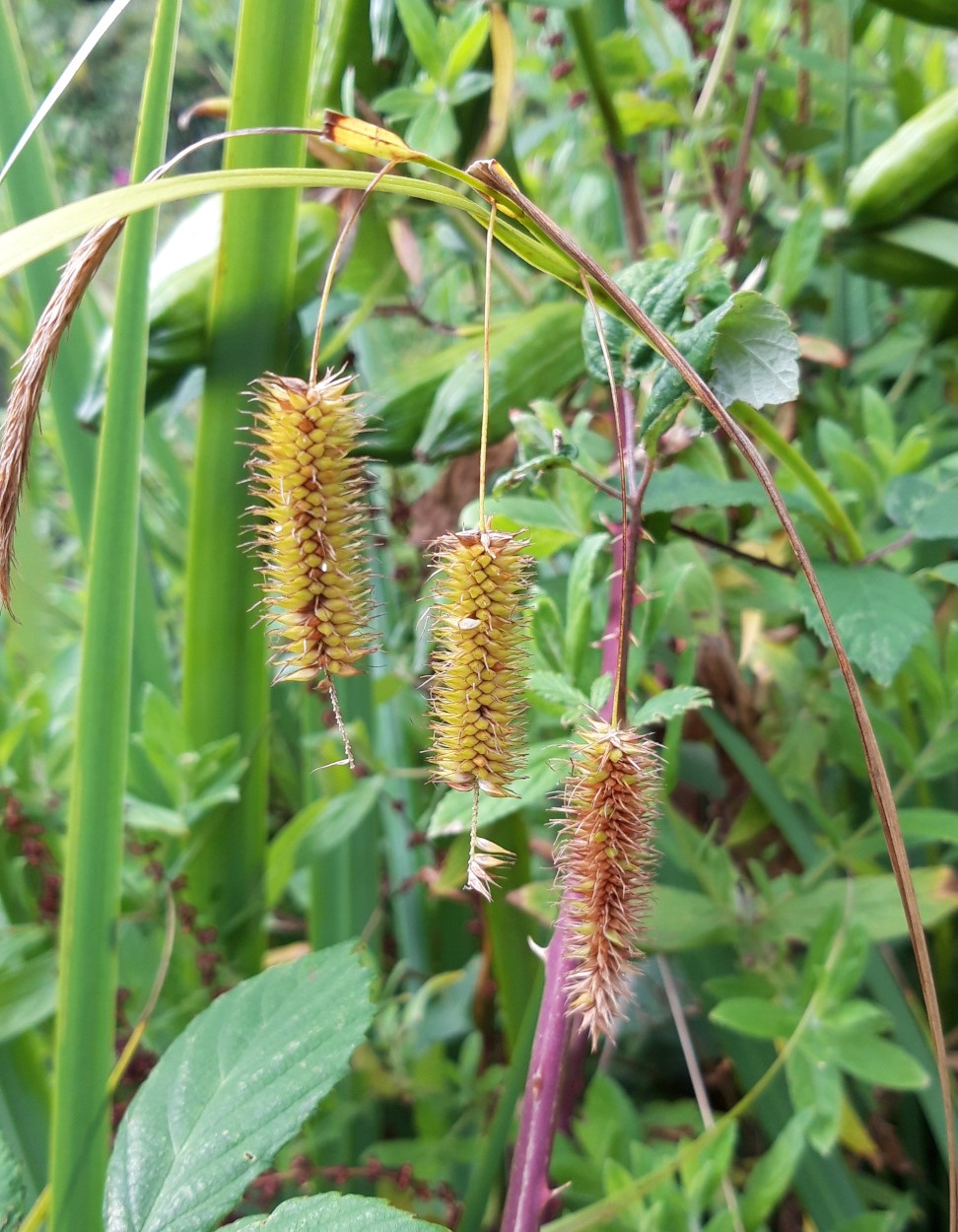
Lunch was eaten by Brighton Pond where Carex pseudocyperus (Cyperus Sedge), Lagarosiphon major (Curly Waterweed) and Hydrocotyle vulgaris (Marsh Pennywort) were seen. Returning to the Sussex tetrad we walked back up the slope through a housing area. Along the side of the road in the gutters we found seedlings of Cyperus eragrostis (Pale Galingale) and Alcea rosea (Hollyhock) that had seeded in from nearby gardens. Also seen were Echinochloa crus-galli (Cockspur) and Digitaria ciliaris (Tropical Finger-grass), probably from bird seed mixtures. Our botanist’s pace, together with the distances covered, meant that we did not have enough time to go into Hargate Forest, so that will have to wait for a separate meeting.
See also: Brad Scott, ‘The old borderlands of Tunbridge Wells’, Sussex Bryophytes, 2023 https://sussexbryophytes.wordpress.com/2023/08/16/the-old-borderlands-of-tunbridge-wells/