Red House Common, Chailey Commons
Meeting date: 13 September 2025
Leaders: Michael Way & Jacqui Hutson
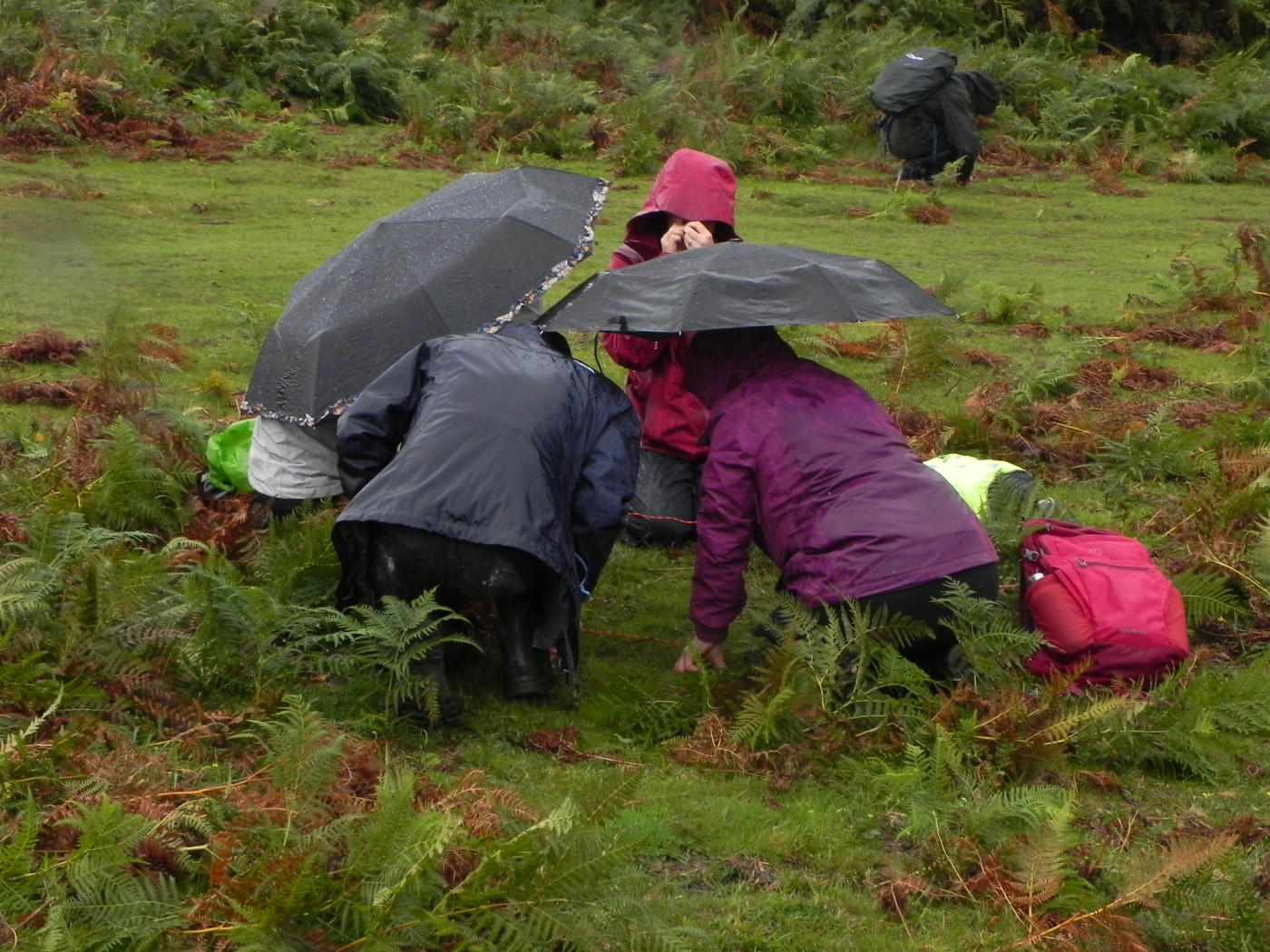
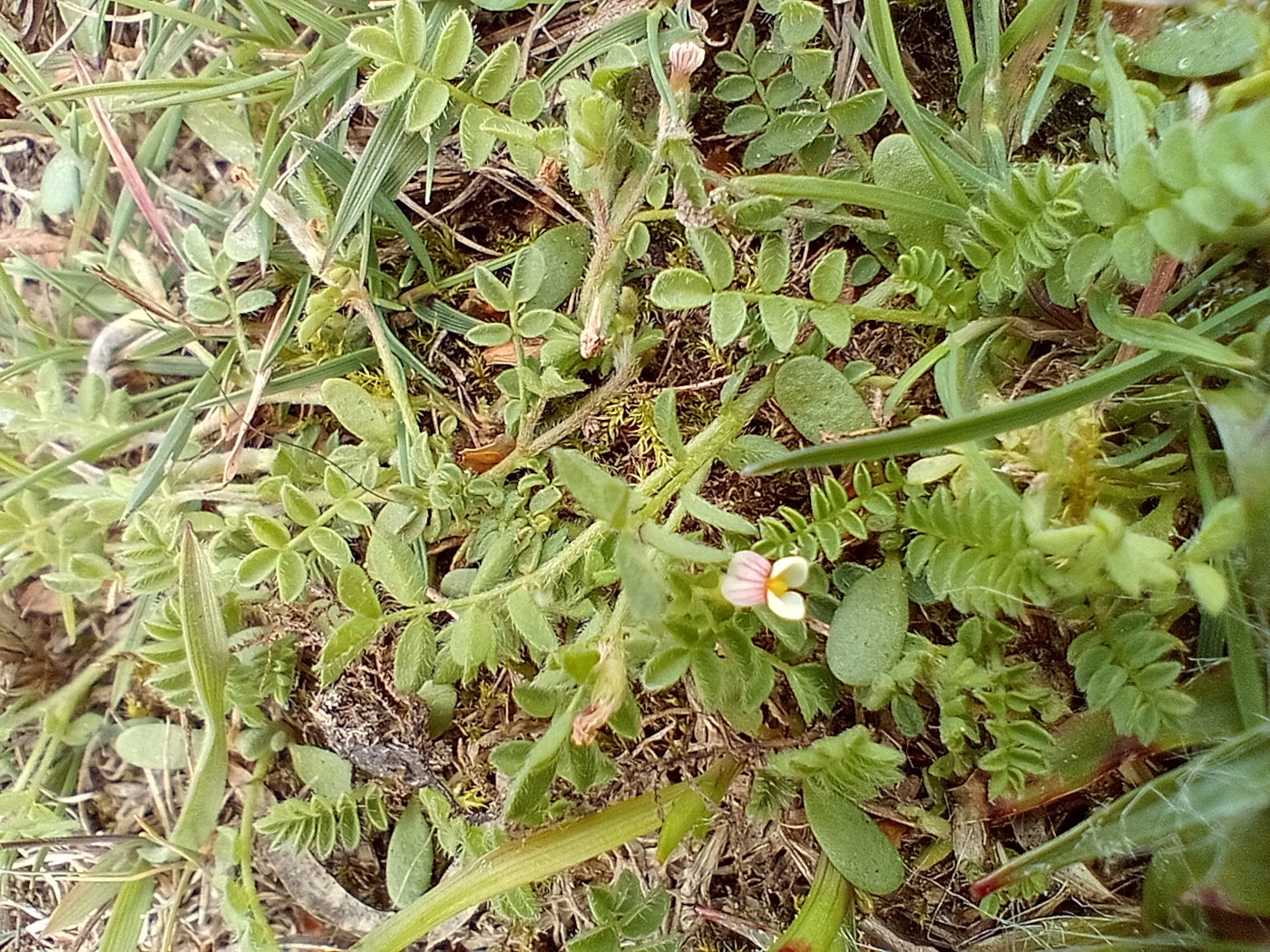
This last East Sussex meeting of the season attracted a large number of bookings but some last-minute cancellations and the day beginning with heavy rain and gloomy sky seemed to put some people off and only thirteen members attended rather than the expected twenty. Despite the forecast, the weather was not too unkind. A series of showers alternated with periods of blue sky and sunshine throughout the day. One of the reasons for visiting this part of Red House Common was to look for Chamaemelum nobile (Chamomile), last recorded here in 1997 when it survived on trodden paths following the lack of grazing. After the reintroduction in 2021 of free-ranging Exmoor ponies on this now fenced Common, there has been some recovery of the closely-grazed turf that Chamomile would favour. So we started by searching the area north of the windmill where it was last seen. It was probably optimistic to expect to find this plant. The seeds are said to remain viable in the soil for only 3-4 years and do not build up a long-lasting seed bank as is the case for some species. The search was unsuccessful. However, our day was enlivened by other tiny heathland plants in the short turf. Best among them was Michael’s discovery of Ornithopus perpusillus (Bird’s-foot), with its minute exquisite flowers. Sue later found another plant on the edge of a grassy ride. This is a first record for the Common and the tetrad as well as one of the few for East Sussex. Wolley-Dod’s 1937 Flora reveals that Chailey Commons were once home to numerous species of tightly grazed and trampled grassland that are now rare. The plants in these conditions are so reduced in size that one needs a very close look, so we set up some 1m quadrats in areas of light bracken with underlying short sward.
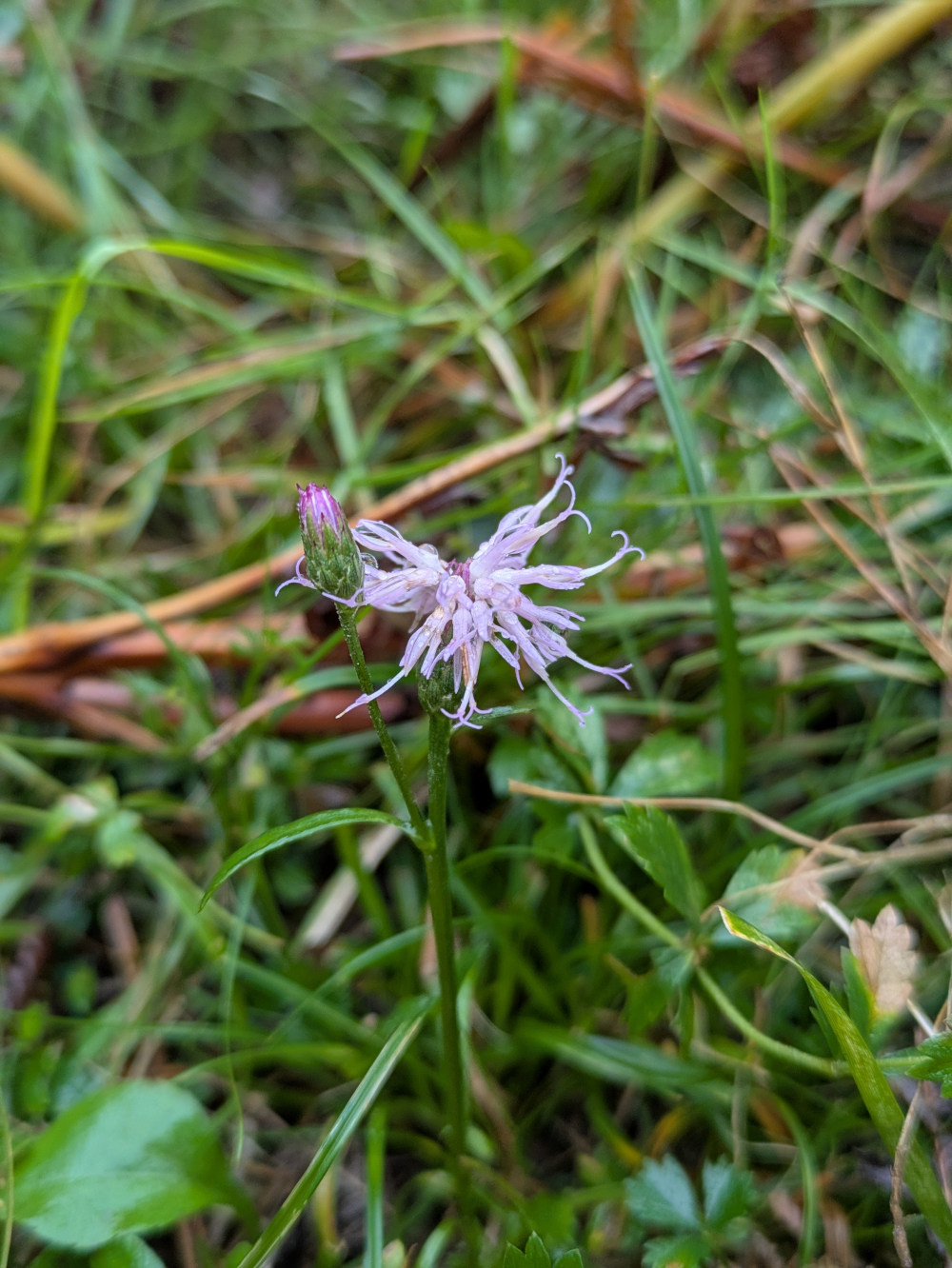
On hands and knees in a heavy shower we found flowering Serratula tinctoria (Saw-wort) and Succisa pratensis (Devil’s-bit Scabious). Solidago virgaurea (Goldenrod) in flower brightened the taller bracken. These finds will help to influence the management of Chailey Commons.
The last stop of the day was a tiny mire, heavy with the scent of Mentha aquatica (Water Mint), where we negotiated grazed tussocks of Molinia caerulea (Purple Moor-grass) and deep pools tofind Potamogeton polygonifolius (Bog Pondweed) and Scutellaria minor (Lesser Skullcap). A total of 150 vascular plant species was recorded in the monad, TQ3821, as well as 38 bryophyte species.