
Fairmile Bottom nr Slindon
Meeting date: 12 June 2022
(Leader: Sue Denness)
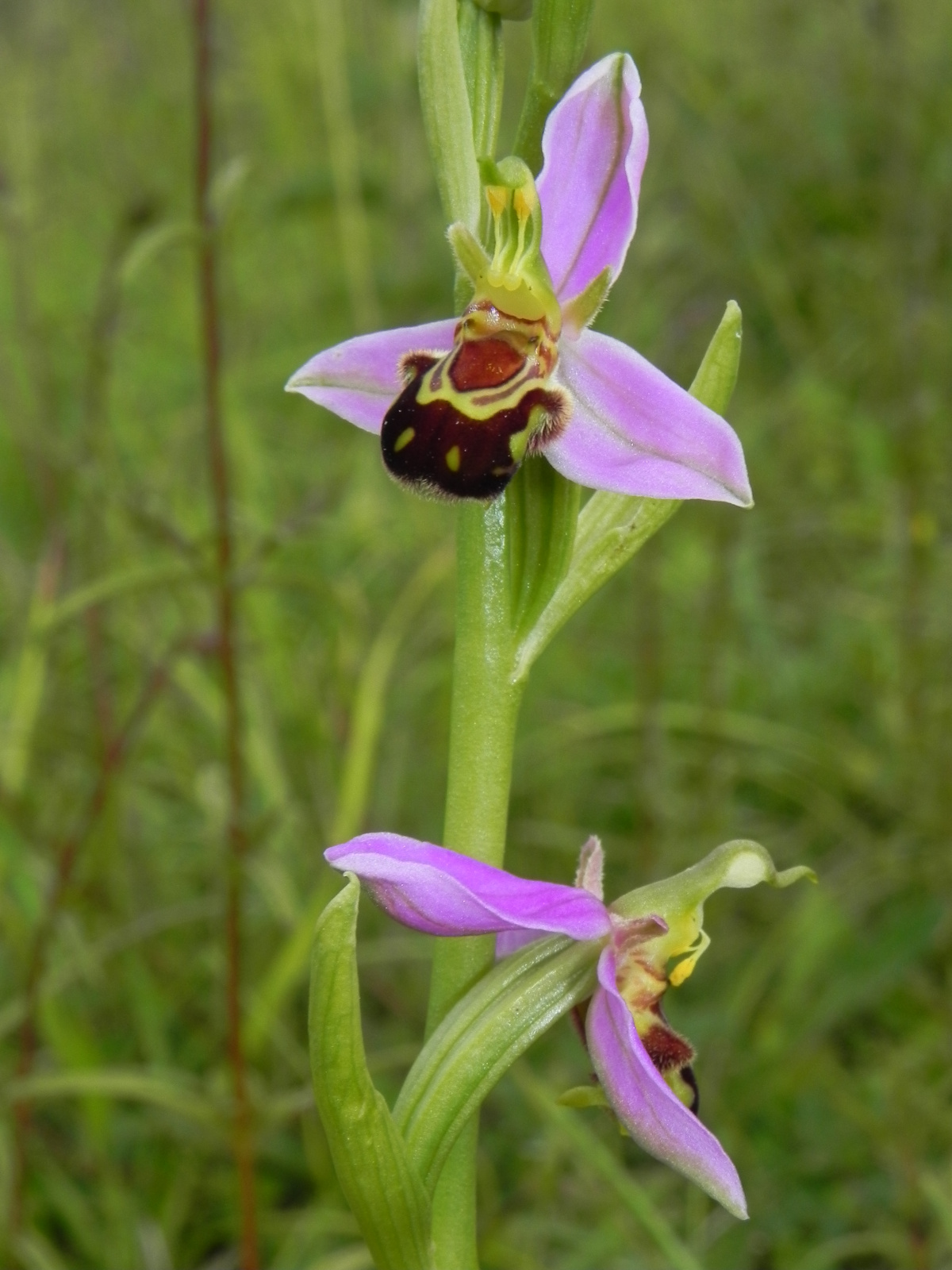
Bees, flies and frogs. What was a group of eleven botanists doing getting excited about fauna rather than flora? The fine chalk grassland at Fairmile Bottom near Slindon proved to be the perfect habitat for these eponymous orchids – and several more to boot. As well as Ophrys apifera (Bee Orchid), Ophrys insectifera (Fly Orchid) and Coeloglossum viride (Frog Orchid) we also ‘spotted’ – warning: a pun worthy of our Chair, Nick is coming here – Dactylorhiza fuchsii (Common Spotted-orchid), Listera ovata (Common Twayblade), Anacmptis pyramidalis (Pyramidal Orchid) and hybrids between Dactylorhiza praetermissa (Southern March-orchid) and D. fuchsii. The hybrid was a first for me – Nick pointed out that the leaves have very distinctive small dots. And I have never seen so many D. fuchsii in one field. They, and the Valeriana officinalis (Common Valerian) and the Rhinanthus minor (Yellow-rattle), were everywhere in abundance.
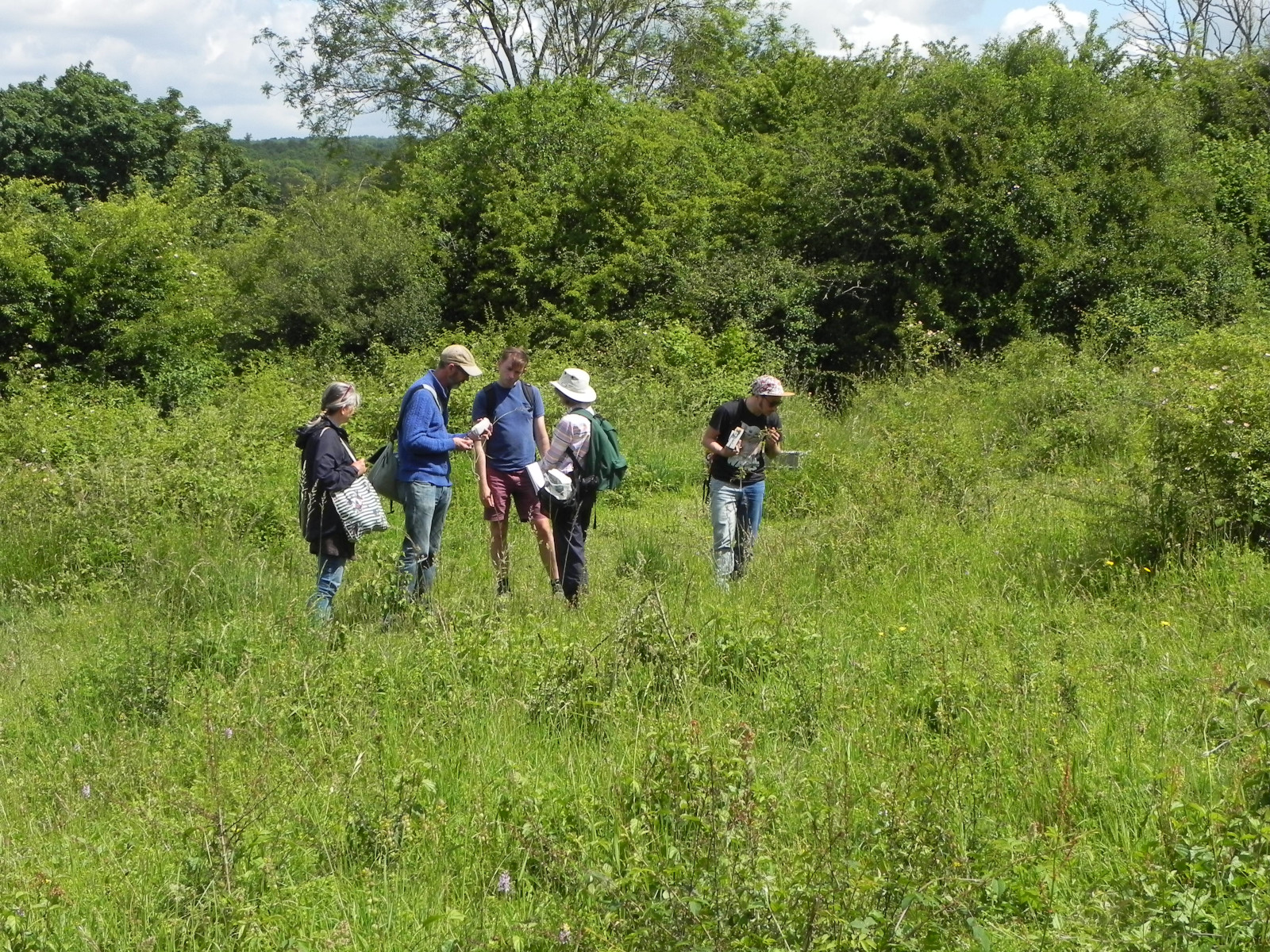
But of course we recorded other finds besides the orchids. Plantago media (Hoary Plantain) with its greyish, downy leaves and pinkish flowers was a nice find. I was less pleased when I tried to identify an umbellifer by putting it under my nose and near my lips and discovered it was Pastinaca sativa (Wild Parsnip), a poisonous plant whose sap can cause blisters when the skin becomes hyper-sensitive to sunlight. One of our group showed me his scars from a previous encounter. Luckily we all survived the risk assessment.
Yes – our botanising saw us identify bees and flies but we also saw a spectacular Drinker moth caterpillar – but that really was an insect.