Plumpton meadow and downs
Meeting date: 19 June 2022
(Leader: Jacqui Hutson)
While just listing taxa is interesting and informative, this meeting aimed to take recording a little further to gain more information about the vegetation communities. Fourteen members assembled in the car park at The Plough at Plumpton under grey skies and crossed the road to a meadow that is managed for hay. I had surveyed it for the owner some eight years ago but just listed the species present, so this was an opportunity to find which of the National Vegetation Communities it fitted using NVC methodology (Rodwell 1998).
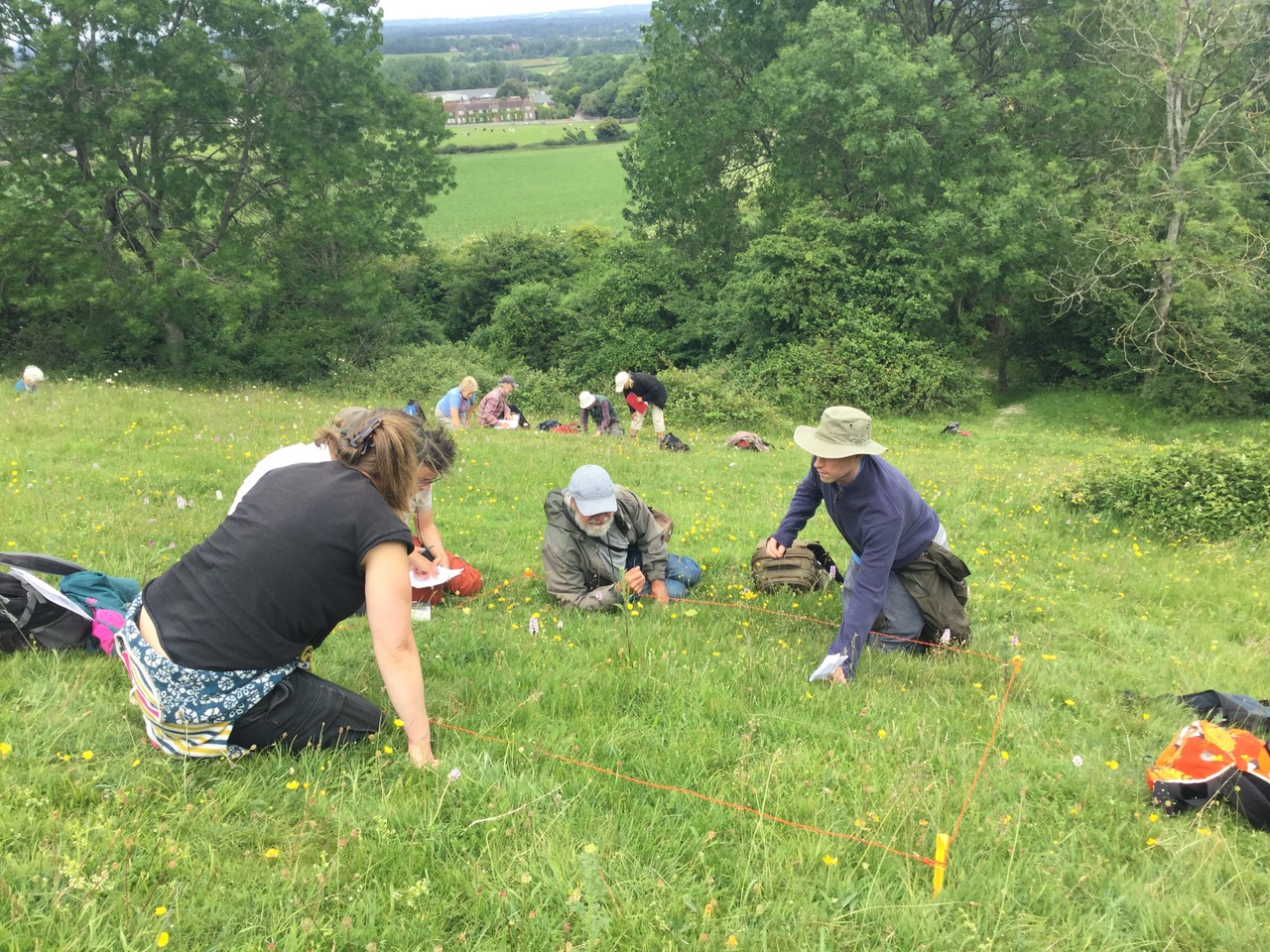
We split into five groups, each pegging out a 2 × 2m square in an area that was representative of the vegetation, and listing the species present (including mosses) as well as estimating their abundance using the Domin scale. This exercise found a total of 37 grassland species, nine of which were common to all squares and a few, such as Dactylorhiza fuchsii (Common Spotted-orchid), Cardamine pratensis (Cuckooflower), Poa pratensis (Smooth Meadow-grass) and Urtica dioica (Nettle) were found in only one. Most exciting was the find of × Schedolium loliaceum (Hybrid Fescue, rare in East Sussex) in Nick and Elizabeth Sturt’s square and Ophioglossum vulgatum (Adder’s-tongue) in Sue Rubinstein’s sample.
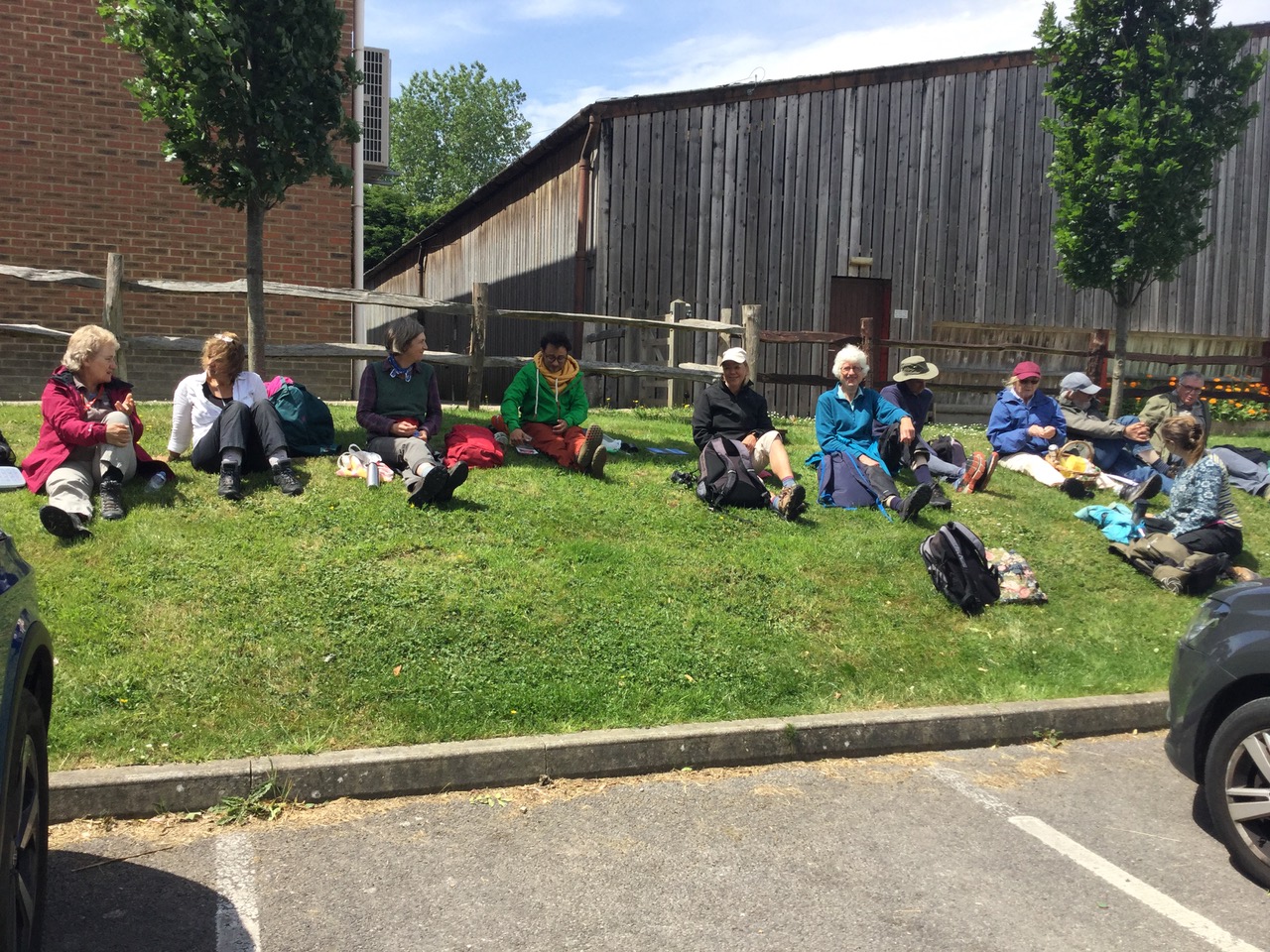
Refreshed by the meadow owners’ supply of elderflower cordial, and alerted by the owner to a Birch Moth on their drive, we returned to our cars and travelled south to Plumpton College where we picnicked under a brightening sky.
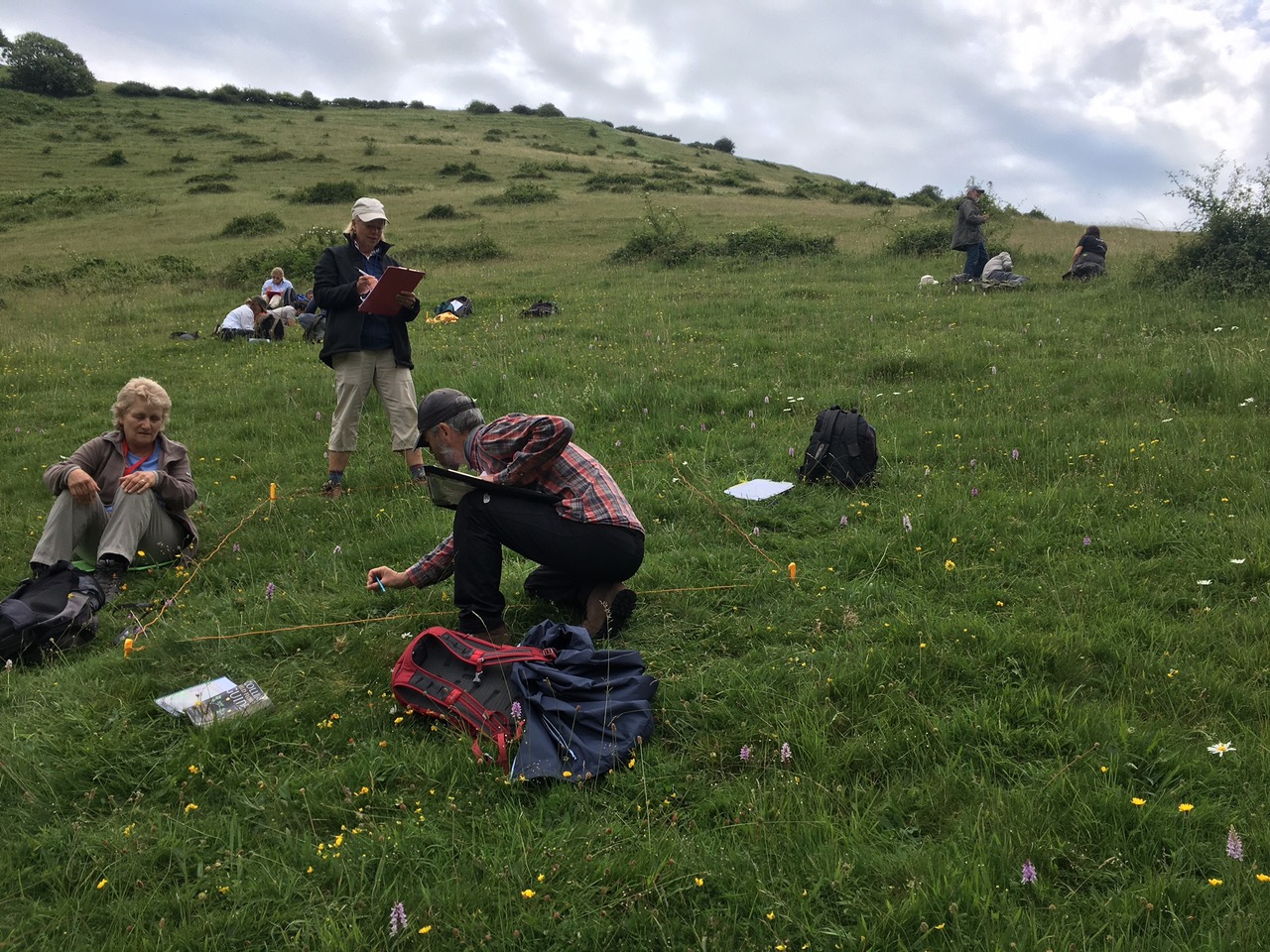
The next site was on sloping chalk grassland accessed by a short walk along a track south from the college. Five groups laid out representative 2 × 2m squares and recorded a total of 63 species. We also took the opportunity to count species in five 1 × 1m squares for the President’s Challenge. This latter exercise found a range of 32 to 44 species, showing that 40 plus species can occur. These included Anacamptis pyramidalis (Pyramidal Orchid), Gymnadenia conopsea (Fragrant Orchid), Dactylorhiza fuchsiii and Phyteuma orbiculare (Round-headed Rampion).

The analysis had to be done later at home. It involves combining the results and calculating the Frequency of each species depending on the percentage of squares in which it occurred, and the Abundance on the Domin scale, and then using the data to work through keys and tables to determine the community, The private hay meadow was a good example of MG5a: Lathyrus pratensis sub-community of Centaureo-Cynosuretum cristati grassland while the downland community was CG2b: Succisa pratensis-Leucanthemum vulgare sub-community of Festuca ovina-Avenula pratensis grassland.
Reference: Rodwell, J. S. (1998) British Plant Communities. Volume 3. Grasslands and Montane Communities. Cambridge University Press.