
Banks Farm, Mountfield
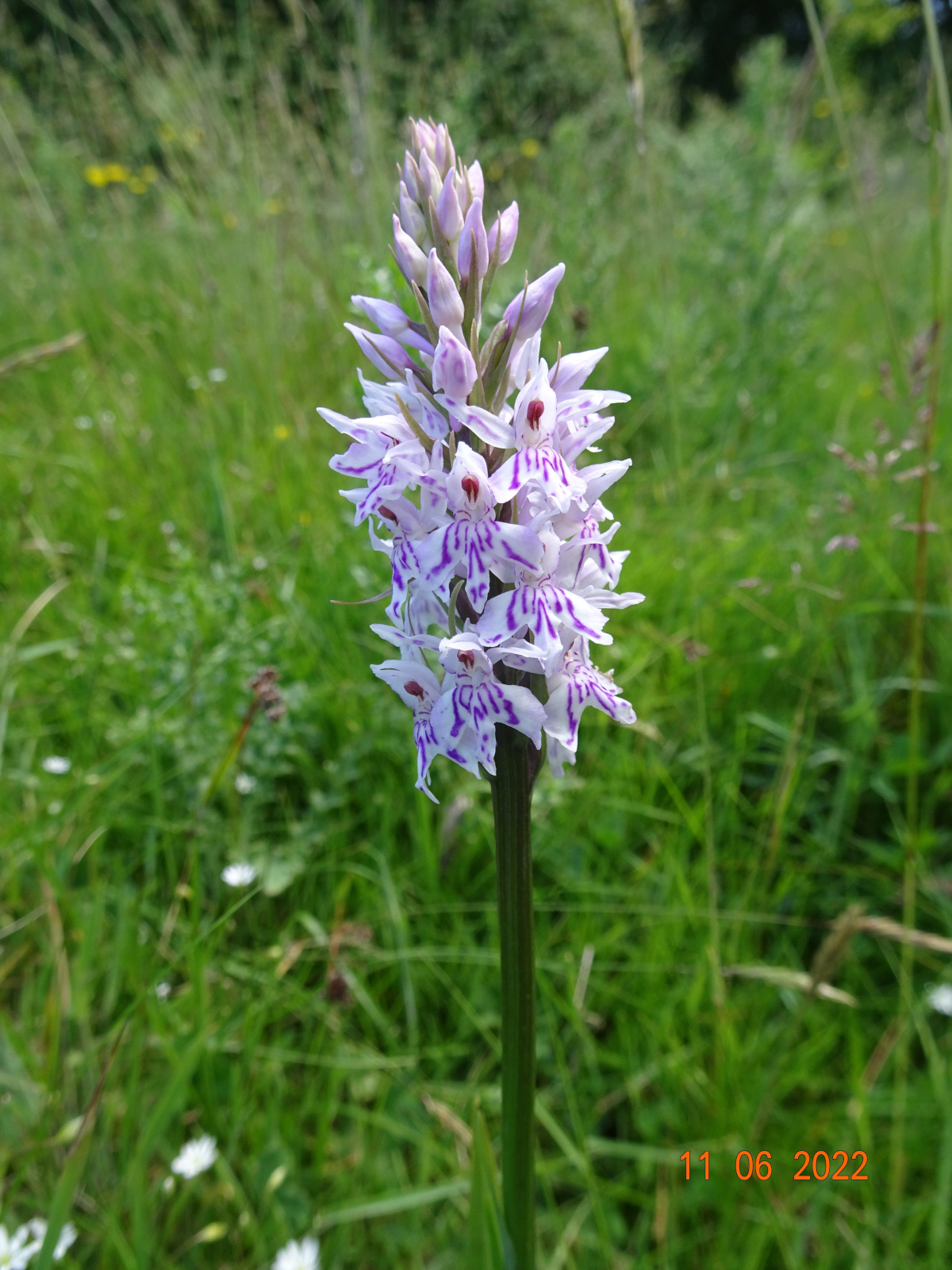
Meeting date: 11 June 2022
(Leader: Helen Proctor)
A select group of six met on a wonderfully sunny day to explore Banks Farm. This small farm comprises sheep pastures, restored hay meadows and woodland (mostly ancient and including a ghyll with a stream).
The meadows were our first port of call. Jacqueline and Judy had surveyed them a couple of years ago and recorded about 80 species, but this visit proved there’s always something more to discover. Elaine’s sharp eyes spotted Ophioglossum vulgatum (Adder’s-tongue); only two plants but a nice find and enough to give James (the owner) bragging rights with his neighbour. Lathyrus nissolia (Grass Vetchling) was another new record, a result of James’ small scale experiments with sowing High Weald meadow seed. Another highlight was Linum bienne (Pale Flax). It had previously been recorded but it was good to see large numbers of its pale blue flowers waving in the breeze. It is only occasional in East Sussex and more usually found on chalk than in the Weald. On the edges of the pond in Bowl Field we found some clumps of Isolepis setacea (Bristle Club-rush), a species that used to be quite widespread in the Weald but one which is nowadays less often seen. The pond itself sported the yellow flowers of Ranunculus lingua (Greater Spearwort), probably planted but a splendid display nonetheless.
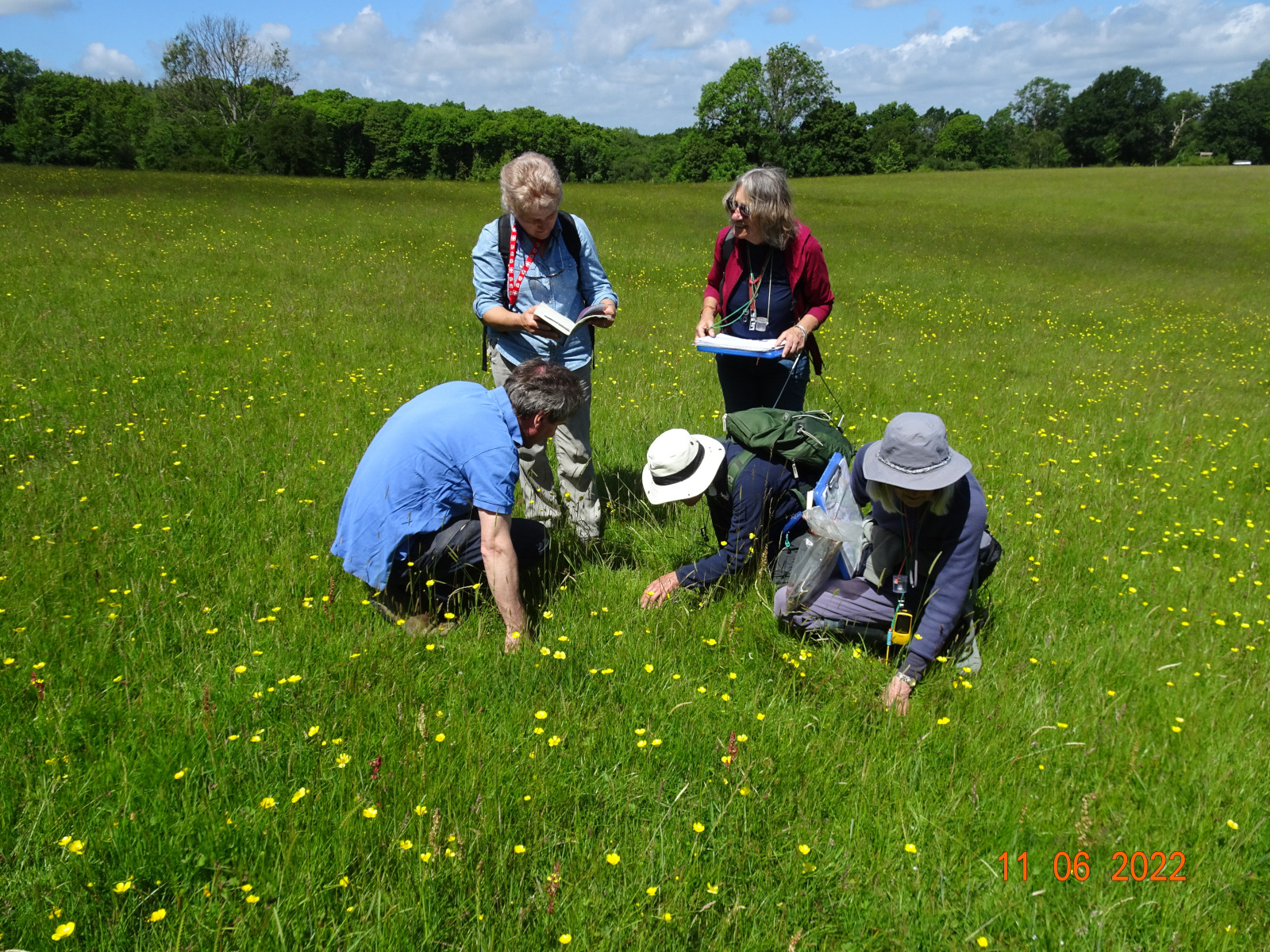
After lunch we moved on to the woodland, hoping that we might find Dryopteris aemula (Hay-scented Buckler-fern) as the ghyll seemed suitable habitat and this species has been recorded nearby. We didn’t find it, but we saw a number of ancient woodland indicator species including Chrysosplenium oppositifolium (Opposite-leaved Golden-saxifrage), Luzula sylvatica (Great Wood-rush), Lysimachia nemorum (Yellow Pimpernel) and Oxalis acetosella (Wood-sorrel). Lys and Elaine braved the bottom of the ghyll stream while the rest of us opted out due to various injuries. They were rewarded with Carex strigosa (Thin-spiked Wood-sedge), only locally common in East Sussex but possibly under-recorded. On the ride along the top we saw Carex pallescens (Pale Sedge), a Wealden species thought to be declining, and one lone Epipactis. James photographed it later, in flower, confirming its identity as Epipactis helleborine (Broad-leaved Helleborine).