
Linum catharticum (Fairy Flax)
My friend usually visits in July during his annual visit to the UK from his home in France, but this year he’s been stuck here since the end of March. He’s a keen lepidopterist so the easing of restrictions prompted him to arrange an Adonis Blue hunt at the Sussex Wildlife Trust’s Malling Down nature reserve. The reserve has the demanding habitat required for the insect: short cropped chalkland turf on south-facing slopes with its foodplant, Hippocrepis comosa (Horseshoe Vetch), and ants.
Chalk grassland is of course what Sussex is rightly famous for. The South Downs dominate the topography of the county and at the sea provide some of Britain’s most iconic views. Our magnificent Flora features one such view on its front cover. Unfortunately, as with most habitats, there has been a reduction, fragmentation and impoverishment of unimproved grassland of all kinds: of the 4 500 000 hectares of grassland in the UK, a mere 100 000 hectares remains unimproved. About 38 000 hectares of this is lowland chalk grassland, the South Downs accounting for around 5000 hectares in scattered blocks – most has been ploughed, improved or lost to scrub encroachment.

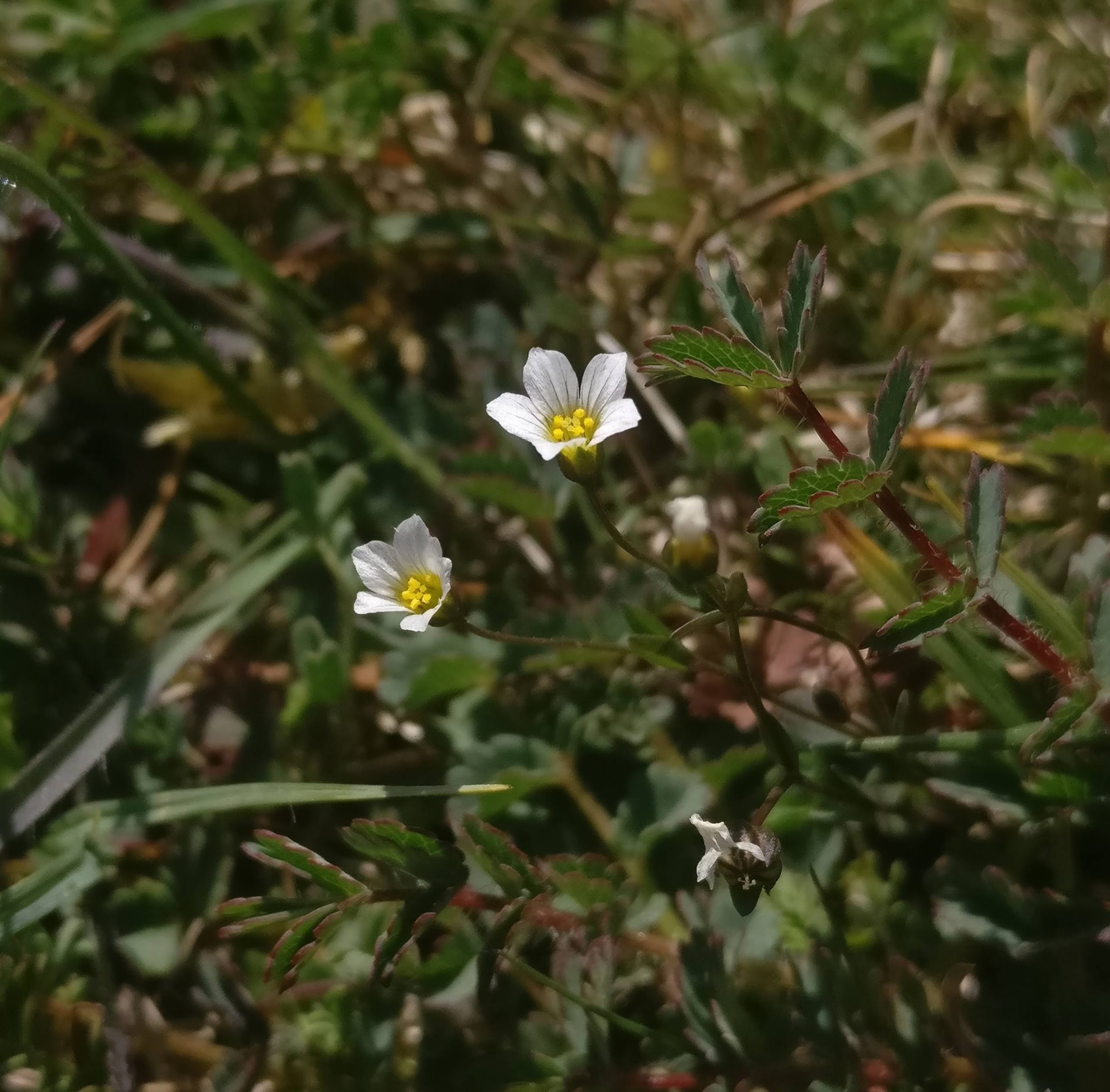
Enough depressing statistics! This week’s #SxPOTW is guaranteed to lift the spirits – the delicate, tiny, very pretty Linum catharticum (Fairy Flax). Its five sepals and longer 4-6mm white petals, and its opposite elliptic leaves, are seldom seen without getting down and up-close to the sward.
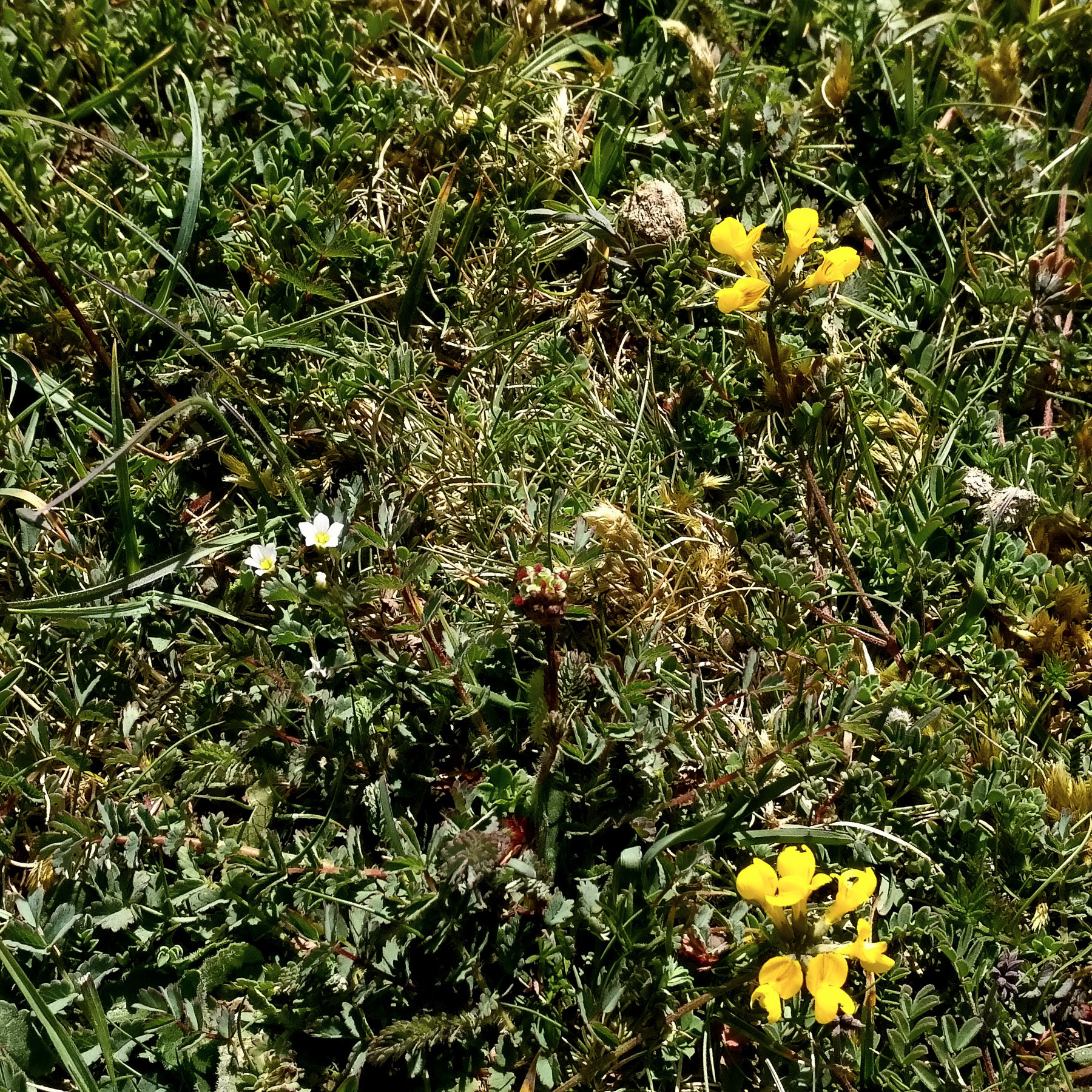
Although our distribution map suggests a strong preference for chalk, it can actually be found in sandy soils and even upland moorland areas (unlike Hippocrepis comosa, which is confined to the shallow rendzina soils that form over chalk). It seems to be reducing in Sussex away from the chalk, and this is likely to be due to ‘improvement’ and changing grazing practices.
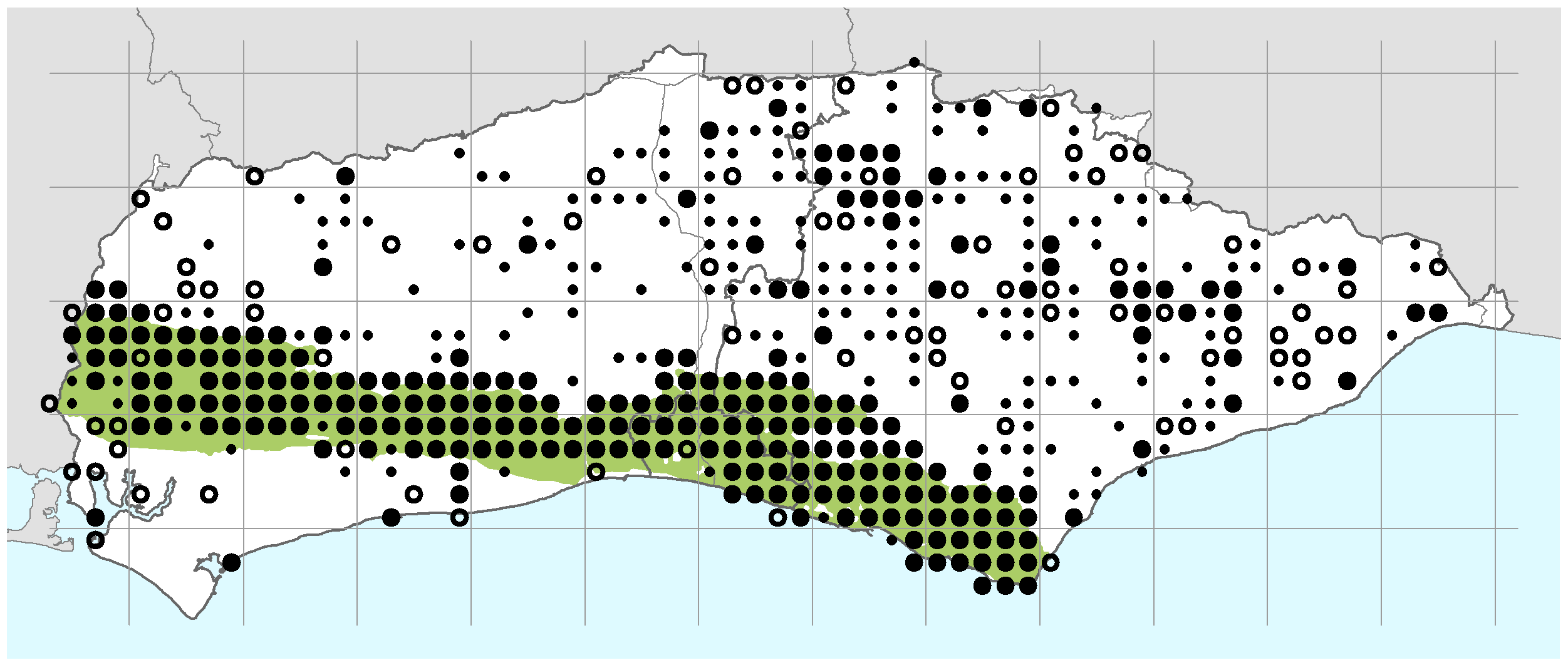
Native. Sx: locally abundant, occasional elsewhere. Short dry grassland. Abundant in downland turf, but there have been fewer records recently from the Weald, where it was formerly widely scattered on heaths and in well-drained species-rich grassland. This reduction is presumably due to the agricultural improvement and neglect of these habitats.
Source: L. catharticum L. Fairy Flax, The Flora of Sussex (2018)
Despite the diminutive size of this delicate annual, Johnson tells us (in Gerard’s Herball) that it is a ferocious purgative. Infused in wine left in the fire’s embers overnight and drunk the following morning before breaking fast it would ‘…give eight or ten stooles’.