
Parham Park
Meeting date: 25 May 2022
(Leader: Frances Abraham)
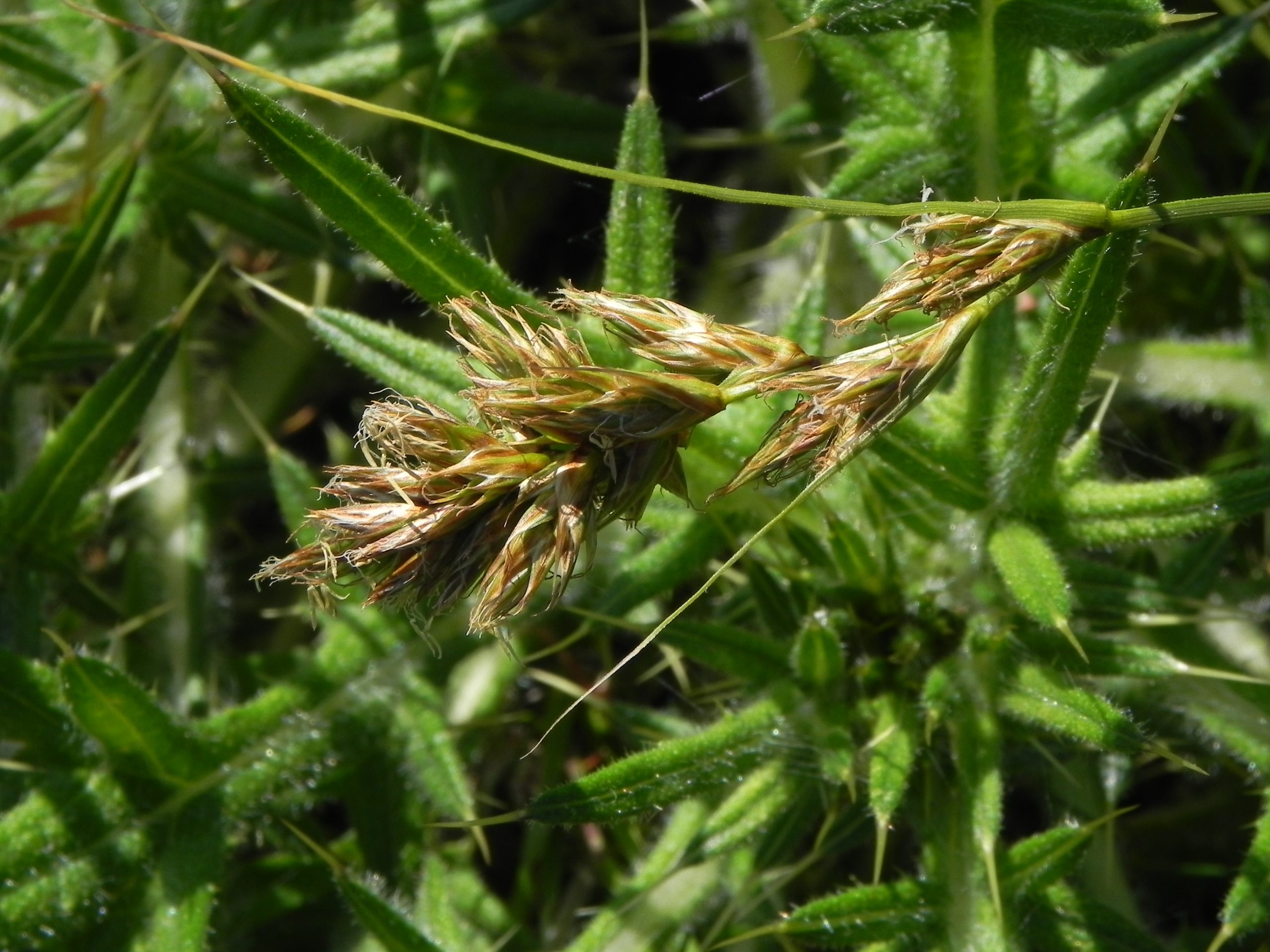
In order to convey some idea of the richness of the site a list of the sedges encountered on the day could be helpful: Carex arenaria, binervis, caryophyllea, demissa, divulsa, echinata, flacca, hirta, leporina, muricata, nigra, panicea, paniculata, pilulifera (Sand, Green-ribbed, Spring, Common Yellow-, Grey, Star, Glaucous, Hairy, Oval, Prickly, Common, Carnation, Tussock, Pill). A start was made on a SW-facing slope down from the church which supported a large population of Carex arenaria in one of its very few inland sites in Sussex. Here a number of species associated with dry acid grassland were found before the party of eleven decended and enjoyed a sweeping track between massive ancient Oaks, the Sand Sedge and its companions following along the surrounding banks – Plantago coronopus (Buck’s-horn Plantain), Aira praecox (Early Hair-grass), Cerastium semidecandrum (Little Mouse-ear), to name but three. We put up two Storks playing truant from Knepp before sampling a peaty bog to add another suite of species to the card. It was all so absorbing that the unseasonably cold wind and intermittent light showers were scarcely noticed… and then it was lunch time.
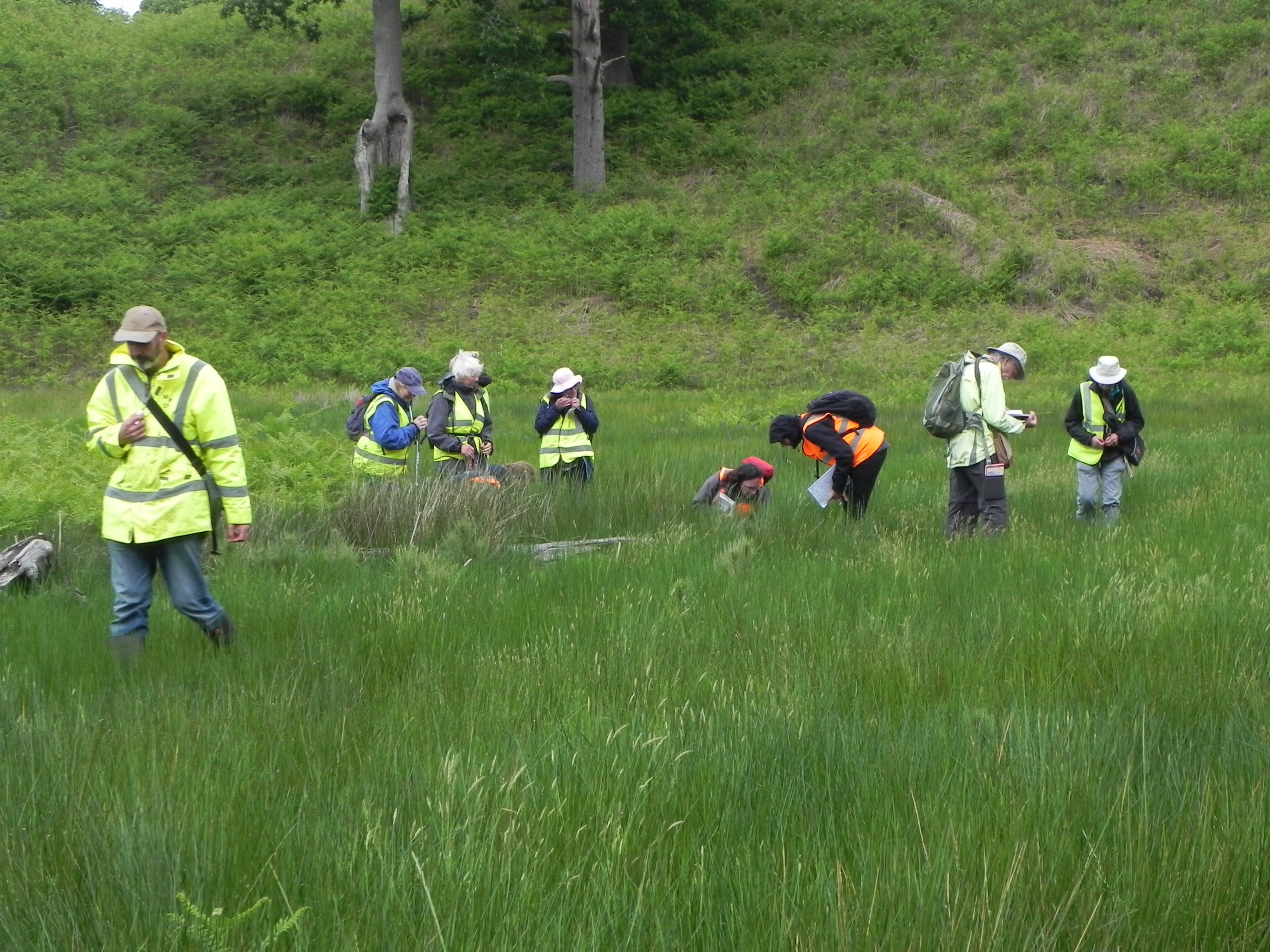
Continuing to work in a clockwise direction our next study was a number of unimproved damp meadows – all wonderfully sedgy, with swathes of Carex panicea and clumps of C. nigra. One might also mention the array of Rushes – Juncus acutiflorus, articulatus, bufonius, conglomeratus, effusus, inflexus, tenuis (Sharp-flowered, Jointed, Toad, Compact, Soft, Hard and Slender). Frances then led us to a pond. This was not as rich as she remembered on a previous visit, with Potamogeton polygonifolius (Bog Pondweed) and Scutellaria galericulata (Skullcap) being about the only noteworthy plants, but the banks surrounding it at least provided Danthonia decumbens (Heath-grass) which had not been noticed earlier. Another species not noticed earlier was Pedicularis sylvatica (Common Lousewort) but on the homeward part of the lap this appeared in some quantity. Alas there was no time to sample the woodland with its interesting damp rides but two last pleasures remained: as the car-park came into view, the party first pounced on a swathe of Briza media (Quaking-grass) and then stooped to enjoy a small crop of Isolepis setacea (Bristle Club-rush) on the trampled line of the public right of way. A wonderful day, reflected in the photographs of the occasion which show a band of happy botanists resplendent in high-vis jackets. We thank Parham Estate for kind permission to visit.