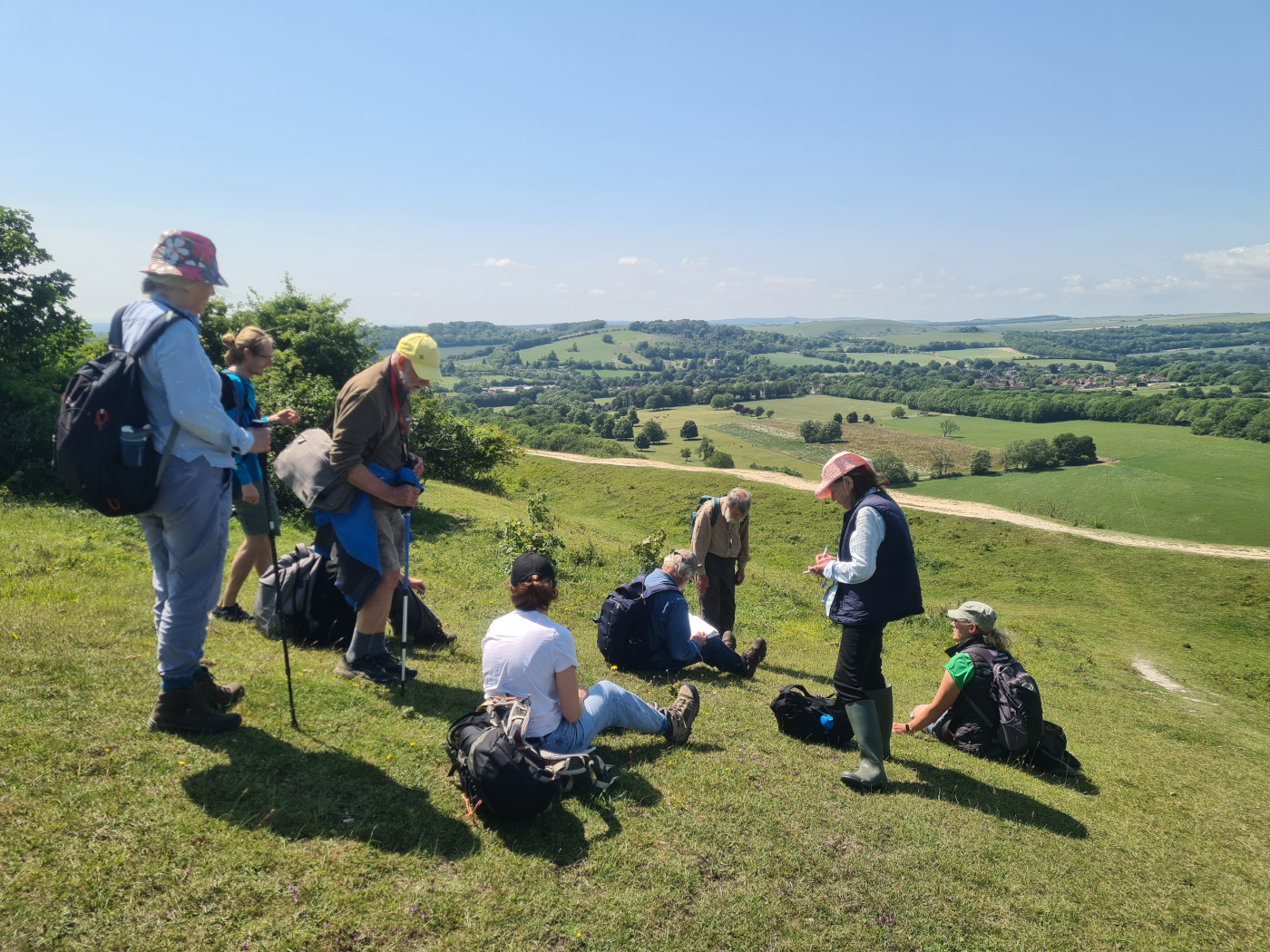
Cissbury Ring
Meeting date: 11 June 2025
Leader: Nick Sturt
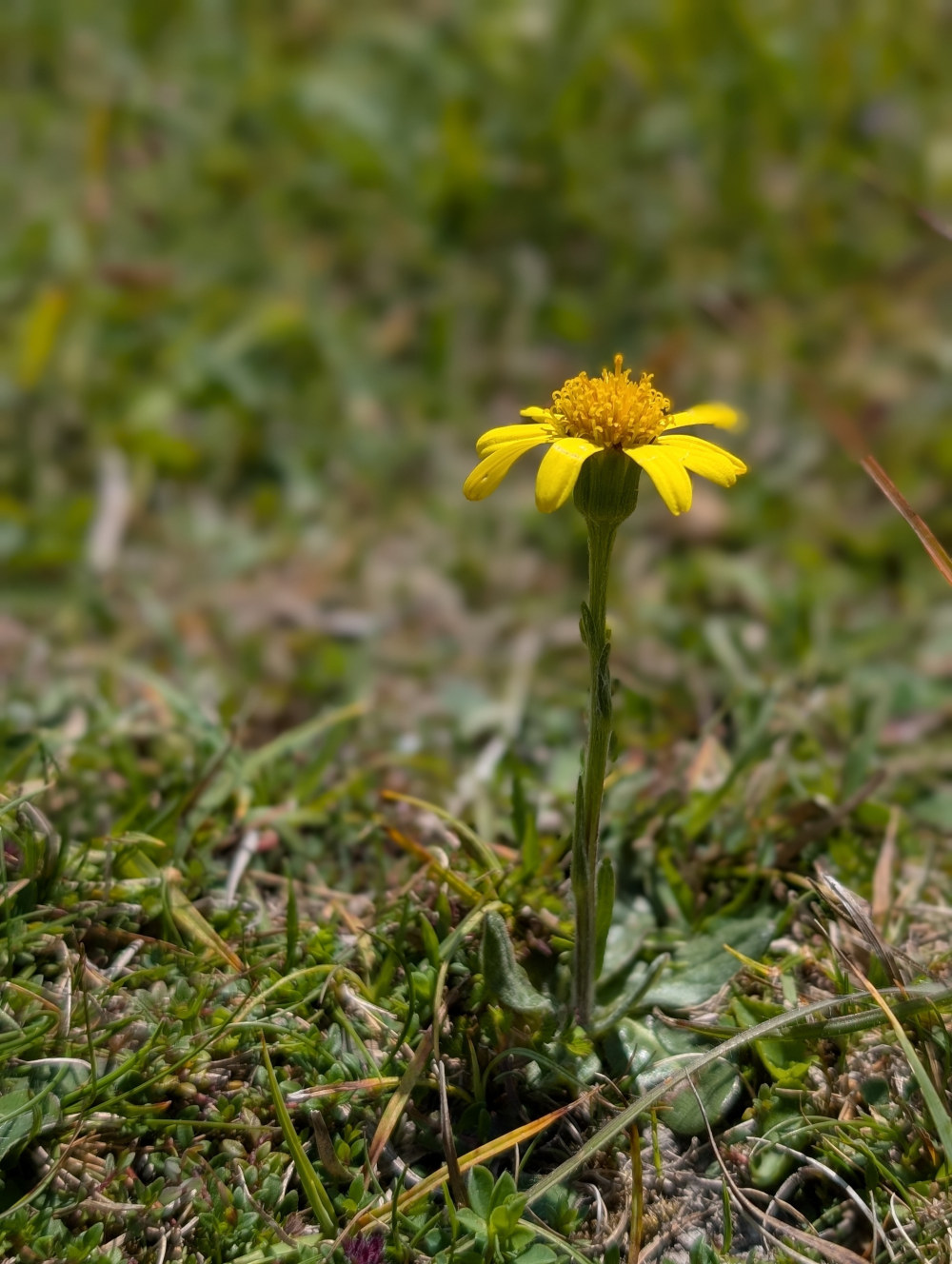
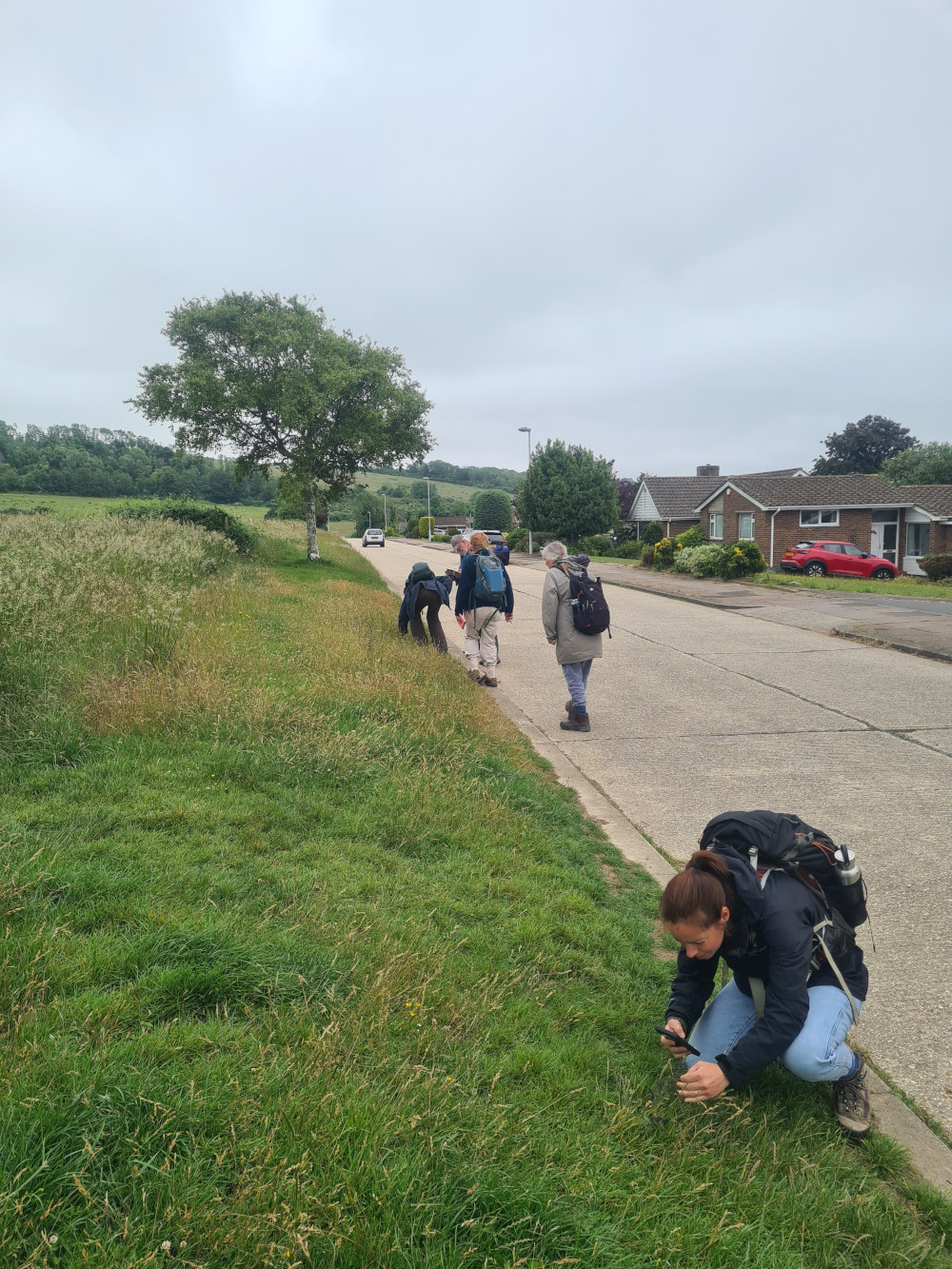
Were we going to be in time to enjoy the Tephroseris integrifolia in flower? Weeks of warm dry weather had hustled many species through and on arrival Chris Brewer reported that in East Sussex Field Fleawort was effectively done and dusted. However, the thirteen-strong party had first to survey the pavement, gutter and verge of Long Meadow in residential Findon Valley before they would be allowed to set foot on Cissbury Ring. This opening part of the schedule proved full of interest and, among other things, a good way for the less experienced to get to know a range of common yellow composites – Crepis capillaris (Smooth Hawk’s-beard), Helminthotheca echioides (Bristly Oxtongue), Leontodon saxatilis (Lesser Hawkbit), Pilosella officinarum (Mouse-ear Hawkweed) for starters. The best plants of the verge were probably Orobanche minor (Common Broomrape), Salvia verbenaca (Wild Clary) and Tragopogon porrifolius (Salsify). As is usual, informal groups gathered around specimens and, as usual in such territory, enthusiasm led some members to stray onto front gardens to take a closer look. The natives were not hostile to the invaders and indeed it was encouraging to observe how many of their lawns were gaily sporting floristic biodiversity.
Eventually a footpath up to the southern end of the Ring was taken, further species added to the TQ1307 monad on the way. On gaining the summit a selection of herbs of downland specialities presented themselves, with a little Geranium columbinum (Long-stalked Crane’s-bill) probably the prize. And then lunch provided an opportunity for all to take a close look at the sward and comment on the Cirsium acaule (Stemless Thistle). Still the question hung in the air: would we find Tephroseris in flower? The first notable plant of the afternoon session was Rosa rubiginosa (Sweet-briar), given away by its impressive armament, including acicles on the lower part of the stem. Within range of the Neolithic flint mines a serious search for Tephroseris began and there were two or three independent finds, one specimen somewhat diminutive but less advanced than its fellows and bearing a golden yellow flower. Further ranging over the undulations at this point above the rampart revealed that there were a considerable number of plants, the majority of them past their sell-by dates regarding flowering.
Gradually the tally of calcicoles was growing and one by one missing species were discovered, notably some very small examples of Carex caryophyllea (Spring Sedge) and what the Treasurer described as a ‘grove of Atropa belladonna’ (Deadly Nightshade). The Tephroseris extended into the next monad TQ1308 and thus the party set about the filling-in of a second card before thoughts began to turn to home.