Beech Estate
Meeting date: 14 June 2025
Leaders: Peter Smith and Helen Proctor
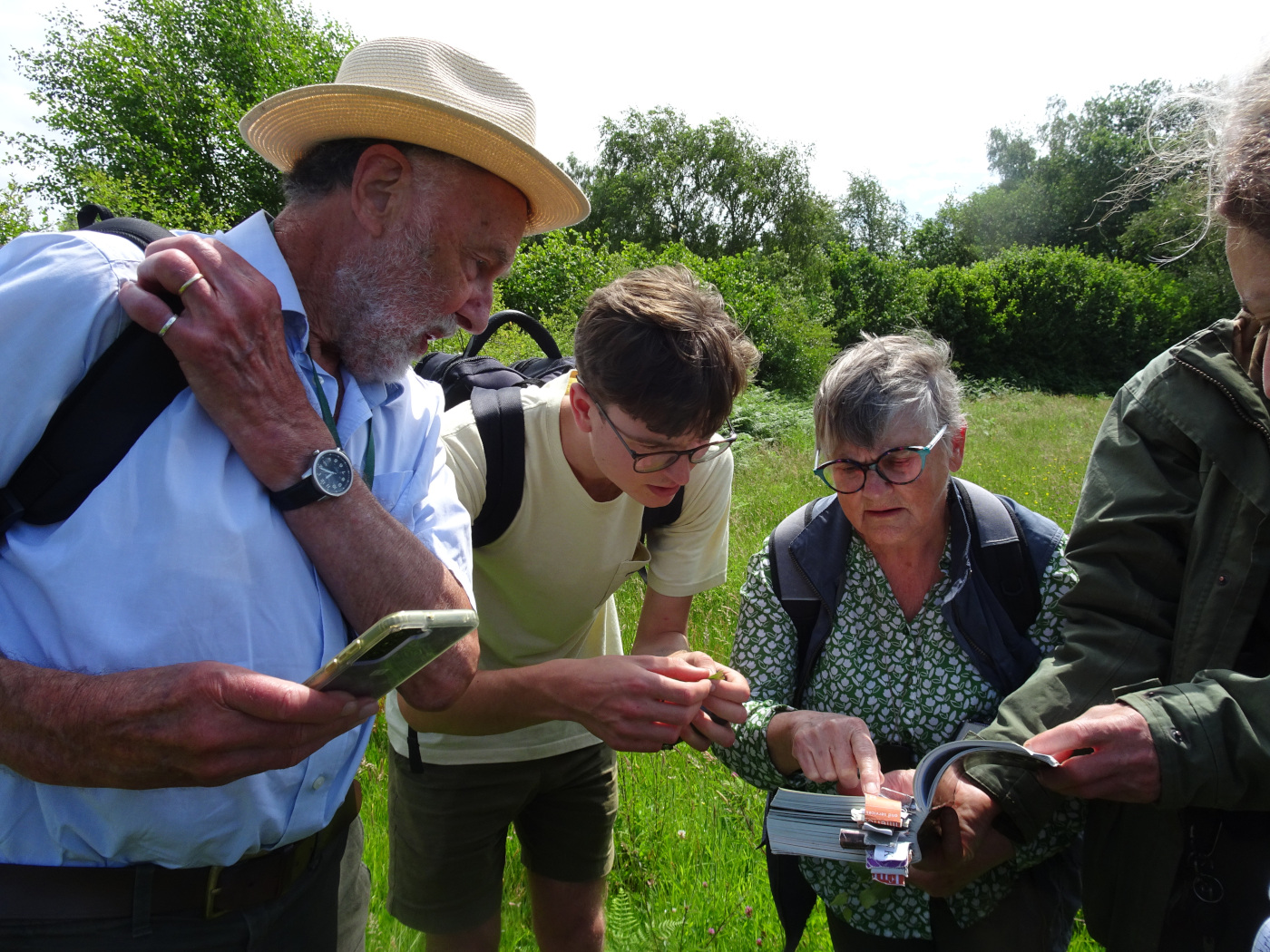
Eight members assembled at Bunces Barn. The owner and manager, Harry Wills, gave a short introduction to the 2000 acre Estate with organically managed farmland. It includes 70 acres of medieval wildflower meadows. These were doubled by seed sowing to nearly 140 acres of species-rich grassland on Weald clay, surrounded by woodland (described on the Estate’s website).
The first four meadows had been managed with varied regimes, with the winter grazing of cattle and sheep affecting the floral composition, while remaining organic. The first meadow included many typical lowland meadow species. A half square metre patch of narrow, dark green, minutely toothed leaves indicated the presence of Achillea ptarmica (Sneezewort), still to flower. The flowers of Briza media (Quaking-grass) waved in the breeze while the seed heads of Conopodium majus (Pignut) were still visible.
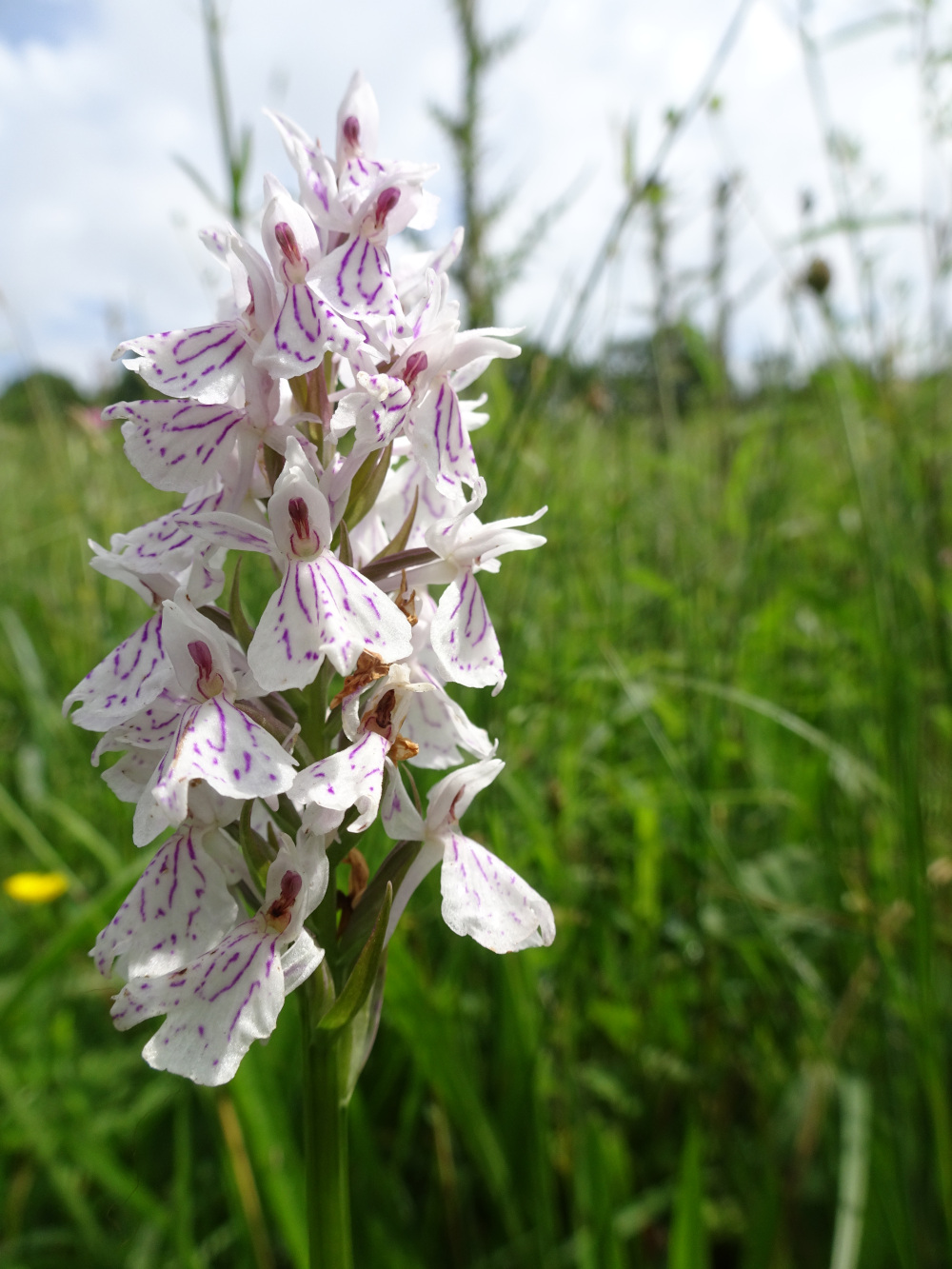
The third and fourth meadows surprisingly included Linum catharticum (Fairy Flax), normally seen on downland chalk. Where the ground had remained damp, a large group of Dactylorhiza fuchsii (Common Spotted-orchid) flourished.
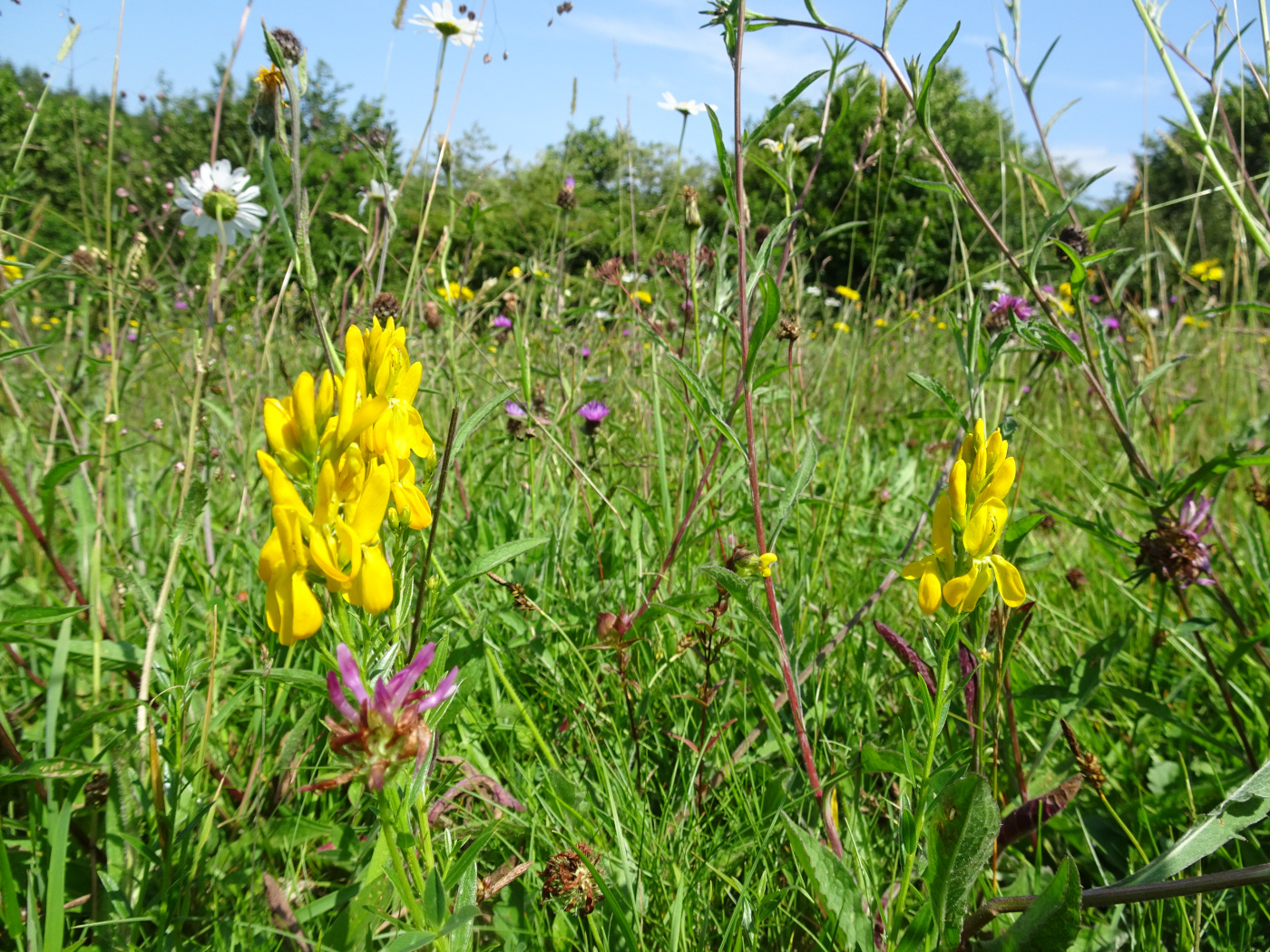
After lunch, seated on cushioned benches in the barn, two car drivers took us to Coach’s Field where Genista tinctoria (Dyer’s Greenweed) produced swathes of yellow mats across the meadows on each side of the track. Lower down the hillside, we found Polygala vulgaris (Common Milkwort), Succisa pratensis (Devil’s-bit Scabious) and Betonica officinalis (Betony). A small ghyll provided ferns and other wet woodland plants. Sharp eyes spotted the leaves of Sanicula europaea (Sanicle).
128 records were acquired in TQ6817 and 87 in TQ6816. Thanks were given to Harry Wills for his hospitality and for accompanying us around some of the meadows, and to Peter Smith for entering the taxa on iRecord.