Hurston Warren
Meeting date: 17 July 2021
(Leader: Nick Sturt)
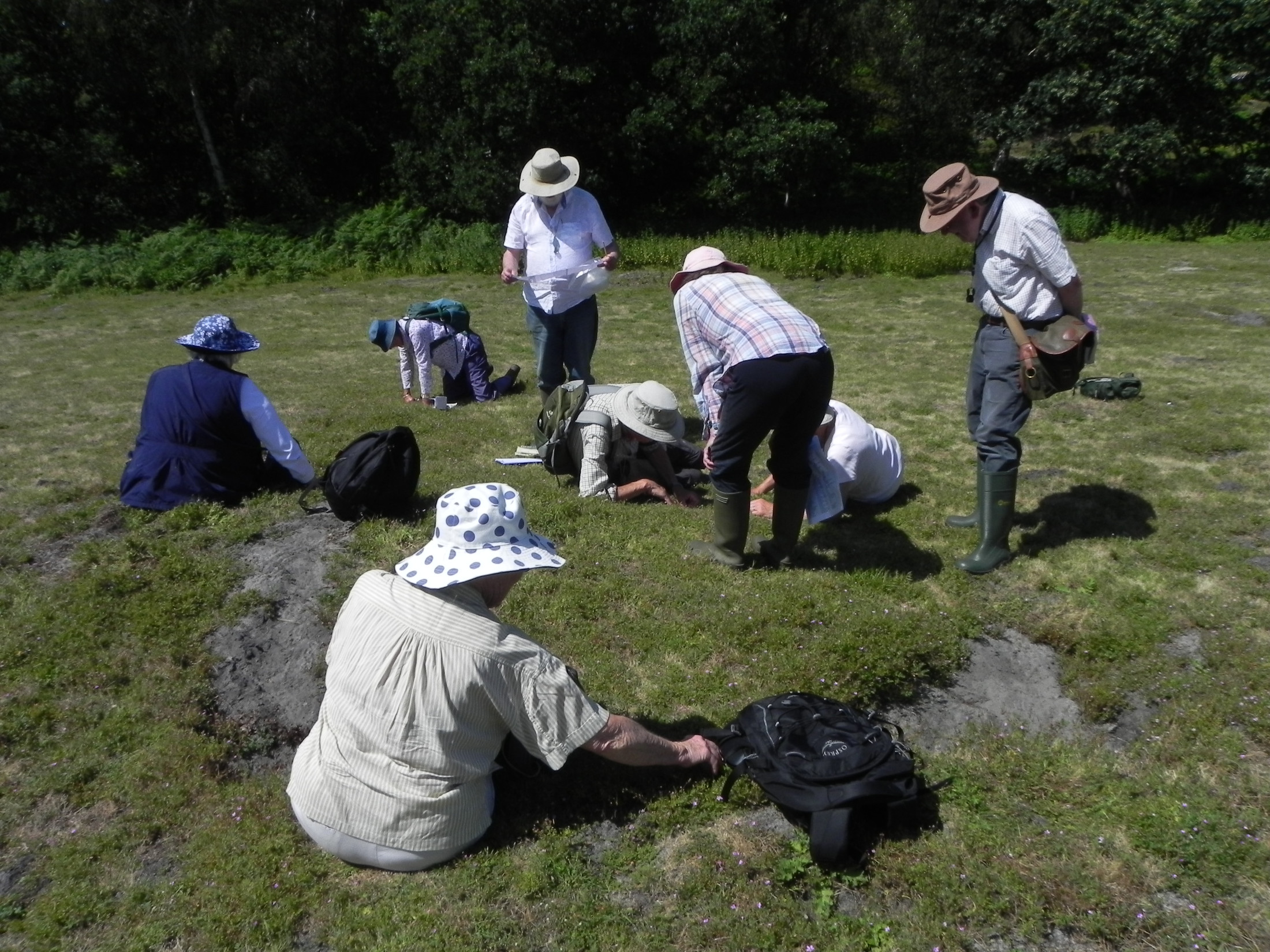
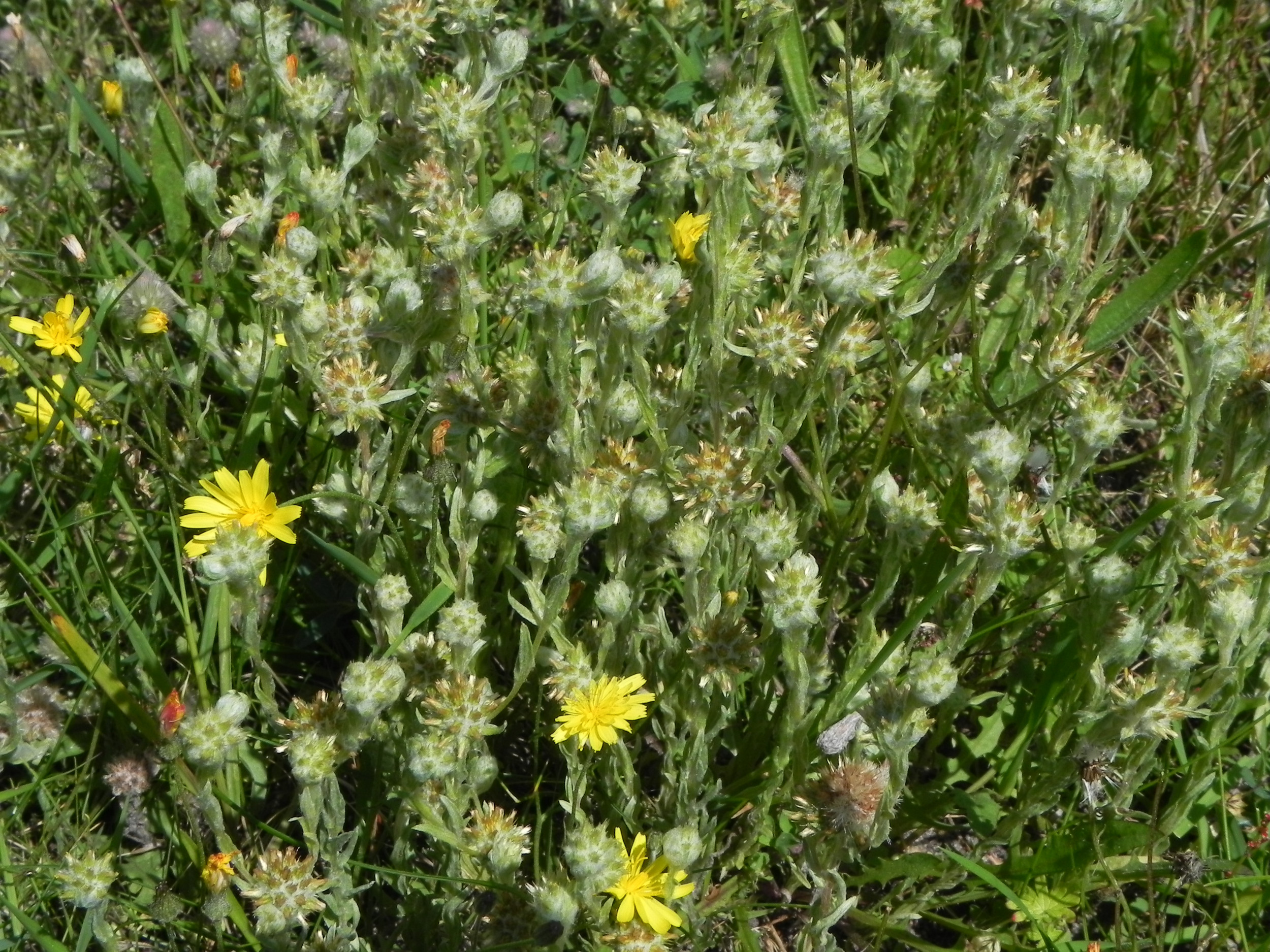
All the hard work had been done by Sue Denness who on the day was self-isolating and distinctly under the weather. Well, not quite all the hard work since the party of twelve had to make the effort to complete the recording cards on what was a very warm day. Warren Field was tackled first and yielded Potentilla argentea (Hoary Cinquefoil) in abundance; other choice species gleaned here included Aira caryophyllea (Silver Hair-grass), Ornithopus perpusillus (Bird’s-foot) and Trifolium arvense (Hare’s-foot Clover). This field was covered by two groups although after about an hour discipline broke down and there was much fraternisation. Dividing again, one party headed for the heath. There were a few typical species added here, the best being Cuscuta epithymum (Common Dodder) which apparently had not been seen before on this site. The other party, many equipped with wellingtons for the purpose, paddled in the bog and found a number of goodies of which the best were Carex canescens (White Sedge), Hydrocotyle vulgaris (Marsh Pennywort) and Potamogeton polygonifolius (Bog Pondweed); several ferns looked a bit like Dryopteris carthusiana (Narrow Buckler-fern) but not quite enough, and a Callitriche (Water-starwort) which Elisabeth collected did not resemble stagnalis but could not be coaxed into flower in captivity and remains therefore a mystery.
Lunch in the shade of a spreading oak with odd people calling out odd plants near to them for the card-bearer to juggle with his sandwiches, followed by more concentrated study of Middle Field: Malva neglecta (Dwarf Mallow) and Filago vulgaris (Common Cudweed) were worthy of note. We had seen a small clump of Carex muricata ssp. pairae (Prickly Sedge) in Warren Field but in Middle Field it formed the shaggy clumps which render it recognisable at twenty paces to those of a sedgy inclination. The last area, the Sheep Field, had formerly been a horse paddock but sheep had been in for a couple of years and the owner was keen to see the results of the change in management. A vast and picturesque sheet of Achillea millefolium in shades of pink as well as traditional white for a start, but there was much more: further patches of Potentilla argentea, some fine stands of Filago vulgaris and scraps again of Ornithopus perpusillus and Trifolium arvense.
The SBRS has been here a couple of times in the past; Frances knows the site well; and Richard actually stayed here while he and Jenny were waiting to move into Amberley. Thus Kate the owner came out to welcome us when we arrived and made it clear that she was agog to see our record cards when all the loose ends had been tied up. I must thank Sue for setting this meeting up, Richard for again stepping up with alacrity to lead a group, and Frances for her contribution, botanical and occasionally satirical, to the proceedings in the morning before she had to leave.