
Grom Valley to High Rocks
Meeting date: 2 August 2025
Leaders: Elaine Boot & Geoffrey Kitchener
Joint meeting of SBRS & Kent Botanical Recording Group
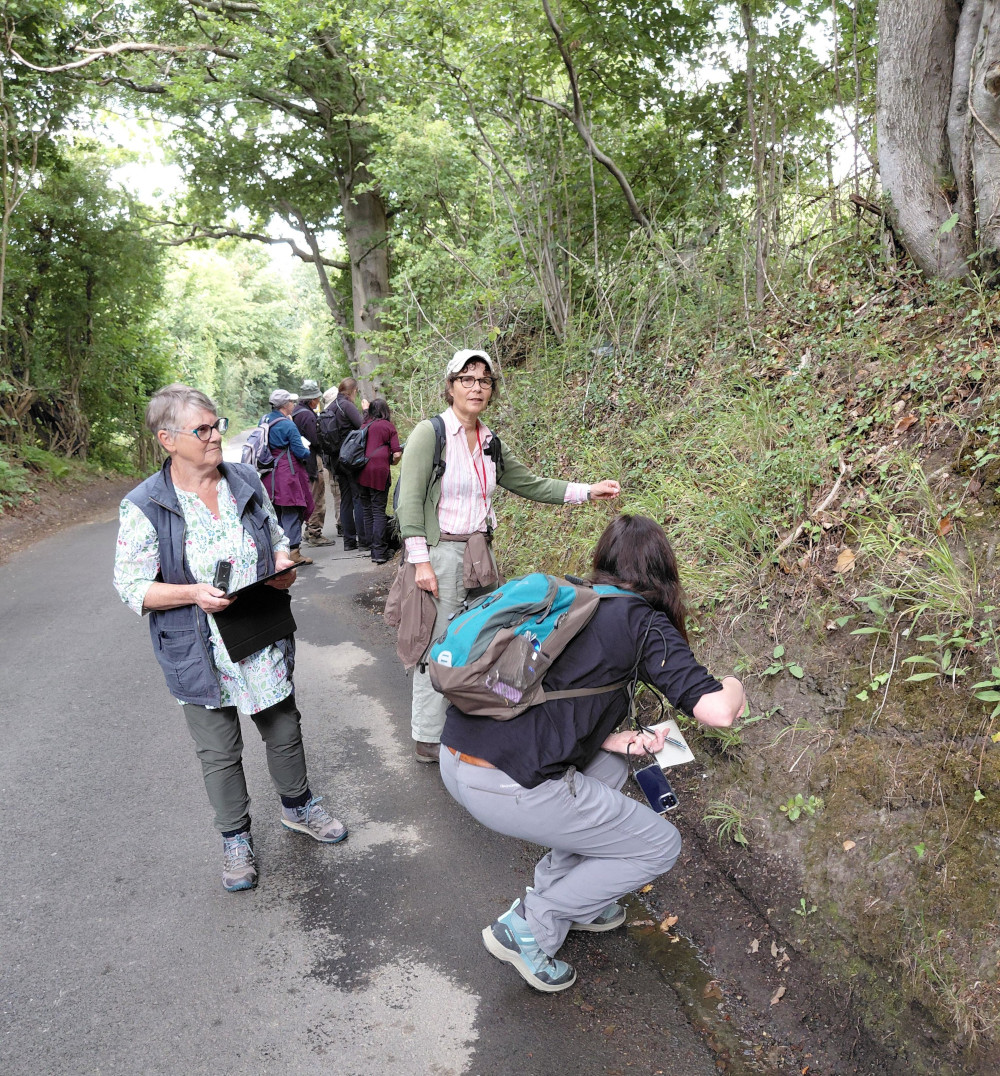
Members met by a Sussex roadside, later turning down Broom Lane where a steep bank displayed an excellent flora including Betonica officinalis (Betony), Hieracium sabaudum (Autumn Hawkweed), Lathyrus linifolius (Bitter-vetch) and Solidago virgaurea (Goldenrod). Luzula forsteri (Southern Woodrush) was common and a small patch of L .pilosa (Hairy Woodrush) together with the hybrid, Luzula x borreri with conspicuously sterile fruits.
We then passed under the Spa Valley Railway, soon to reach the river Grom and the county boundary. On the Kent side was a hybrid Hawthorn, Crataegus x subsphaerica, a cross between C. monogyna and C. rhipidiphylla (Large-sepalled Hawthorn) which displayed large stipules. A plant of Solanum dulcamara (Bittersweet) had been distorted by a gall Aceria lycopersici, caused by the Tomato Russet mite. A small brook leading from a garden pond had Lycopus europaeus (Gipsywort), Veronica beccabunga (Brooklime) and Mentha arvensis (Corn Mint). The hybrid St John’s-wort, Hypericum x desetangsii was seen near the river.
The valley then became more wooded, with some ferny slopes, but at other places forming a flood plain where the river frequently overflows. Stephen Lemon pointed out non-flowering. Scirpus sylvaticus (Wood Club-rush) here. A footbridge crosses the river Grom near High Rocks Halt where we noted a large tree of Acer negundo (Ashleaf Maple), probably planted, overhanging the river from the Kent bank.
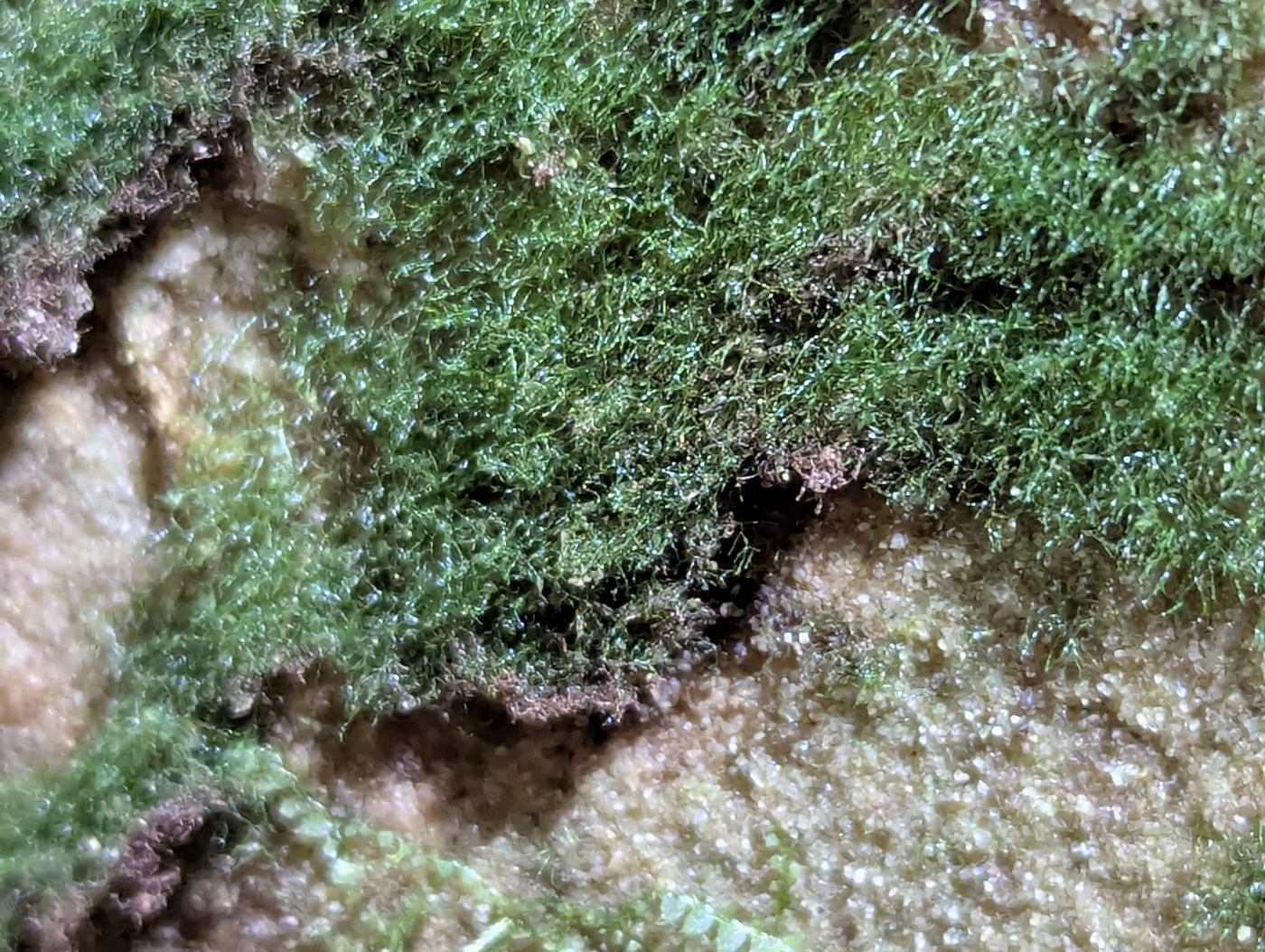
Back in Sussex, Stephen Lemon offered a detour to see Trichomanes speciosum (Killarney Fern) on the ceiling of a cave within the Ardingly Sandstone outcrop. The fern was at the gametophyte stage before becoming frond-bearing, so currently resembled filamentous green algae. Fronds require wetter conditions than are present here. The fern appears to be a relic of a different climate, preserved by the sequestered conditions of its habitat for possibly thousands of years.
On the way back Cordyline australis (Cabbage-palm) was seen. This throw-out had since rooted and thrown out fresh shoots and so was well-established. Returning along a lane, Sanicula europaea (Sanicle) was locally frequent on the banks.
216 records were made in the monads,TQ5436, 5438, 5537, 5538 and 5638. Thanks are due to Judith Linsell for the Sussex recording.