
Halnaker Farm

Meeting date: 17 July 2025
Leader: Paul Whitby
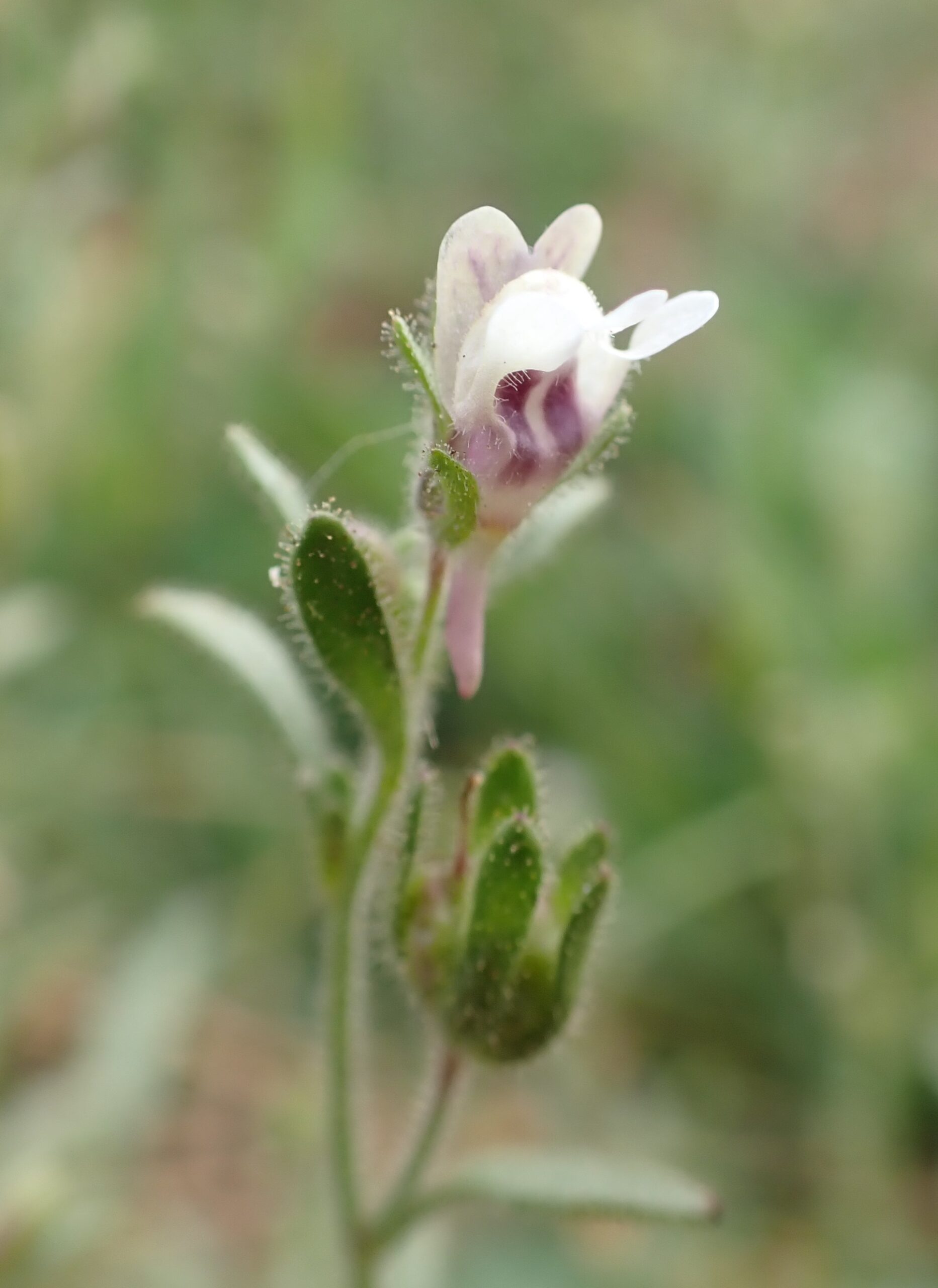
Regarding taking us to interesting sites on land not normally accessible to the general public, Paul, as they say, ‘has history’ and so it was no surprise that Halnaker Farm made a very good day out. It comprises some 200 hectares and is managed as a biodiversity gain site with reversion from arable to pasture, having last been harvested in 2024. The group of eleven wasted no time in getting down on hands and knees to look at the wealth of arable and ruderal weed species (70+ when we added them up), many of them not familiar to a proportion of the members. Kickxia spuria (Round-leaved Fluellen) and K. elatine (Sharp-leaved Fluellen) obligingly showed their distinctive features and there was much Chaenorhinum minus (Small Toadflax) and Bromus secalinus (Rye Brome). The prize, however, went to Erysimum cheiranthoides (Treacle-mustard), a scarce species these days which was scattered, albeit thinly, over a large part of the site surveyed. Paul had devised the management plan whereby a transition to chalk grassland was planned with the aid of imported native seed and the early results of this were studied, distinguishing the introductions from the species already present on the site. Of the latter a little Campanula glomerata (Clustered Bellflower) and some stands of Carduus tenuiflorus (Seaside Thistle) were noteworthy.
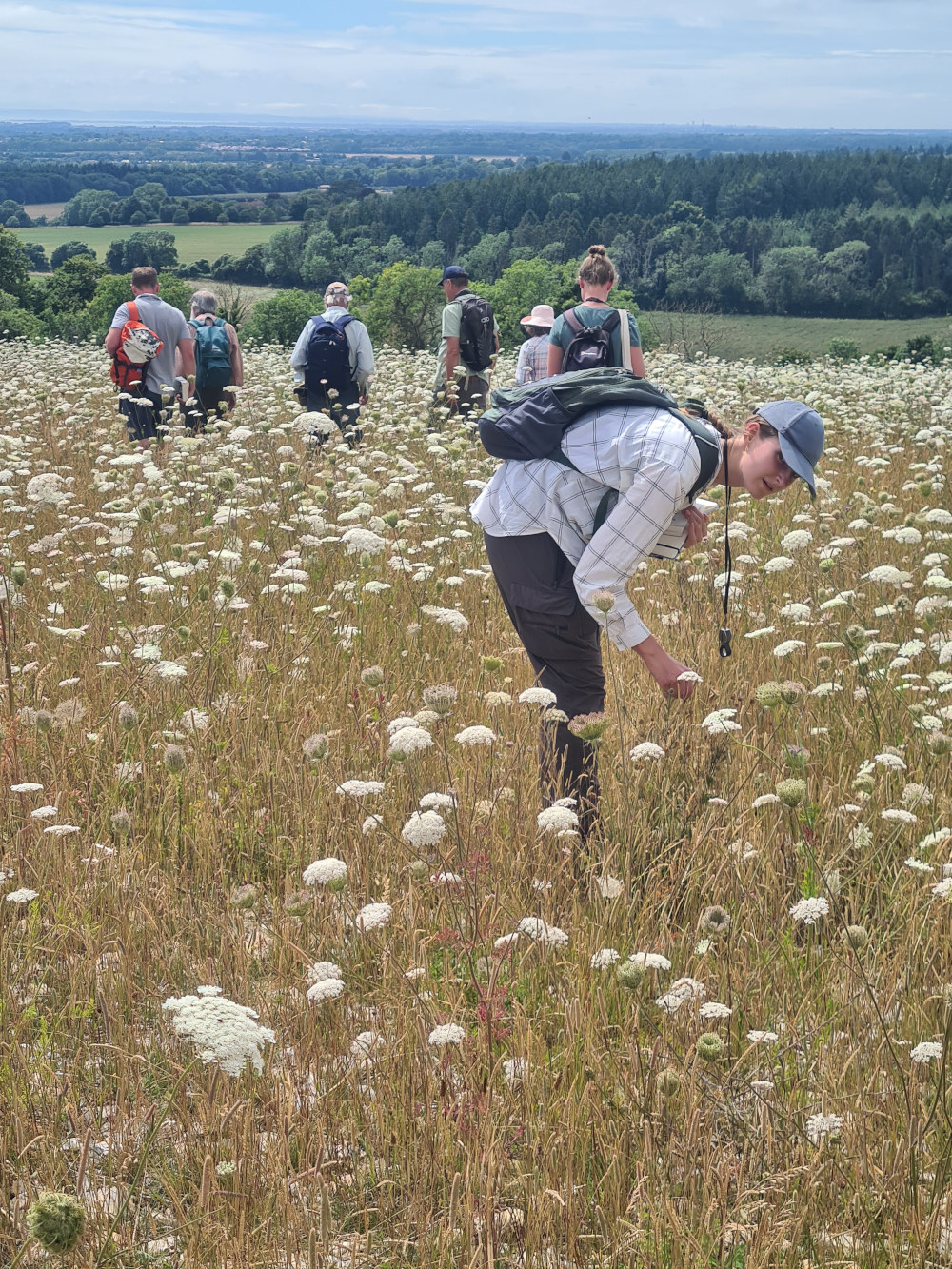
Swathes of the hillside were being mown as we sat down in a welcome patch of shade for lunch but there was plenty remaining to record in the afternoon. Biodiversity was boosted by small areas of established woodland and also the installation of two ponds created on traditional lines using puddled clay. Arguably it was the examination of the arable weed flora in the morning which was the highlight of the day since this habitat does not often feature in the field meetings and it is to be hoped that room can be made to preserve this suite of species within the overall management plan.
Equally valuable, however, was the insight afforded by the visit into this type of initiative whereby enhancing the biodiversity of one site is traded off against the erosion of biodiversity elsewhere: this engendered plenty of food for thought. But the climax of the afternoon was unquestionably the breath-taking view from Halnaker windmill over the shimmering coastal plain to the Isle of Wight, a distant grey mass which seemed to be hovering above the sea.
