Pevensey Levels
Meeting date: 12 July 2025
Leader: Evan Jones
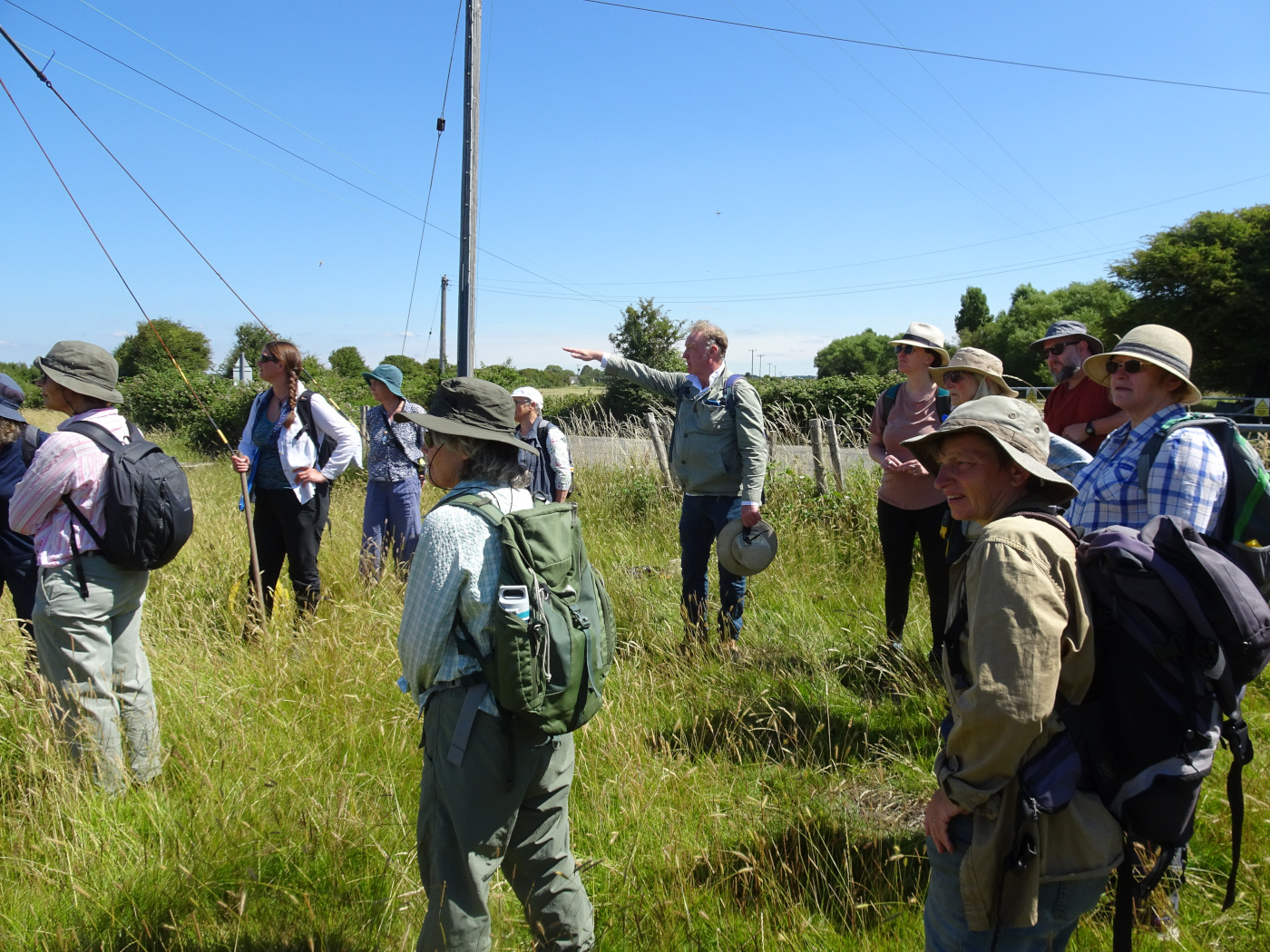
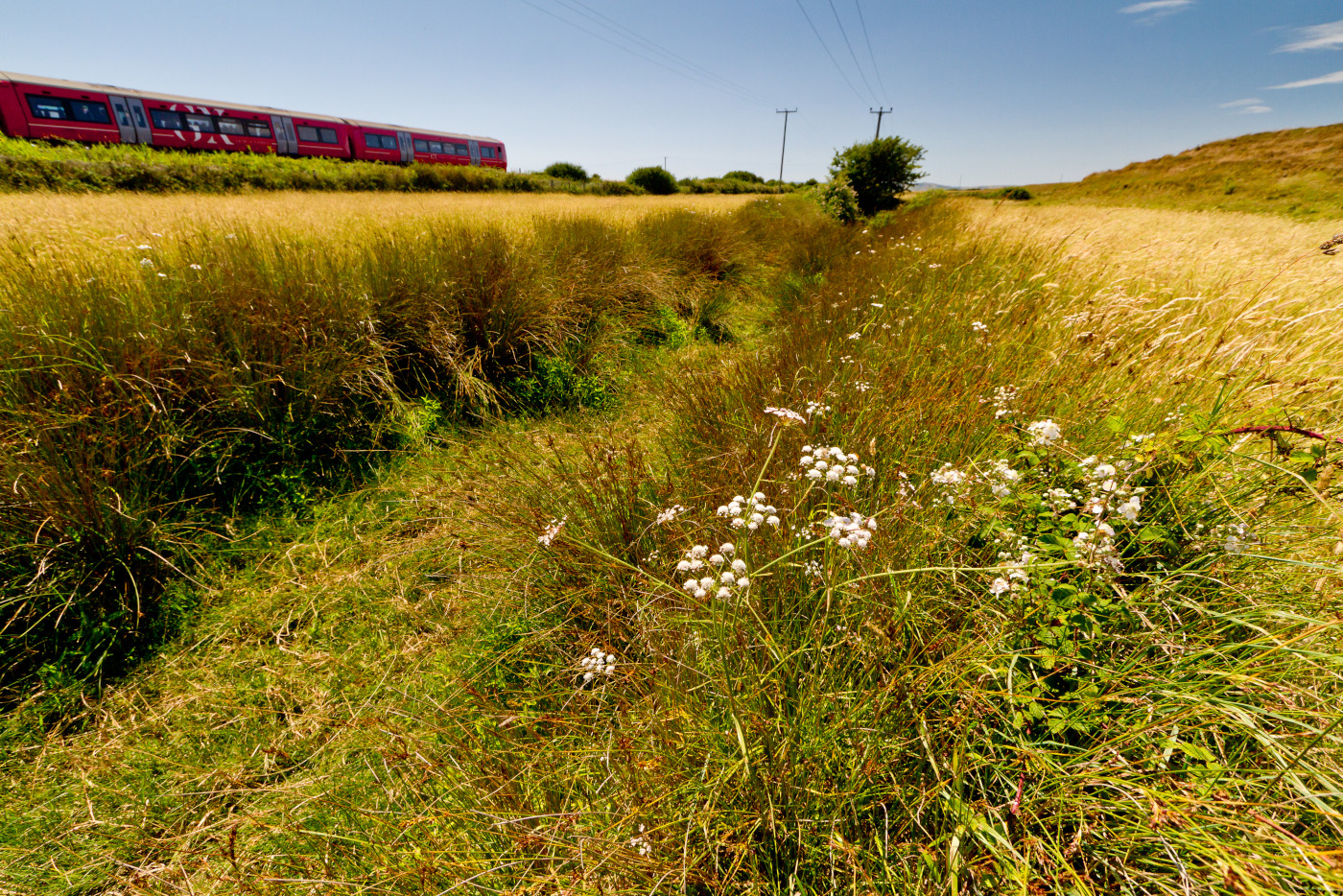
Fourteen of us met at Normans Bay on a warm sunny morning. The survey areas were meadows in the Pevensey Levels SSSI close to the coast. The first fields were just over the level crossing, immediately north of the railway. It was hoped that within such easy range of salt spray and with the ditches there tentatively connected with the saltmarsh behind the beach, there might be some upper saltmarsh species present.
Perhaps the stand-out find was a very good population of Oenanthe lachenalii (Parsley Water-dropwort) growing along a ditch by the railway. This species now usually occurs as isolated plants or in very small groups on the Levels here. The spring and early summer saw very little rain so water levels were way down and some ditches completely dry. Sadly this is now not unusual here.
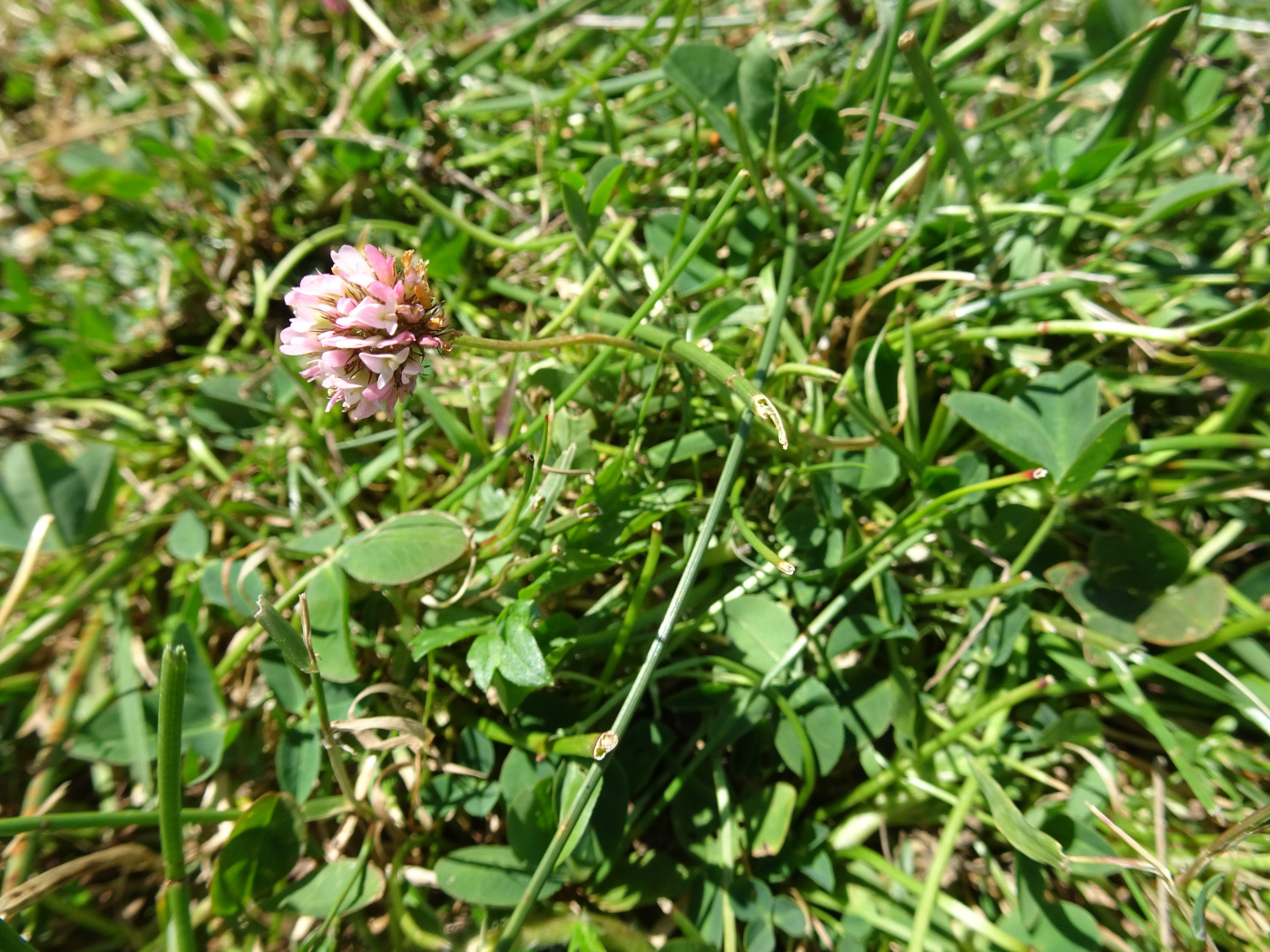
A damp depression had Trifolium fragiferum (Strawberry Clover), a typical plant in these maritime pastures. These particular fields included part of Rockhouse Bank, an old island with an ancient steep, earthen coastal cliff slope.
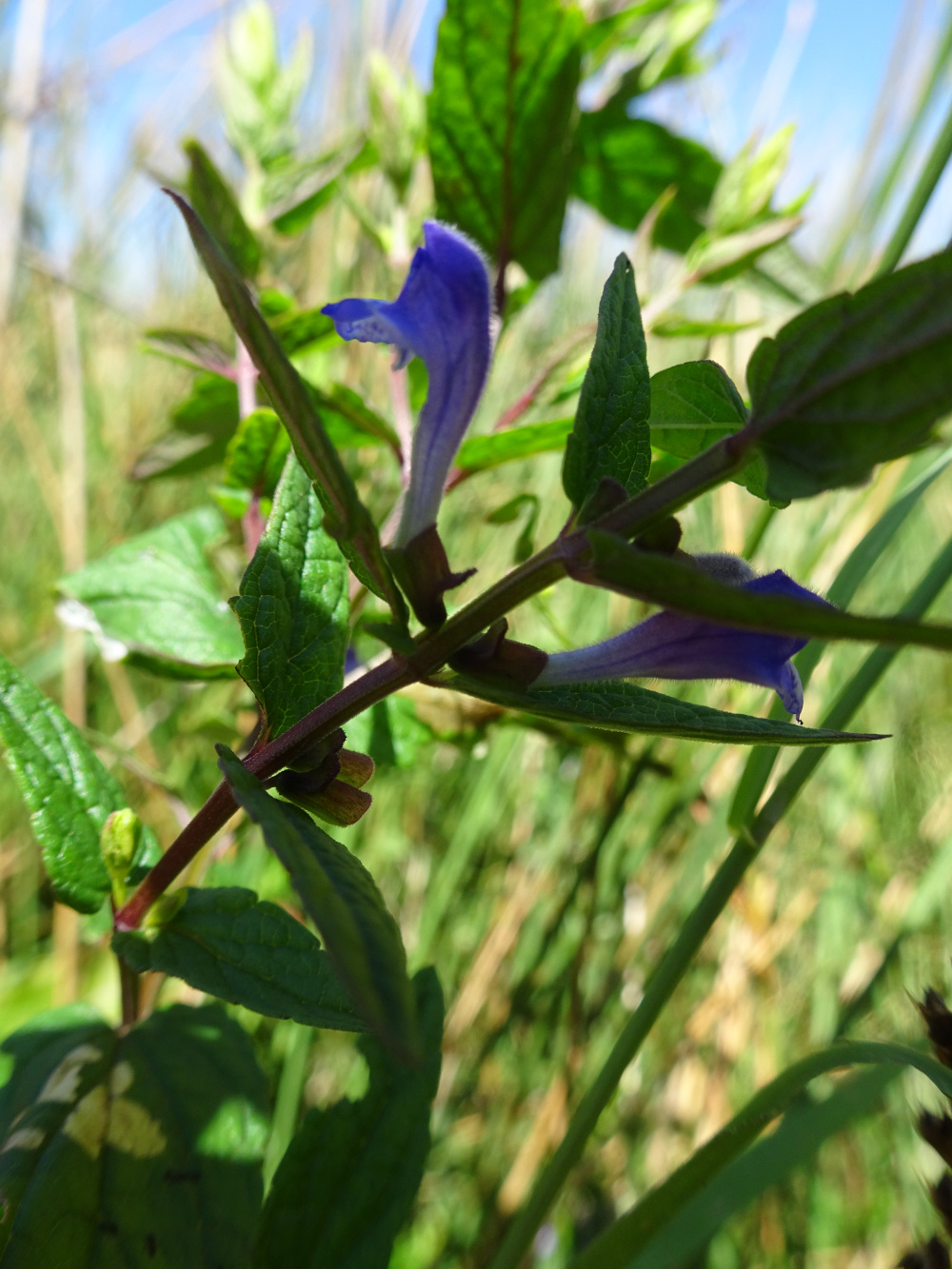
The second area that we looked at was just a couple of gate climbs and across Sluice Lane to the north. It has very recently been acquired by Natural England to extend the National Nature Reserve. Water levels were again low and additionally the ditches had not been cleared and were reeded-up. Unfortunately this is a typical pattern on the Levels now. Nonetheless aquatic species were found, including Hydrocharis morsus-ranae (Frogbit), Rumex hydrolapathum (Water Dock), and Typha angustifolia (Lesser Reedmace) along with many others. Hottonia palustris (Water-violet) was present in a ditch and on damp mud and Potamogeton acutifolius (Sharp-leaved Pondweed) filled the accessible ditches. This nationally rare plant has a stronghold at Pevensey. Oenanthe lachenalii (Parsley Water-dropwort) was also present in good numbers. This time it was along the edge of a wide linear depression that probably marks the position of a substantial ancient tidal channel and river mouth. Scutellaria galericulata (Skullcap) was present in unusual abundance in the tall sedgy and rushy sward here. Overall this was an interesting site which had not seen much attention previously, but the dryness reduced the number of aquatics recorded and the overgrown ditches restricted our access to the remaining water.
80 taxa were recorded in TQ6805. And 52 were made in TQ6705. Nineteen bryophytes were recorded including the rare Drepanocladus aduncus on a ditch bank, where it was hidden and kept damp by foliage.
Very many thanks to everyone attending and most especially to the recording scribes: Debbie Alston and Judith Linsell for the vascular plants and Sue Rubinstein who recorded the bryophytes.