Hooe Common
Meeting date: 7 June 2025
Leaders: Owen Johnson & Evan Jones
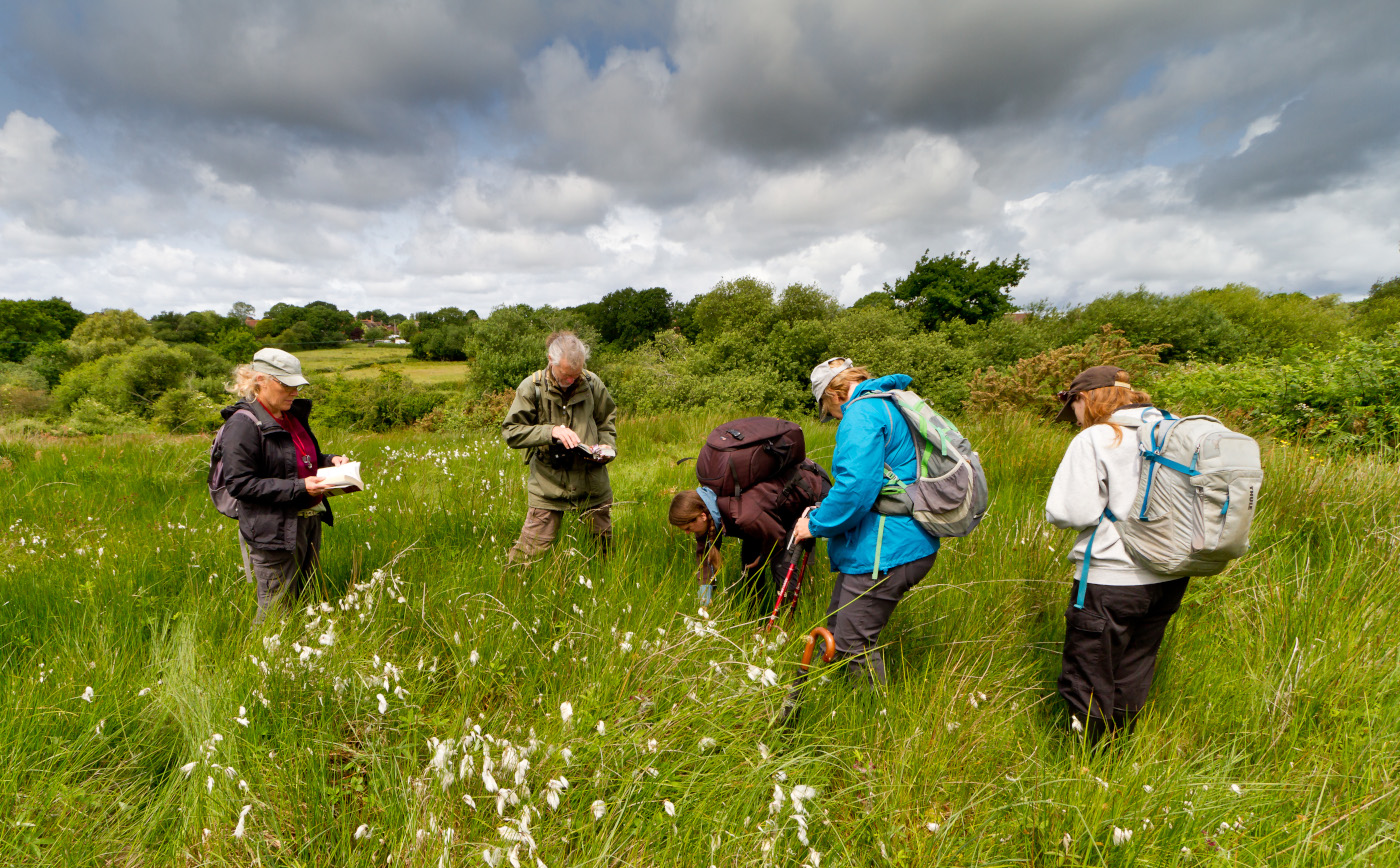
A lucky thirteen of us gathered in Hooe Common village for an outing to ‘The Bogs’ field, a remnant of the village’s ancient common which is still owned by the parish and grazed by parishioner’s ponies and cattle. Rain threatened occasionally through the day, but missed us.
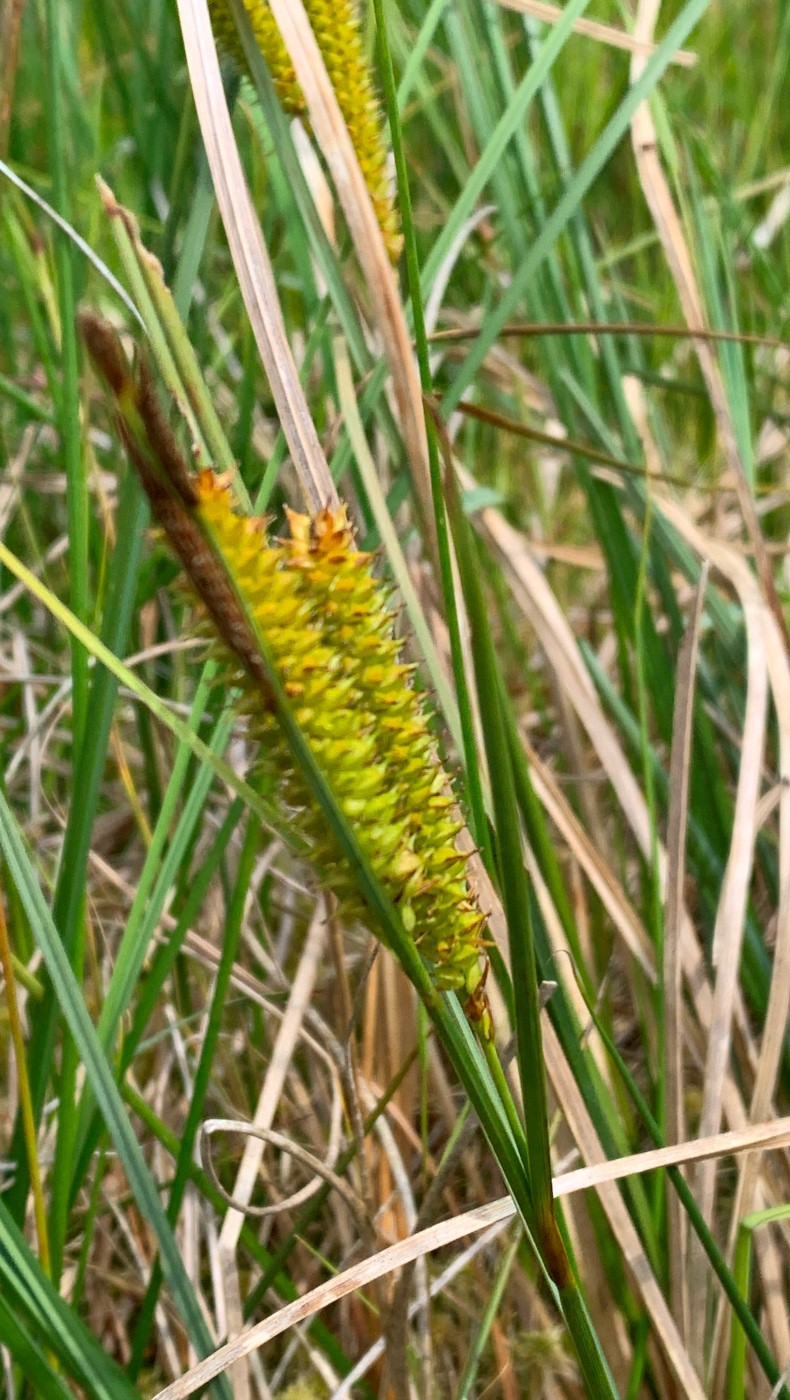
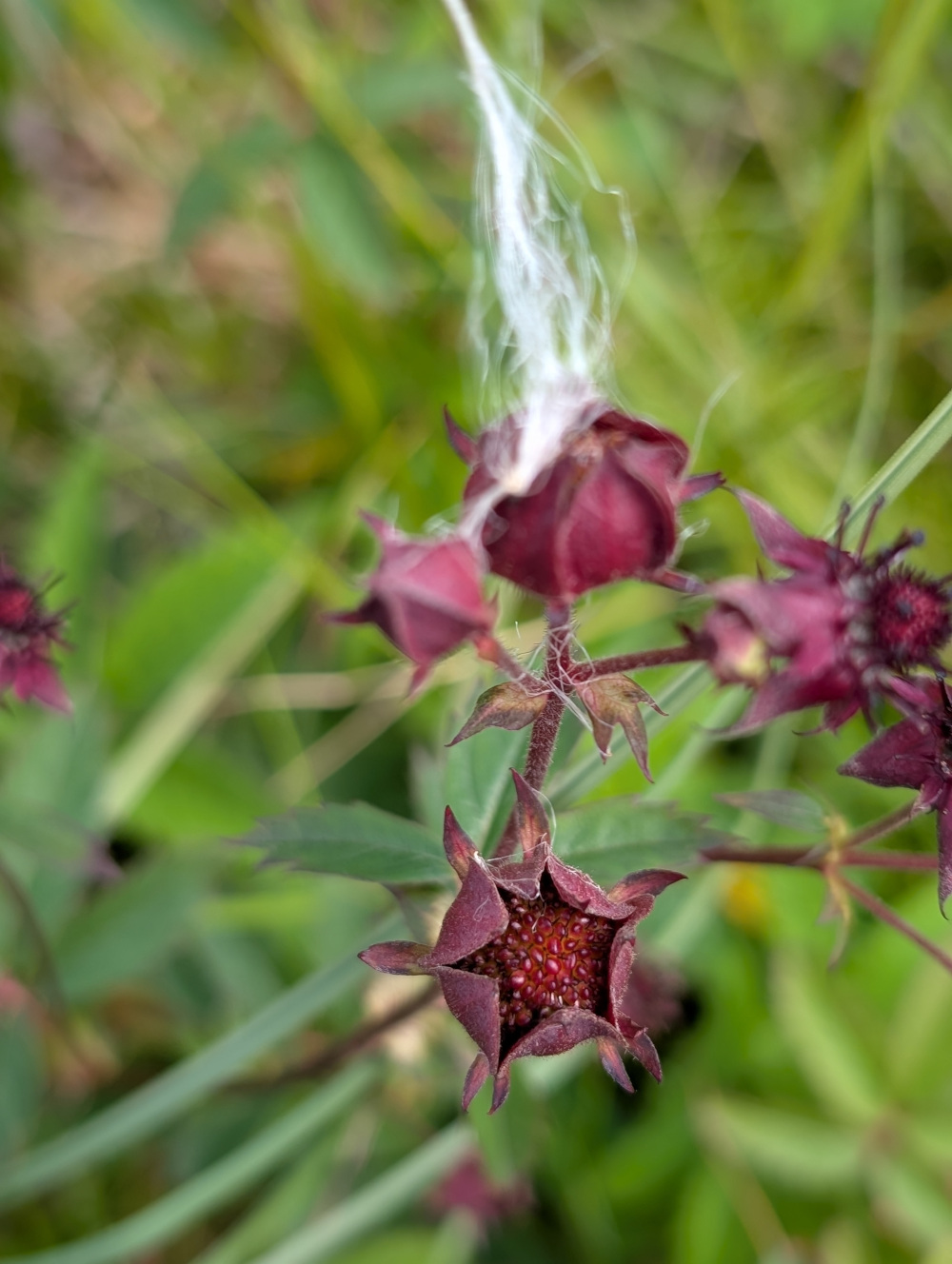
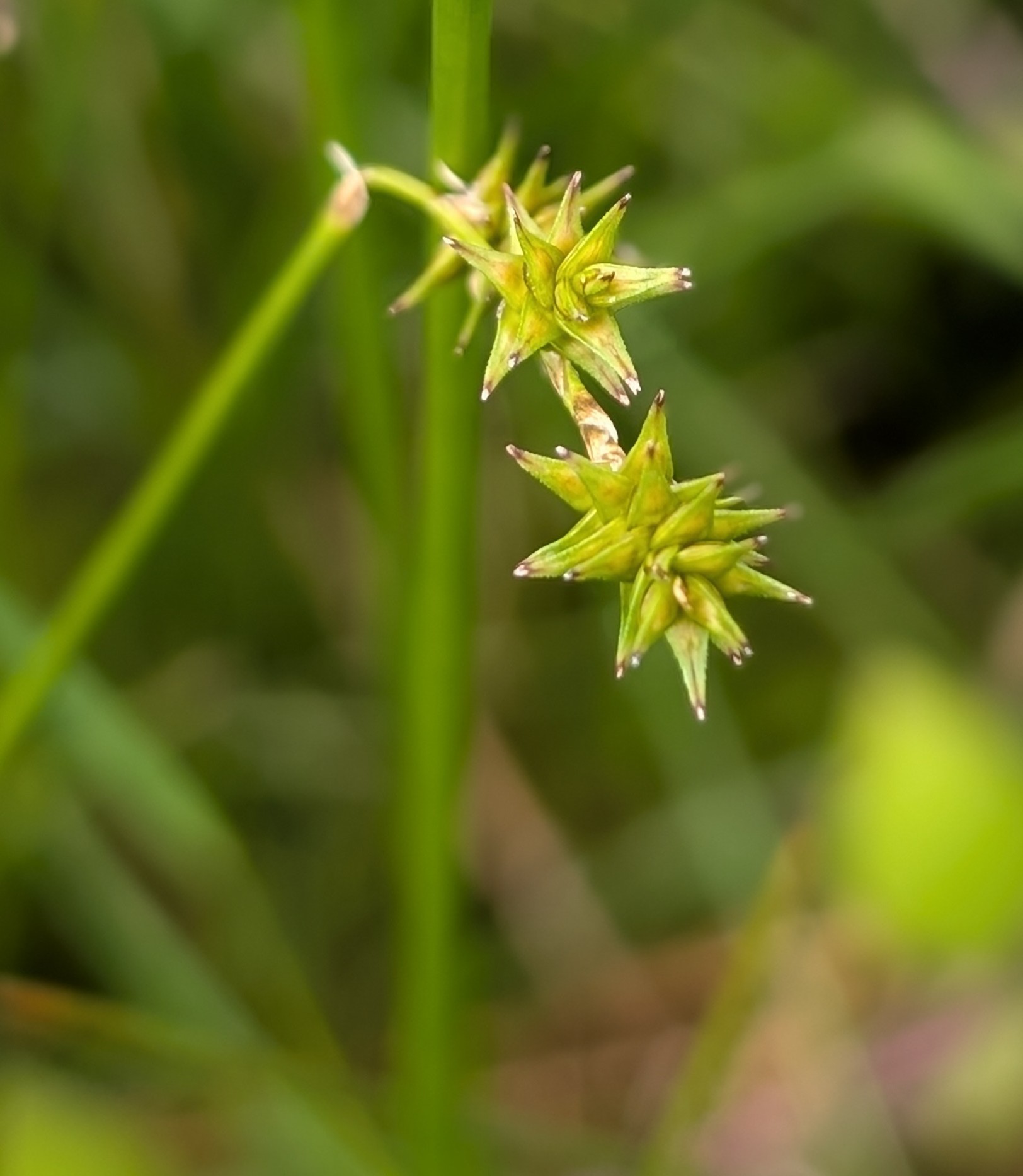
Although it is a tiny site and not very well-known, the Bogs is special: a raised sphagnum bog about 100m wide with several metres of peat deposits, occurring where permeable Tunbridge Wells Sand meets impermeable Wadhurst Clay and ground-water, loaded with bright orange iron-ore, is constantly forced to the surface. The bog is solid enough to walk across without wellingtons, but it quakes and shifts underfoot. Along with the four species of Sphagnum, the flora here is dominated by Comarum palustre (Marsh Cinquefoil), Eriophorum angustifolium (Common Cottongrass), and a suite of sedges including Carex echinata (Star Sedge), C. rostrata (Bottle Sedge) and C. demissa (Common Yellow-sedge). The cinquefoil was in full bloom for our visit and the cottongrass still had plenty of seedheads. Some of us went as far as to say that this habitat is a unique one for the south-east of England.
Where the water drains out from the bog itself, the next part of the field is dominated by huge old tussocks of Molinia caerulea (Purple Moor-grass) that were quite difficult to walk amongst. We saw several of the special plants of this area, including the large layering patch of Salix repens (Dwarf Willow), a few plants of Pedicularis sylvatica (Lousewort) still in flower, and Rubus laciniatus (Parsley-leaved Bramble), a single plant which seems not to have grown or changed in the 35 years I’ve known the Bogs. A few other species from earlier years, such as Anagallis tenella (Bog Pimpernel), Potamogeton polygonifolius (Bog Pondweed) and Dactylorhiza maculata (Heath Spotted-orchid) eluded us this time.
Some areas of badly poached mud, which had concerned the Parish Council the previous winter, turned up some special if tiny plants, as is often the way: Centunculus minimus (Chaffweed), Montia fontana (Blinks) and Isolepis setacea (Bristle Club-rush).
The day included brief excursions into the other four fields that make up Parish Farm, but which lack the complex hydrology of The Bogs itself. Here we found little to add to our list of 110 higher plants, except for Veronica beccabunga (Brooklime) lining one cattle-poached surface stream.
The cows themselves seemed unimpressed. The Bogs field is maintained by the Parish Council and by a team of volunteers (led by myself), and it is heartening that so many special plants can still be found within this vulnerably tiny site. It is open to the public at all times, although you venture off the public footpath at the bottom of the field at your own risk.