Whithurst Park, Kirdford
Meeting date: 5 June 2024
(Leader: Frances Abraham)
The Park lies on Weald Clay influenced by Paludina limestone, which gives rise to a rich and unusual flora. The owners, Richard Taylor and Rick Englert, manage the land organically. Thirteen members parked in the courtyard of the extraordinary modern Jacobean-style house and set off to two extensive meadows nearby, bright with buttercups and uncountable multitudes of Dactylorhiza fuchsii (Common Spotted-orchid).
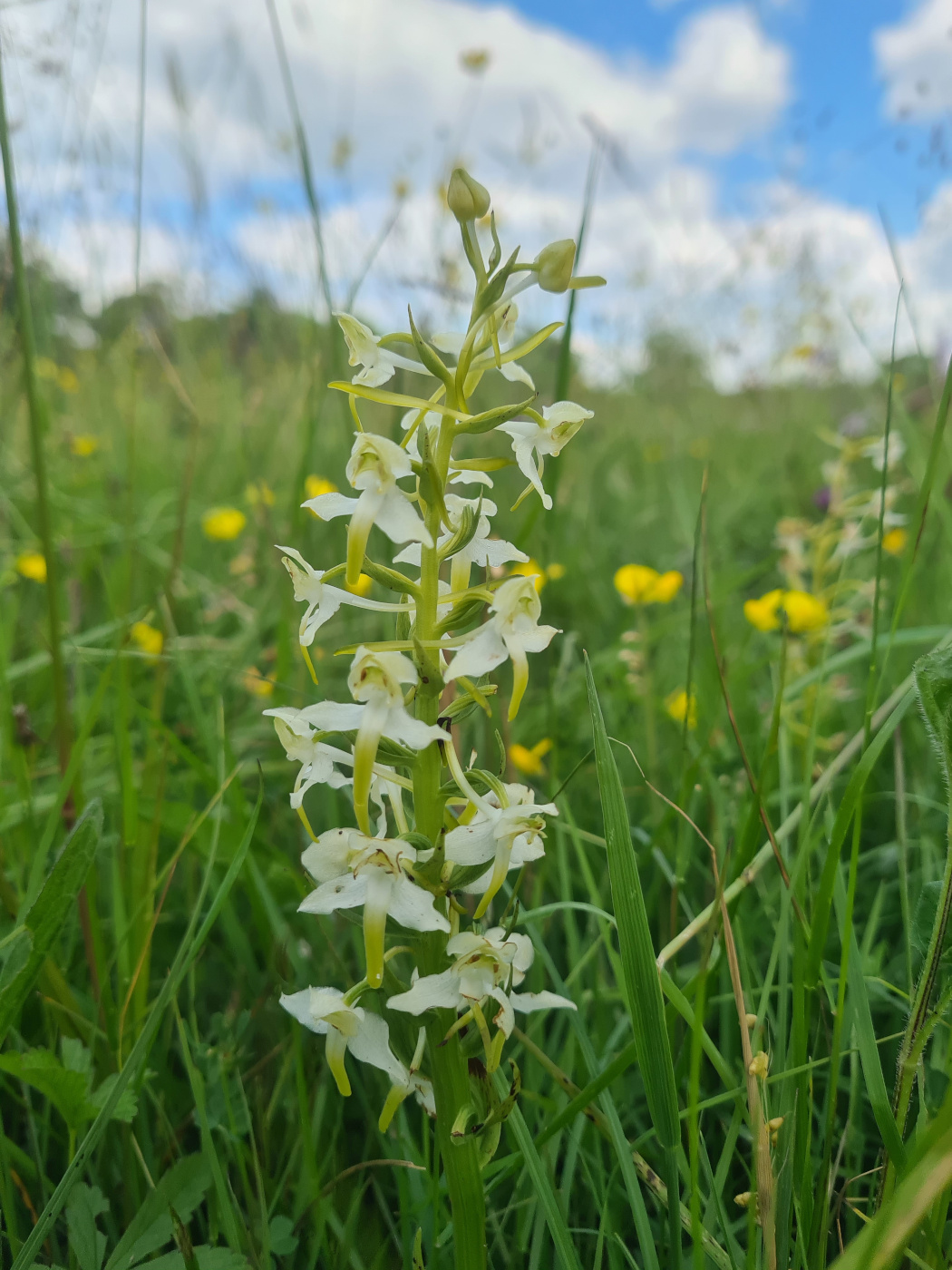
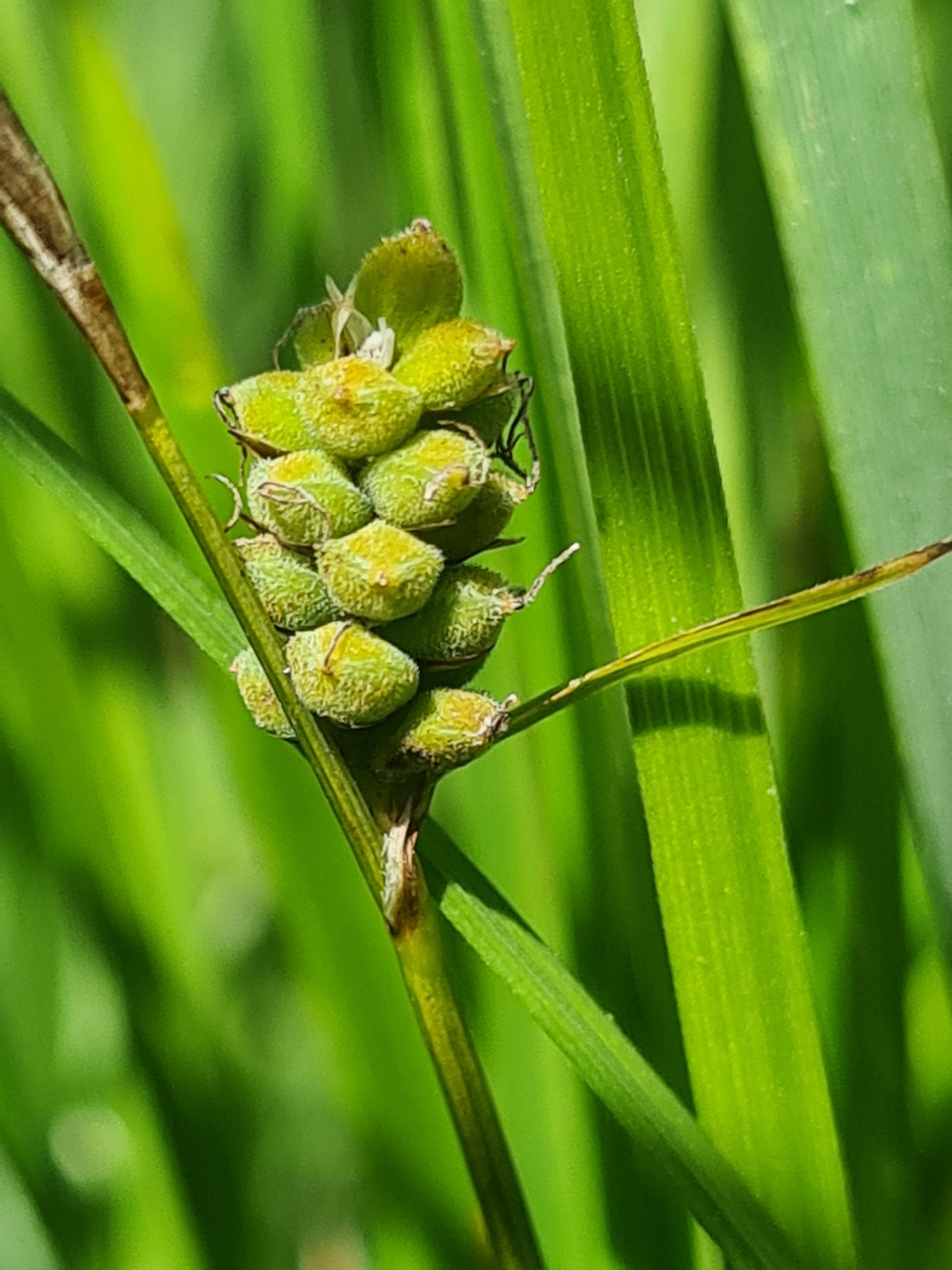
We were soon intrigued by the rich and varied flora. There were numerous species characteristic of old unimproved grassland, such as Ophioglossum vulgatum (Adder’s-tongue), Silaum silaus (Pepper-saxifrage), Trifolium medium (Zig-zag Clover), Hordeum secalinum (Meadow Barley) and Primula veris (Cowslip). There was frequent Lathyrus nissolia (Grass Vetchling) just coming into flower, and several flowering spikes of Platanthera chlorantha (Greater Butterfly-orchid) which, although not uncommon in grassland in other counties, is more usually found in woodland in Sussex. Species of more calcareous soils included Briza media (Quaking-grass) and Fairy Flax (Linum catharticum), while at the northern end were plants of damp acid grassland such as Juncus acutiflorus (Sharp-flowered Rush). A puzzling purple orchid was later determined as an odd form of Dactylorhiza praetermissa (Southern Marsh-orchid). Star of the show was a small sedge with pubescent utricles. As we discussed it over lunch the conviction grew that it could be Carex filiformis (Downy-fruited Sedge).
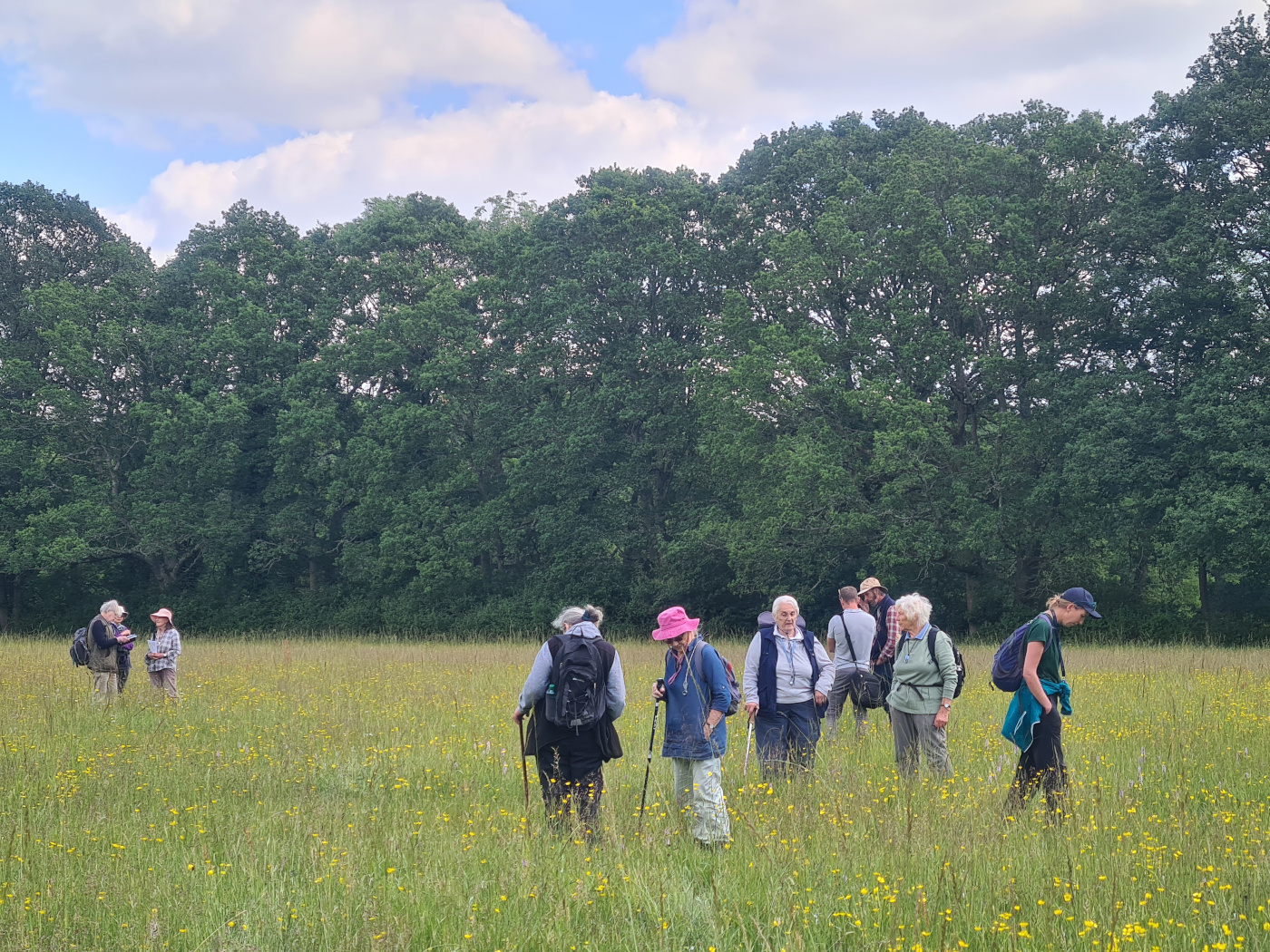
After lunch we entered a coppice where we saw a good number of species suggesting the ancient origins of the wood. Amongst much Hyacinthoides non-scripta (Bluebell) we were pleased to find Ranunculus auricomus (Wood Buttercup), Sanicula europaea (Sanicle) and, another sign of calcareous soils, several bushes of Daphne laureola (Spurge-laurel). Best of all was a small clump of Cardamine impatiens (Narrow-leaved Bitter-cress): there were formerly about six sites in woods around Kirdford and Ebernoe, but most have been lost to scrub and it is now rare in Sussex. On our way back we crossed one more meadow and were delighted by an estimated count of 50 Platanthera spikes and more of the morning’s grassland plants. Back at the house, invited indoors for tea, we scoffed a magnificent pumpkin cake. Thank you for a great day, Richard and Rick!