
Normans Bay
Meeting date: 25 May 2024
(Leader: Evan Jones)
Fifteen members assembled at the Caravan Park. The owner had kindly offered access permission to the car park and the SSSI on his land in TQ60X. We visited the only unit of the Pevensey Levels SSSI that is south of the coastal railway and which goes across the sandy and shingly beach down to the seashore. The top shore flora was dominated by Glaucium flavum (Yellow-horned Poppy) and Crambe maritima (Sea-kale). Other habitats include vegetated shingle, shingle lichen-heath, saltmarsh, brackish meadow, a shallow brackish lagoon and scrubby coastal meadow as well as a substantial chalk bank. As it is privately owned with no public right of access, it has remained rather overlooked and its botany unsung.
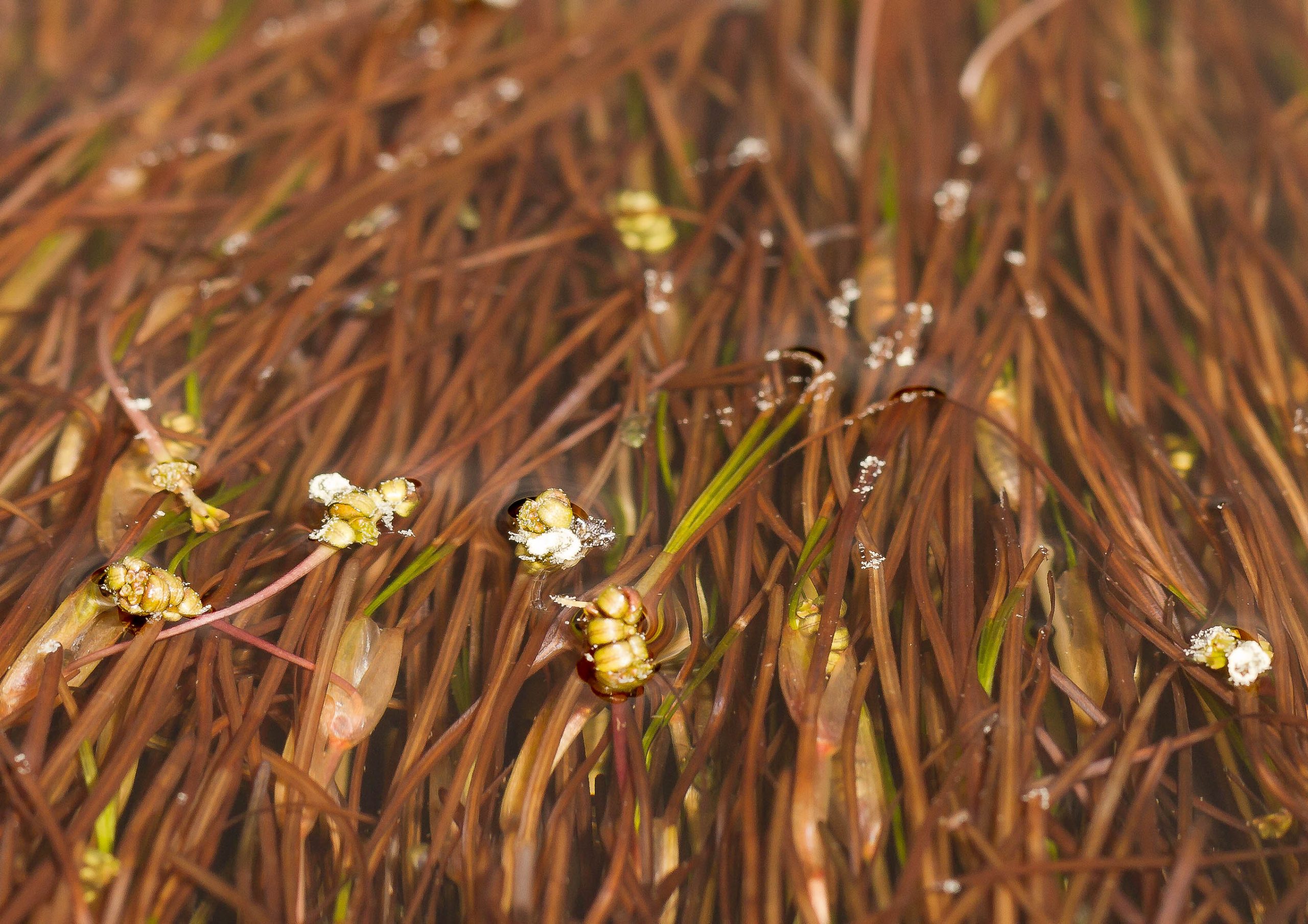
We headed onto the beach ridge to spot the leaves of Galeopsis angustifolia (Red Hemp-nettle). On reaching the vegetated shingle and lichen heath, the group immediately collapsed to the ground and lay in huddles around patches of small, barely noticeable plants. Words like Knotted, Suffocated, Rough and Clover could be overheard. These were Trifolium striatum, T. suffocatum and T. scabrum. In saltmarsh behind the beach there was Juncus gerardii (Saltmarsh Rush) and Bolboschoenus maritimus (Sea Club-rush). The only plant in the brackish lagoon was Ruppia spiralis (Spiral Tasselweed, formerly R. cirrhosa), bursting its pollen onto the surface of the water to be passed on to the little female flowers that also reached up to the surface from a mass of fine underwater leaves and stems.
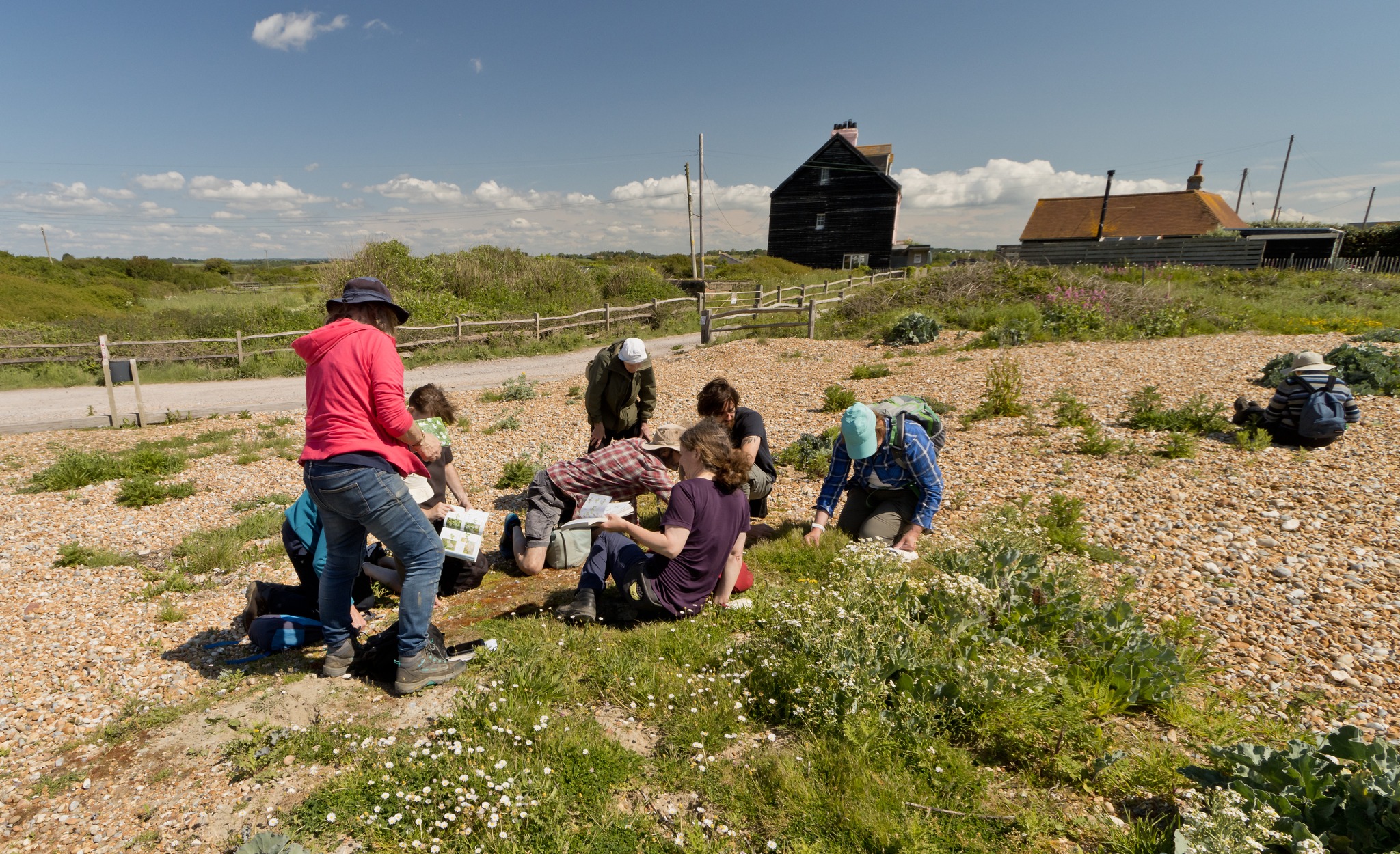
After lunch, we found Carex distans (Distant Sedge) and Lysimachia maritima (Sea-milkwort) in the saltmarsh meadow. We then looked at the back of the beach with shingle covered in Cladonia species, and the rough meadow on old disturbed ground. We went eastwards to the chalk bank (possibly originating at the same time as the railway) where plants like Blackstonia perfoliata (Yellow-wort), Viola hirta (Hairy Violet) and Linum catharticum (Fairy Flax) appeared.
Back at the caravan park shop much ice cream was consumed. The list, a respectable 123 species long, included several rarities. Thanks to everyone attending for making a very pleasant group event. If we can alert Natural England to the special biodiversity of this little known coastal area perhaps they can more ably conserve it!