
Eridge Rocks
Meeting date: 8 October 2023
(Leader: Brad Scott)
A joint meeting with the BBS South-East Bryology Group. Eridge Rocks is such a famous bryological site that it attracted an impressive group of eighteen people, including two curators from the Natural History Museum (and their children). With a wide spectrum of expertise present, the meeting was a continual delight, featuring descriptions of the characters of common species, locating rare ones, and Brad chipping in on the long history of botanical visitors to the rocks. At least one person was nearly an hour late, but the group was easily located as we were still at the first outcrop right by the car park, already overloaded with the site’s specialities, including the liverworts Odontoschisma denudatum, Barbilophozia attenuata, and Calypogeia integristipula, together with the moss Dicranum scottianum.

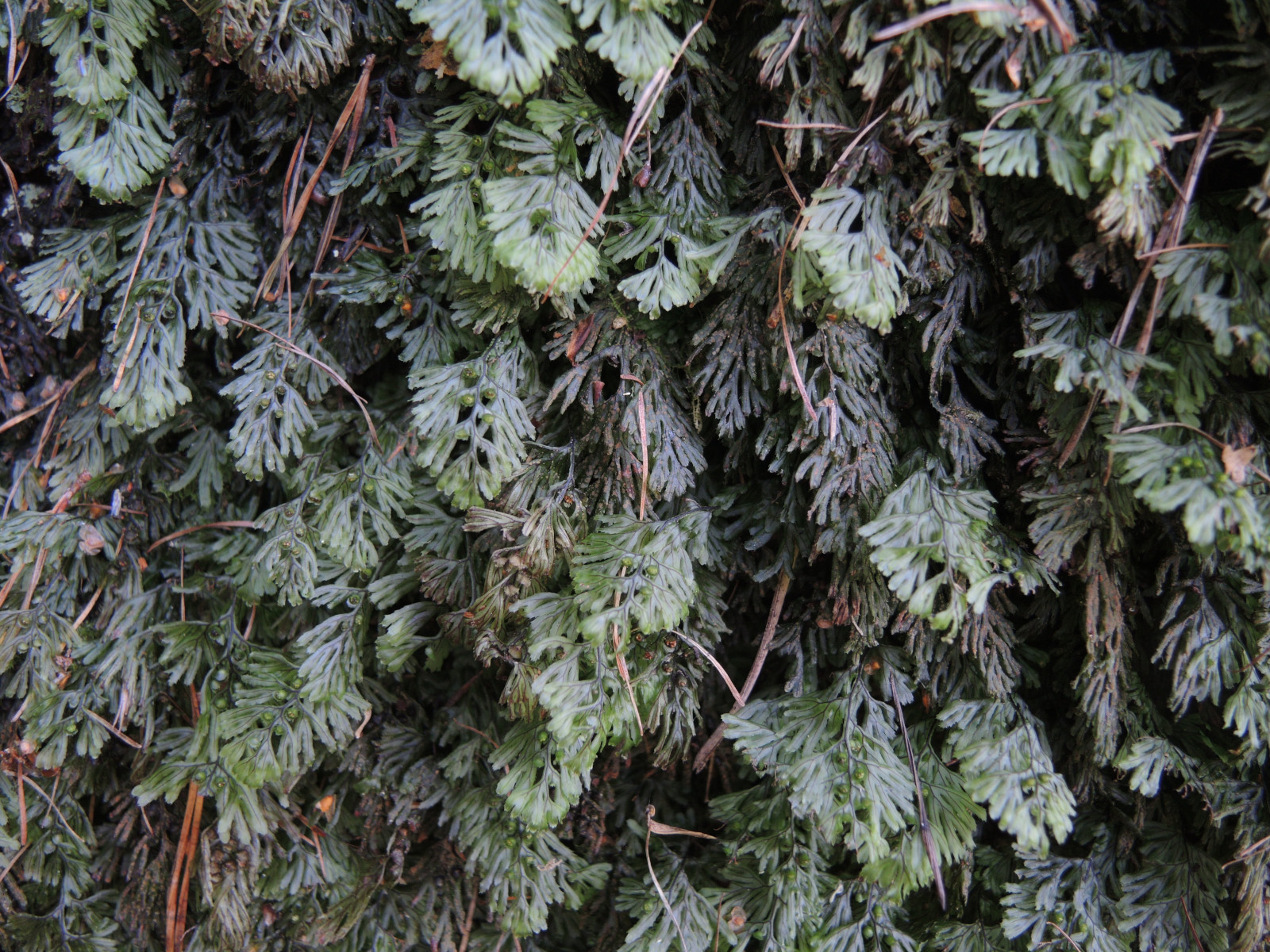
The site is of course also famous for Hymenophyllum tunbrigense (Tunbridge Filmy-fern), which we all admired, and a few even braved a low dark muddy cave to look at the gametophyte of Trichomanes speciosum (Killarney Fern), to which we were directed by Steve Lemon, who found it there some years ago. One of the ‘white mosses’, Leucobryum juniperoideum, was also confirmed; recent work has demonstrated that it is a western species, and this was only the second Sussex record. Many other liverworts that are rare in the south-east were also seen, including Kurzia sylvatica, Lophozia ventricosa and Harpanthus scutatus. The great wall of Bazzania trilobata is a bit diminished compared with a decade ago, but many species were doing very well.
