
Hammer Wood, Chithurst
Meeting date: 13 August 2023
(Leader: Ben Benatt)
Hammer Wood itself consists of approximately 200 acres of semi-natural woodland owned by Chithurst Buddhist Monastery, and we also visited some adjacent land. In addition to standard tetrad recording, the purpose of this field meeting was to revisit old locations and update records for Fallopia dumetorum (Copse Bindweed), Dryopteris aemula (Hay-scented Buckler-fern) and Campanula patula (Spreading Bellflower).
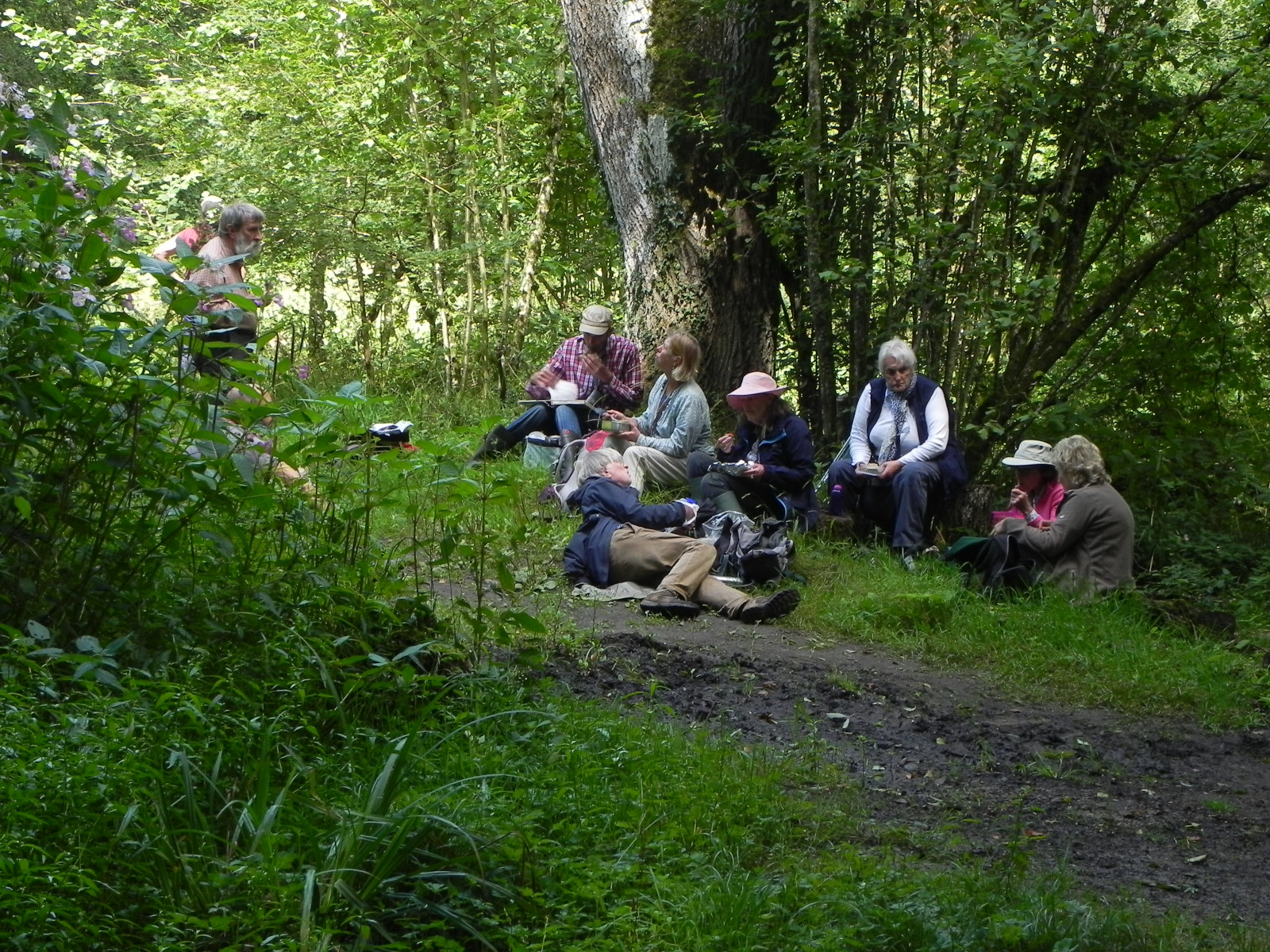
With a good turnout of eminent Sussex botanists we set out across the arable field adjacent to Hammer Wood, where the Campanula was last recorded, but sadly found no sign of this species. However, an interesting arable flora was recorded including an unknown Solanum species that created great intrigue among the group. From here we moved on to the location in Chithurst Lane where Fallopia has been known for many years, and we found the colony to be in good shape with many hundreds of plants spread through the adjacent coppice woodland and path edges. Next we progressed into Hammer Wood and had a pleasant lunch break by Hammer Stream before searching in earnest on the nearby steep shaded bank for the Dryopteris aemula first recorded at this location by Francis Rose many years ago. Unfortunately it was not re-found here, but a number of interesting species were added to our list.
We then moved on around the lake and half the group split off to return via a more gentle gradient. The intrepid scaled a steep slope up to the north-eastern part of the wood to inspect a location where Fallopia dumetorum had been found by Ben in 2023. In this recently coppiced woodland compartment, we did not manage to find further examples of this rare species, but we did add such delights as Senecio sylvaticus (Heath Groundsel), Gnaphalium sylvaticum (Heath Cudweed) and Gnaphalium luteoalbum (Jersey Cudweed). The other part of our contingent also recorded some interesting species on their way back at the downstream end of Hammer Pond, including two small plants of Dryopteris aemula, which have been known here for some years. The species lists from this field meeting, and management advice related to the conservation of the interesting species present, will be fed back to the Hammer Wood management committee.