
Battle Great Wood
Meeting date: 14 August 2021
(Leaders: Jacqueline Rose and Judy Clark)
Ten members, including four new members, gathered in the car park on a dry and sunny day. On entering the wood we paused to look at some planted trees that included Paulownia tomentosa (Foxglove Tree) and a tall Eucalyptus gunnii (Cider Gum), astonishingly adorned with a wheelbarrow high on its trunk.
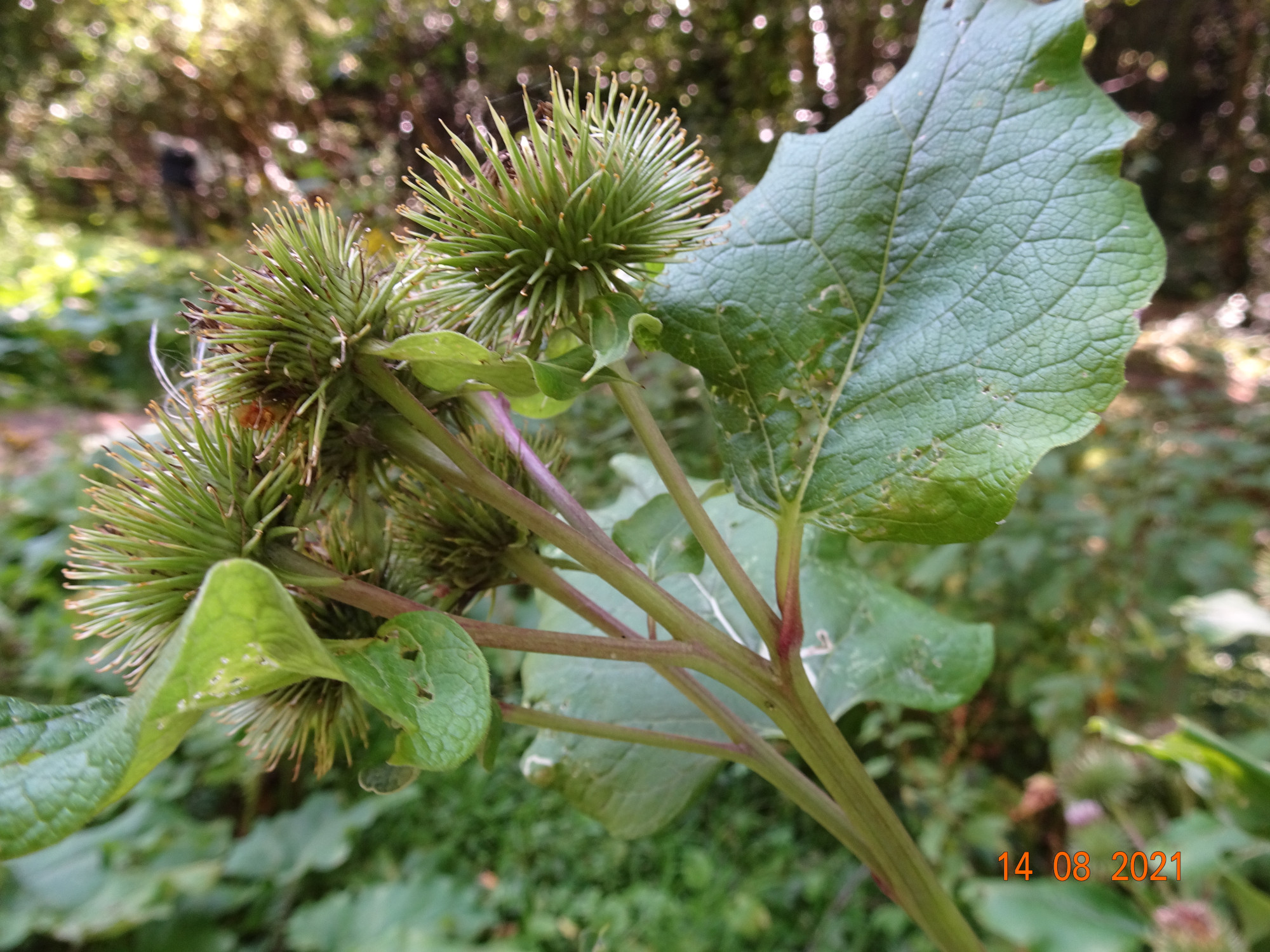
It was interesting to see Verbena officinalis (Vervain) and Blackstonia perfoliata (Yellow-wort), both more usually found in calcareous rather than acid habitats. David Streeter described the ID features of Centaurea debeauxii (Chalk Knapweed) as described in Stace (4th edition page 737). Intermediates between this and C. nigra are common. The verge flora became more diverse as the ride became more open. Species such as the hemi-parasite Odontities vernus (Red Bartsia) and Agrimonia eupatoria (Agrimony) were flowering profusely, along with numerous Eyebright plants (probably Euphrasia nemorosa), while in a drier spot the tiny Centaurium pulchellum (Lesser Centaury) displayed its deep pink flowers. David found a candidate for the uncommon Arctium nemorosum (Wood Burdock). Turning off the main ride the edges became more heathy, with species typical of acid habitats such as Succisa pratensis (Devil’s-bit Scabious), Solidago virgaurea (Goldenrod), Molinia caerulea (Purple Moor-grass), Hieracium sabaudum (Autumn Hawkweed) and Calluna vulgaris (Heather). Lastly, participants could compare the fruits of Agrimonia procera (Fragrant Agrimony) with those of A. eupatoria. But the day was not yet done with surprises. Flowering in a puddle at the edge of the track, without a brackish ditch in sight, was Samolus valerandi (Brookweed).