
Nap Wood
Meeting date: 17 April 2024
(Leaders: Jacqui Hutson & Sue Rubinstein)
Fourteen SBRS members plus a National Trust ranger met at the entrance to Nap Wood on a chilly but dry day, a relief after such a long spell of rainy weather. We headed on the main western path on the plateau. Progress was slow because of the dense patchwork of bryophytes encountered on the steep banks of the holloway. Robust woodland mosses including Polytrichum formosum, Mnium hornum and Dicranum scoparium jostled for space with leafy liverworts, notably Diplophyllum albicans and Lepidozia reptans. Two tiny epiphytes, Orthotrichum pulchellum with pixie hat lids on minute capsules and Microlejeunea ulicina (Fairy Beads) grew on Silver Birch at the top of the wood. Vascular plants were less interesting in the oak-beech woodland with Rowan, Holly and Yew being occasional. Hyacinthoides non-scripta (Bluebell) and Pteridium aquilinum (Bracken) were the most common components of the field layer with a few sightings of Juncus effusus (Soft Rush), J. tenuis (Slender Rush), Luzula pilosa (Hairy Wood-rush) and Deschampsia flexuosa (Wavy Hair-grass). It was too early in the season for most ferns but Dryopteris dilatata (Broad Buckler-fern) was abundant in this higher part of the wood. A heathy area was carpeted in invasive Campylopus introflexus (not recorded on the last bryophyte survey in 2015), leaving space for a scruffy tuft of Campylopus pyriformis. Leucobryum albidum grew in pale cushions on Sweet Chestnut coppice stools.
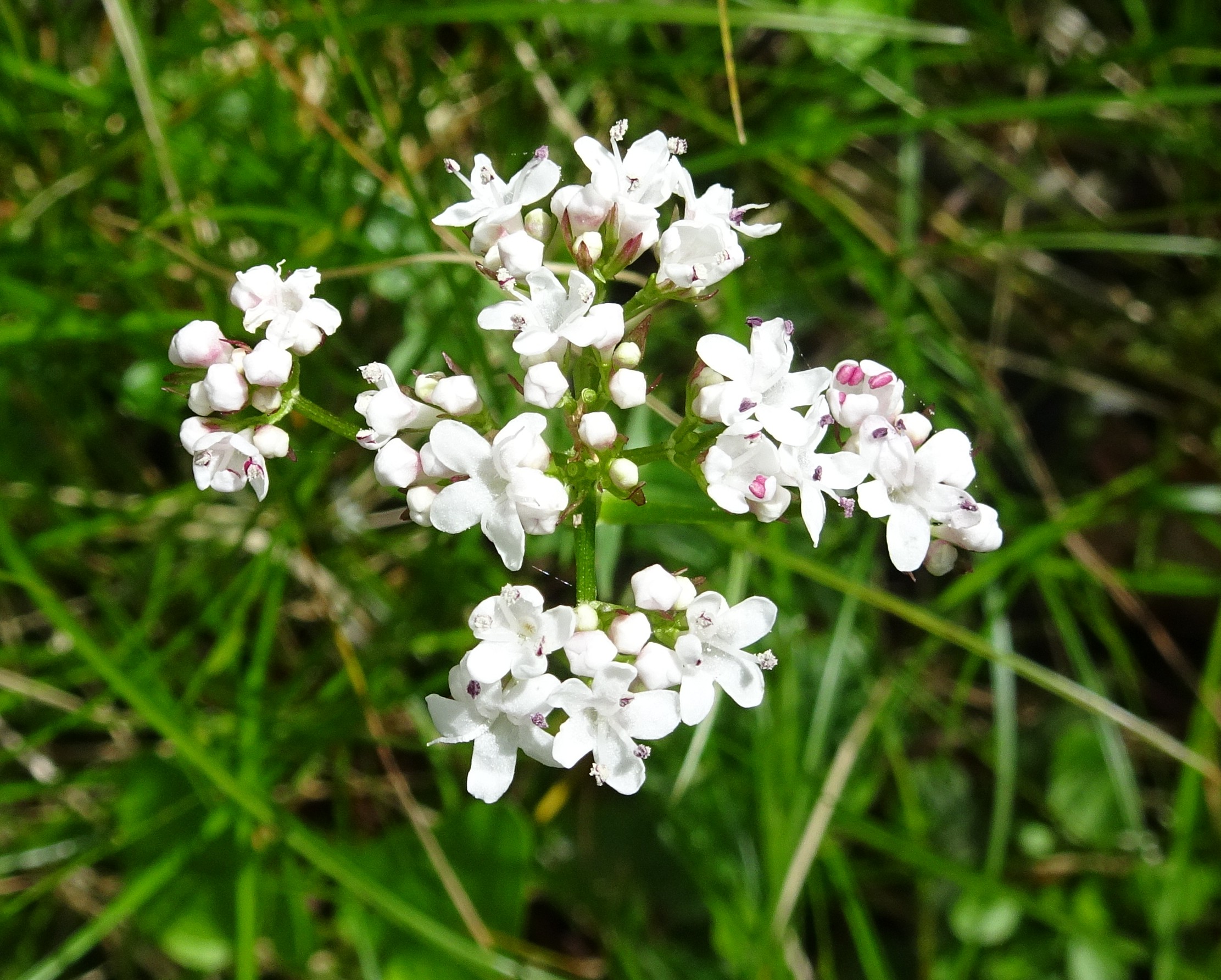
Descending towards the stream was challenging in places because of fallen trees but it was well worth the effort. The wetter flushes by the stream had a more diverse collection of vascular plants, with Mercurialis perennis (Dog’s Mercury) and Sanicula europaea (Sanicle) indicating a higher soil pH in places. The highlights of the streamside flora were the discovery of a large patch of flowering Valeriana dioica (Marsh Valerian) on squidgy ground and four plants of flowering Cardamine bulbifera (Coralroot). It was also nice to find a single plant of Dryopteris carthusiana (Narrow Buckler-fern) in its rightful place in the wet. Dryopteris aemula (Hay-scented Buckler-fern) was perched high on a well-drained bank. The new growth of the latter with its pinnules curled up at the edges giving fronds a crinkly appearance, was just emerging through the tangle of the old winter-green fronds.
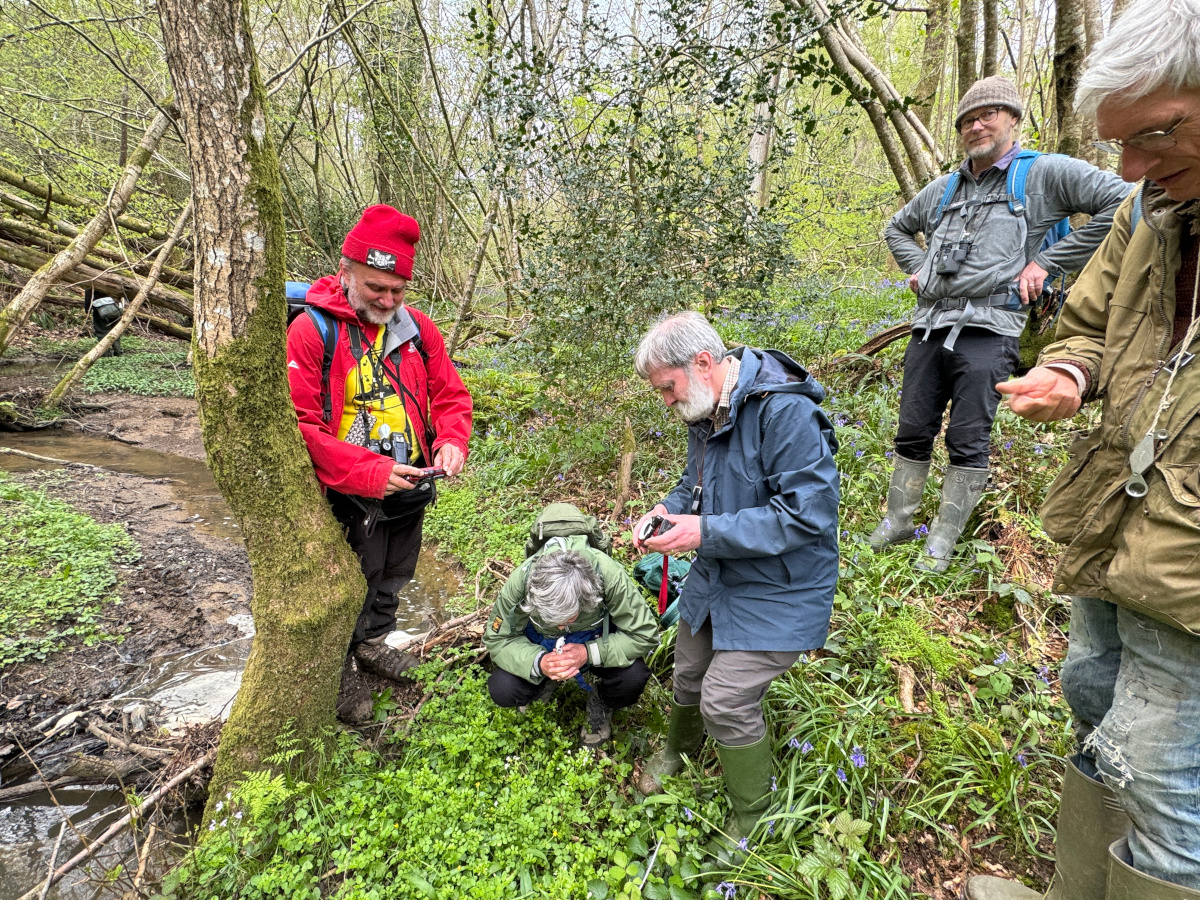
The stream banks held a rich bryophyte flora, and the flushes contained a scrunchy, glistening mass of Hookeria lucens but we were struggling to find Trichocolea tomentella (Handsome Woollywort) which was recorded in three places along the stream in 2015. Dave, Ben and Sim found it, just hanging on in a flush overhanging the stream. A mass of Riccardia multifida further up the flush is a new record for the wood.
After lunch we started on the uphill trek back to the start but on the way were delighted to find three patches of Cardamine amara (Large Bitter-cress) with its distinctive purple anthers. Nearby, Zygodon stirtonii and Isothecium alopecuroides grew on the trunk of a large Ash and Thelotrema lepadinum (Barnacle Lichen), an ancient woodland indicator, grew on Hazel. In total, we recorded 75 vascular plant taxa including nine new records for the wood. Most notable among the latter was Marsh Valerian. Another new species was Poa nemoralis (Wood Meadow-grass), an ancient woodland indicator which may be under-recorded. 67 bryophyte species were recorded, including 10 new records for the wood. An enjoyable day with congenial and knowledgeable company.
See also Sue’s report of this meeting on the Sussex Bryophytes blog.