Wiggonholt
Meeting date: 1 May 2021
(Leaders: Nick and Elisabeth Sturt)
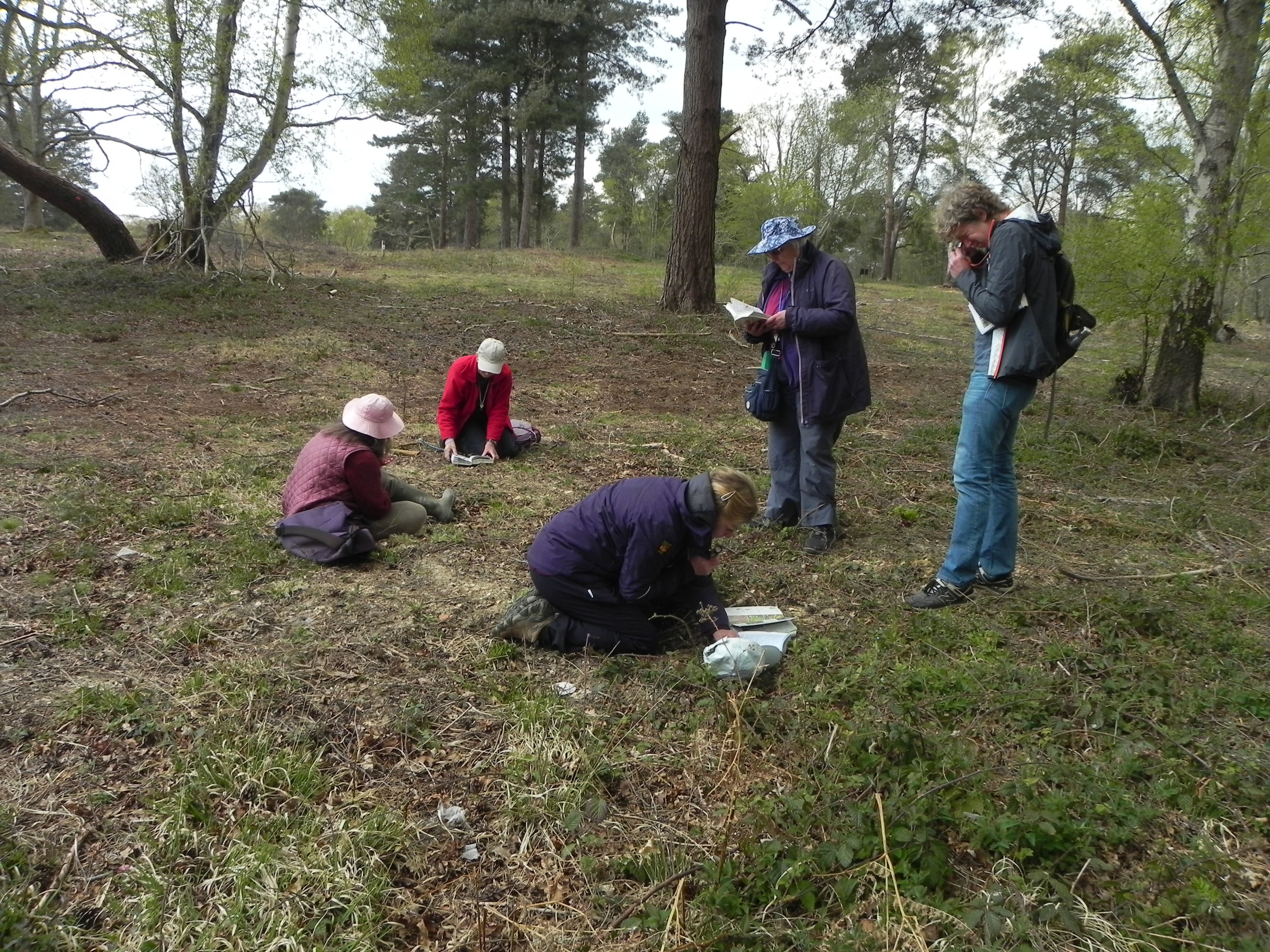
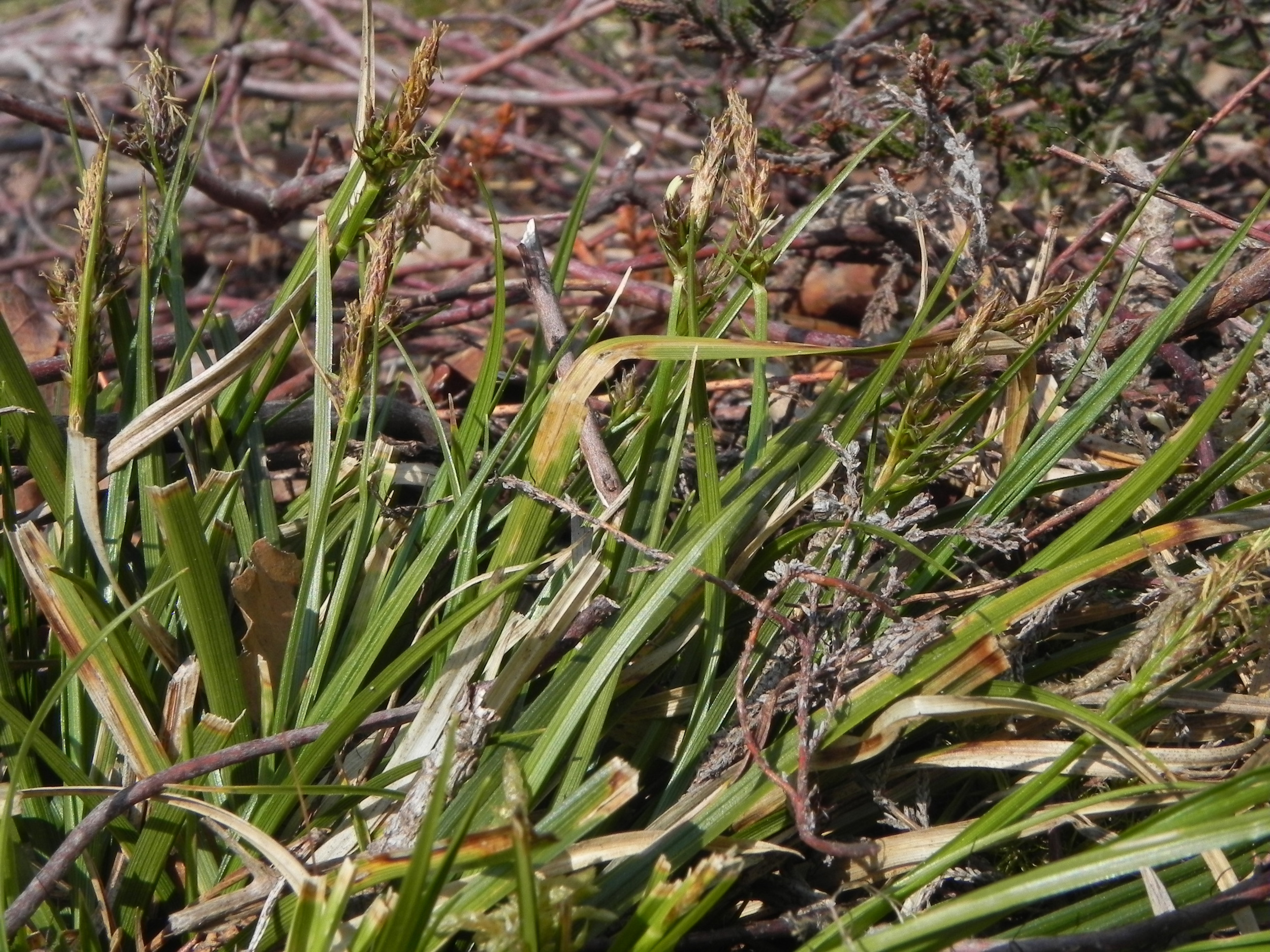
Back in the field together at last! Two groups of six assembled on different sides of the lane in order to observe the statutory guidelines in place. It was clear that for some at least the experience of being in company felt a trifle strange but all that wore off early on as East Group concentrated on the area known as The Triangle where much clearing had taken place, with Juncus squarrosus (Heath Rush) arguably the most conspicuous of the species to be asserting itself by the sandy tracks. There was much Calluna vulgaris (Heather) and just a couple of spots of Erica cinerea (Bell Heather) were discovered, but the E. tetralix (Cross-leaved Heath) was all in the tetrad to the south of TQ01T. Meanwhile West Group, under the command of Elisabeth, was working its way very slowly up to the extension RSPB car-park, arriving just as East had begun a hands-and-knees search there – which was rewarded with Myosotis discolor (Changing Forget-me-not), Filago vulgaris (Common Cudweed) and crispy scraps of Stellaria pallida (Lesser Chickweed). Of the showier plants, Anchusa arvensis (Field Bugloss) was the most notable and then soon it was time for lunch – the parties well separated on the grassland by the RSPB drive.
Rain arrived rather earlier than expected and West was able to shelter under some conifers while East had further to travel, viz to the porch of Wiggonholt church. A nightingale sang by the pond as we hurried past but inevitably a fair number of plants were missed (a fairly conspicuous patch of Trifolium subterraneum (Subterranean Clover) outside the church for one) and when the cards were totted up at the end of the day this was probably the crucial factor which led to the ignominious defeat of East. Not that it was a competition, we Easterners were quick to point out as some of the less civilised Westerners leapt in the air, threw cartwheels and jeered. Analysis of the records later brought to mind the scientific experiments conducted by Tim Rich some 30 years ago: he set different groups the task of recording each other’s fixed routes (including in different directions) to try to shed light on margins of error inherent in plant recording. To sum it up, however, Wiggonholt was a day memorable for reunions and pleasurable botany in interesting territory. The overall tally of 174 would have been higher had not April been so cold and so dry but, for the record, East bagged 160 species and West 132. Not, of course, that it was a competition!