
Glaucium flavum (Yellow Horned-poppy)

We must head to the coast for our next #SxPOTW, which is one of my favourite plants. Not only does it have beautifully flouncy, bright yellow, papery flowers; it has the most spectacularly long seed pods of any of our native plants. They look like ludicrous French beans, curving up to a foot long in some cases. Each plant can produce up to 60,000 kidney-shaped, black shiny pitted seeds.
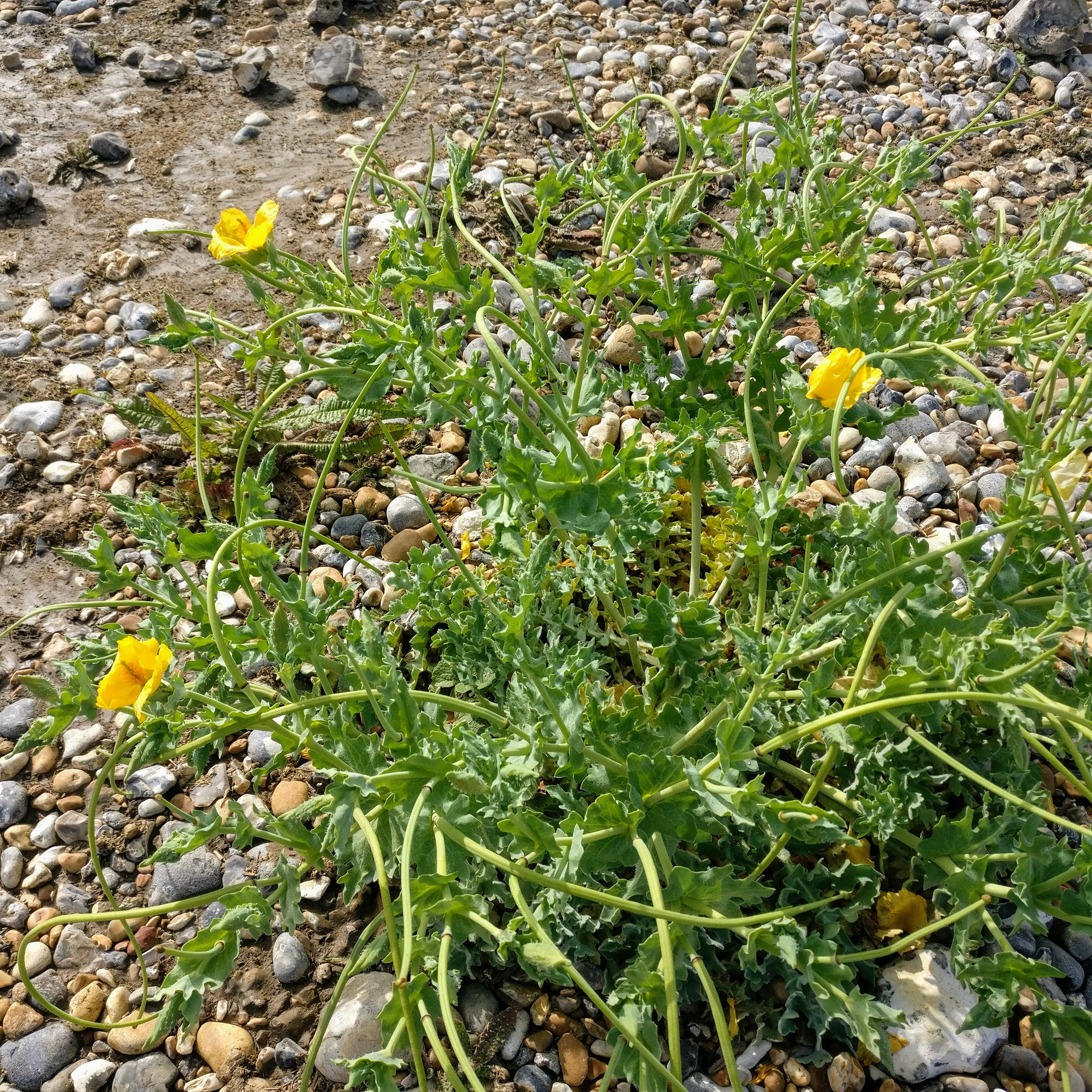
It is a plant of maritime shingle. A demanding habitat shared with a number of other specialist plants such as Crambe maritima (Sea Kale) and Solanum dulcamara var. marinum, the procumbent variety of Bittersweet.
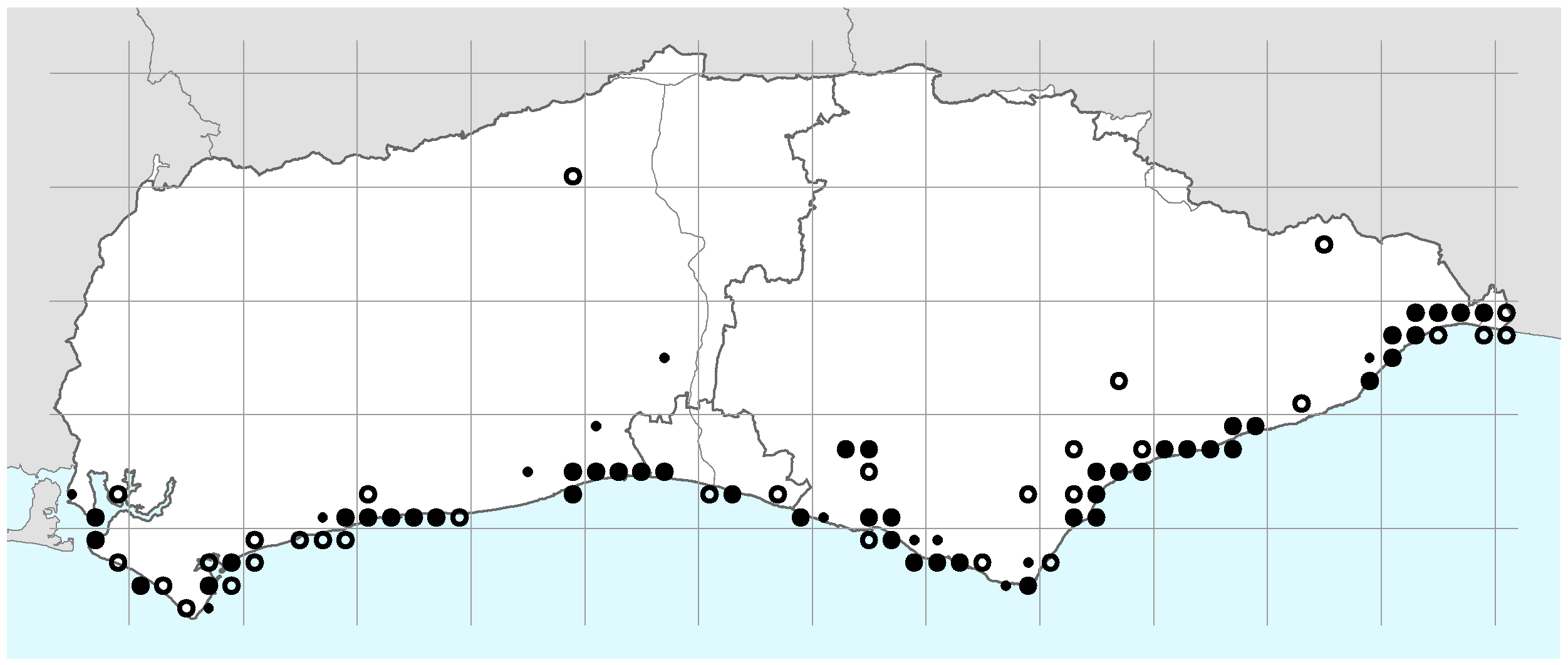
Native. Sx: locally frequent. Shingly and sandy shores; cliffs. Successfully survives increasing human pressure in coastal habitats. Inland, it usually occurs on imported soil, but in 2008 over 20 plants were recorded on the eroding face of an old chalk pit near Tas Combe (TQ50W RPW/MBE).
Source: Glaucium flavum Crantz Yellow Horned-poppy, The Flora of Sussex (2018)
It is a biennial or short-lived perennial with yellow/orange latex and all parts of it are poisonous. The thick leathery pinnately divided leaves are covered with a layer of wax and hairs to reduce water loss.
Glaucine, the main active alkaloid, causes a variety of symptoms, including hallucinations. There’s a story in Geoffrey Grigson’s book, The Englishman’s Flora, of an account sent to the Royal Society in 1698, in which someone made a pie with the roots of G. flavum having mistaken them for those of Eryngium maritimum (Sea Holly). Eating it he became delirious and “…voided a stool in a white chamber pot, fancied it to be gold, breaking the pot in pieces, and desiring what he imagined as gold might be preserved as such. Also his man and maid servant eating of the same pye, fancied of what they saw to be gold.”