
Searching for mosses in early eighteenth century Sussex
Source: Scott, Brad. “Searching for mosses in early eighteenth century Sussex.” Sussex Botanical Recording Society Newsletter, no. 92 (January 2021). https://www.sussexflora.org.uk/wp-content/uploads/2022/02/Newsletter_jan_21.pdf.
Botany did not start with Linnaeus; for at least two hundred years before Species plantarum was first published in 1753, the booksellers of Europe traded in herbals and other books listing plants, their descriptions and uses. At a national level, David Pearman (2017) has reported that about 85 per cent. of the native lowland vascular plant flora of Britain and Ireland had been described by the 1720s, which is a remarkable statistic. The same is not true for the bryophytes, lichens and fungi, though these taxa certainly do appear to some extent in books from the sixteenth and seventeenth centuries, for example in works by Bauhin, Tabernaemontanus, Tournefort and Ray.
The earliest published ‘botanical’ works are primarily descriptive, including medicinal and cultural uses of plants, and such content continues into the seventeenth century and beyond, alongside the more taxonomic focus of the later texts.
Nationally, Mark Hill has been working on an account of the early bryophyte records, and that text is eagerly awaited. For now, I’d like to focus on Sussex, and illustrate the (limited) extent of the study of this group of plants in the county some three hundred years ago.
For this, our sources are the works and herbarium of Johann Jacob Dillen, otherwise known as Dillenius (1687–1747), who was from the German state of Hesse, where his father was professor of medicine at Giessen. Though initially also starting out on a medical career, the young Dillenius developed an interest in plants and compiled his first book on the local flora in 1718. Not only did it include vascular plants, but also what Linnaeus subsequently called the cryptogams (mosses, algae, fungi and lichens). His work attracted the attention and correspondence of William Sherard, who enticed Dillenius to England in 1721 where he embarked on the third edition of John Ray’s great work Synopsis methodica stirpium britannicarum (1724). Elected FRS in 1724, Dillenius eventually became professor of botany at Oxford, probably in 1735, hosted Linnaeus in Oxford during the summer of 1736, and his ground-breaking Historia muscorum was published in 1741 (Boulger 2004; Kippis 1778–1793).
It isn’t clear how Dillenius met Thomas Manningham (1684–1750), though the eighteeenth century educated elite was quite a small network of people. Manningham was rector of Slinfold and Selsey, and his father the bishop of Chichester. His botanical excursions with Dillenius are frequently alluded to in the 1724 book and include discoveries of what we now know as Geranium purpureum (Little-Robin), Petrorhagia nanteuilii (Childing Pink) and Oenanthe lachenalii (Parsely Water-dropwort) at Selsey and the Manhood peninsula. He also found Ornithogalum pyrenaicum (Spiked Star-of-Bethlehem) at Fishbourne, and is the likely discoverer of Tephroseris palustris (Marsh Fleawort) at Amberley Wild Brooks. Like Borrer after him in Henfield, Manningham’s garden is probably the source of several other interesting plants in the vicinity of Slinfold: Asplenium maritimum (Sea Spleenwort); Euphorbia corallioides (Coral Spurge); and Cardamine impatiens (Narrow-leaved Bitter-cress) (Abraham et al. 2018).
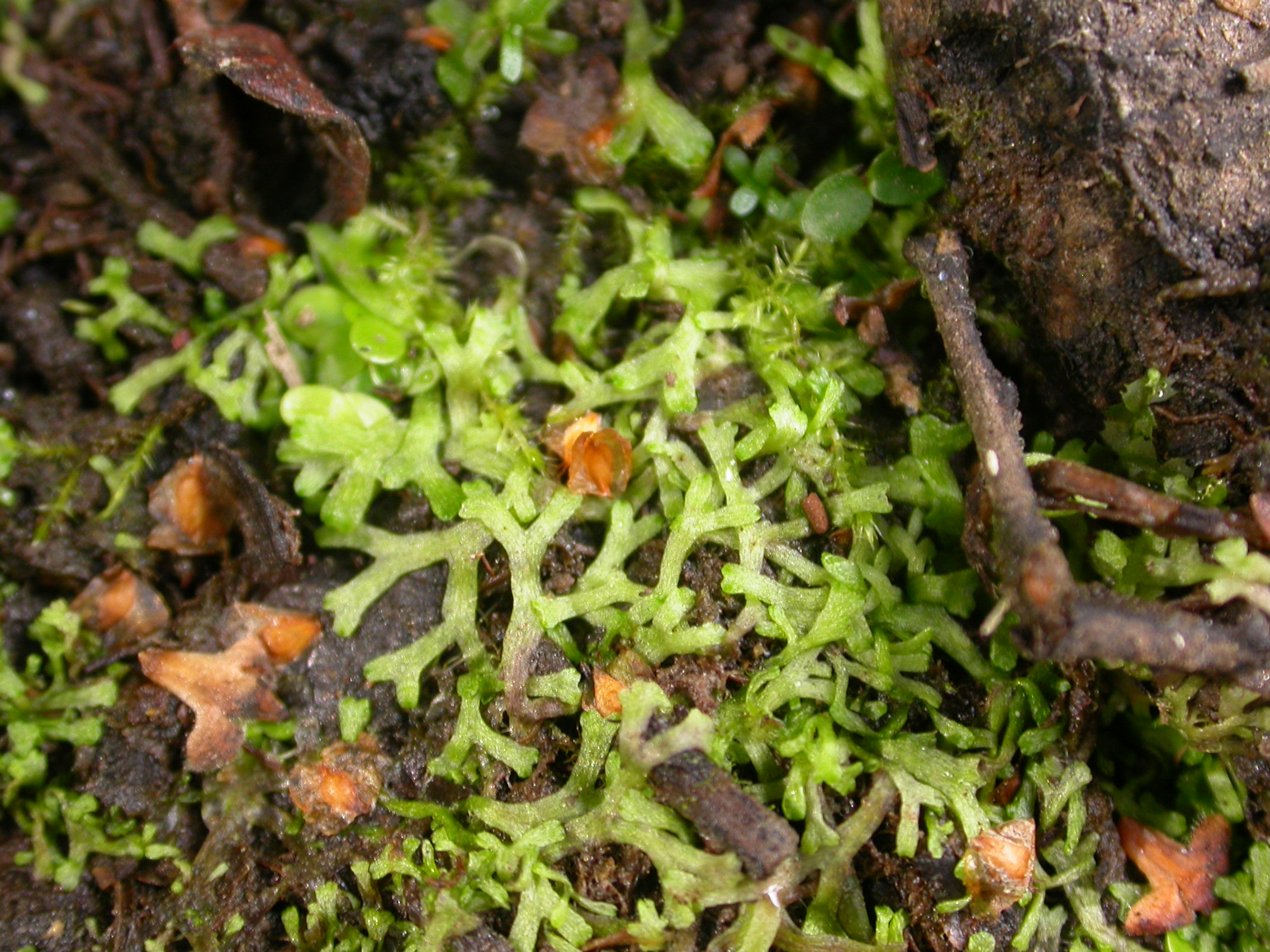
Also in the third edition of John Ray’s (1724) book we find the earliest reliable published bryophyte records for Sussex, in which Manningham also figures. On page 63 there is a plant named as ‘Ulva palustrus furcata, angustioribus & firmioribus segmentis’. Mapping the polynomial names to their modern equivalents can often be a bit tricky, but was clearly a common problem in the eighteenth century as attested by the existence of Giseke’s index (1779) which provides a mapping between the names in Historia muscorum to those in Species plantarum, though it is not always a reliable guide to the modern taxon. This particular plant is an instance of the liverwort Riccia fluitans, which Dillenius notes that ‘Mr. Manningham and I observed it plentifully in the Ditches about Chichester’. It is noteworthy that Dillenius names it as Ulva, which is now a genus of green seaweeds, and indeed this plant has that quality about it.
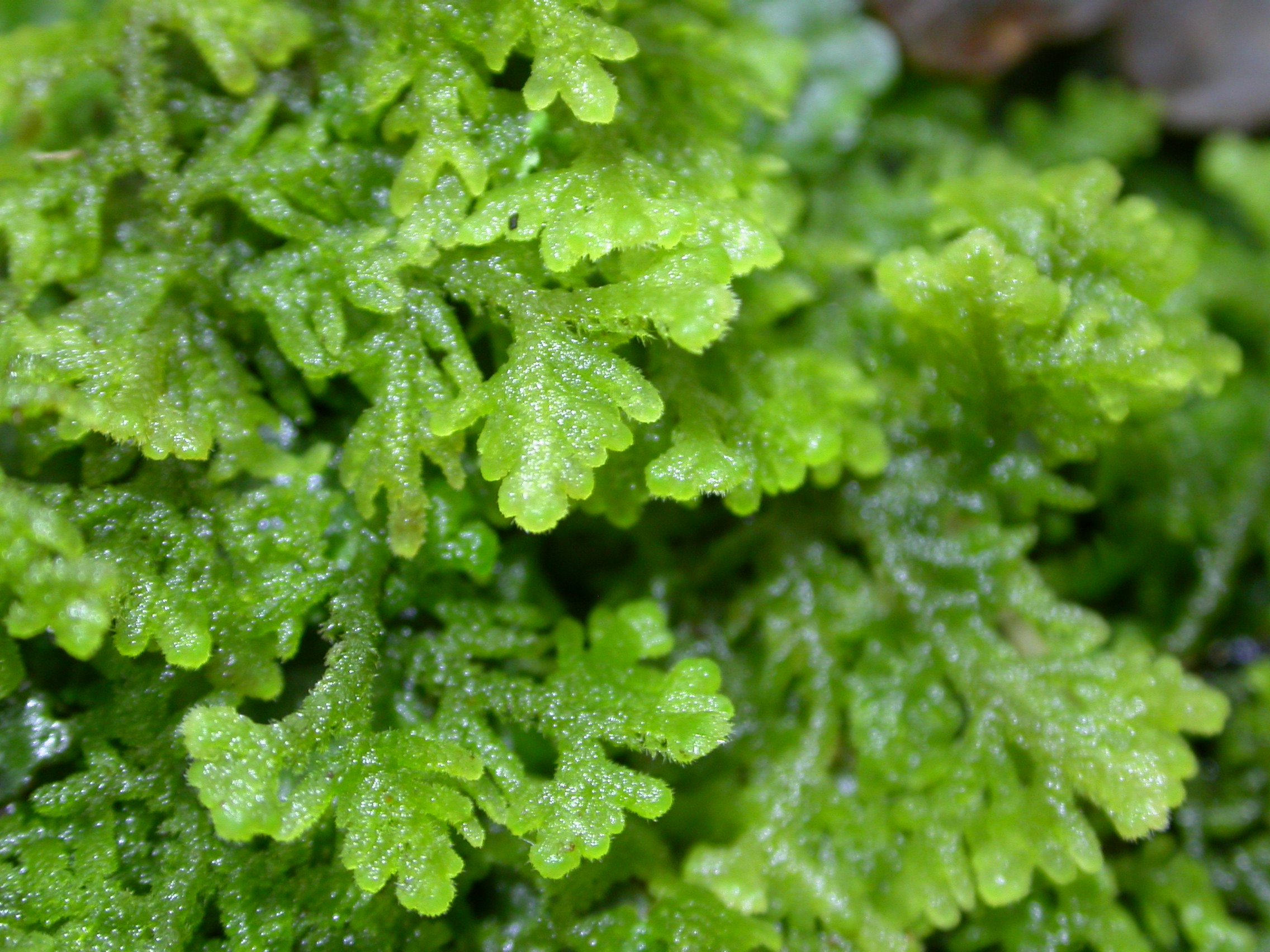
Later in the same book (p. 111) we find a species described as ‘Lichenastrum filicinum crispum’, found near Chichester by Manningham, and subsequently given the more amplified (and accurate) name ‘Lichenastrum filicinum pulchrum villosum’ in Historia muscorum. Dillenius also crafted the English name ‘The handsome woolly Fern-like Lichenastrum’, and we now know this stunning liverwort as Trichocolea tomentella; charmingly, the English name in the current field guide (Atherton et al. 2010), ‘Handsome Woollywort’, has Dillenian echoes. Importantly for us, this is the only record of this plant from anywhere near Chichester, and it is hard to imagine where it might have been, being typically found in flushed banks in woodland, and is only known from scattered sites around Sussex, mostly in the Weald and on the Greensand.
Alongside Dillenius’ books there is also the herbarium, which adds additional collections and details. Usefully, George Claridge Druce compiled an extensive annotated guide to the Dillenian herbarium (1907), which includes other Sussex plants probably collected after the publication of the Synopsis.
The first (referencing p. 78 of the Synopsis) was ‘On Tunbridge rocks 1733 in July’ and is described as ‘Mnium minus non ramosum, angustioribus & pellucidis foliis’. That this was almost certainly in Sussex is suggested when another Dillenius herbarium note described a different plant at Tunbridge rocks, Hymenophyllum tunbrigense (Tunbridge Filmy-fern), ‘which rocks are about a mile off from Tunbridge Wells, lying west or rather north west’. This is surely High Rocks, and they and the other sandrocks in the area are still home to abundant Tetraphis pellucida.
Another specimen ‘from Dr. Manningham’ was ‘Hypnum terrestre erectum’ (p. 81) to which Druce added the note ‘doubtless from Sussex’. The identity of this plant is slightly ambiguous from The Dillenian Herbarium, and it could either be Leucodon sciuroides or (as the Druce note appears to suggest) Pseudoscleropodium purum. Druce similarly annotates ‘Hypnum erecturm aut fluitans aquaticum’ as ‘from Dr. Manningham’, adding that it was ‘A Sussex spec[imen]’, and recording the determination Hypnum Kneiffii, which is now known as Leptodictyum riparium (Kneiff’s Feather-moss).
Two others in the Dillenian herbarium have more precise location data, and are both from Slinfold: ‘Hypnum repens trichoides arboreum majus, capitulis & surculis erectis’ is the moss with the modern name Anomodon viticulosus; and ‘Lichenastrum capitulis oblongis juxta foliorum divisuras enascentibus’ is a liverwort species complex now named Aneura pinguis.
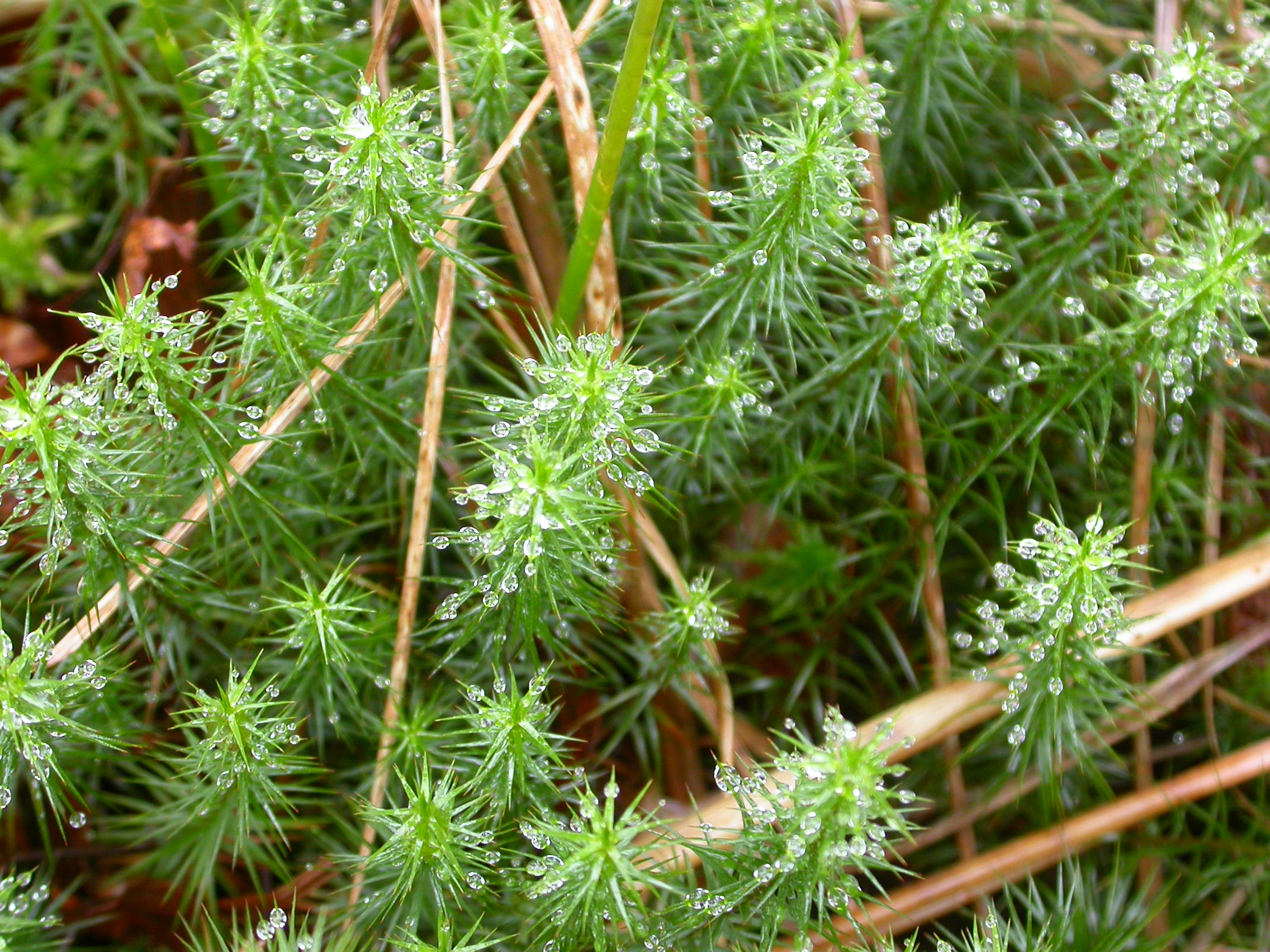
The remainder of the early records were published in Dillenius’ Historia muscorum (1741), and it is worth reminding ourselves that at that time ‘moss’ was much more widely applied than it is by botanists today. Not only does this work include the bryophytes, but also the seaweeds and other algae, lichens, club-mosses, and fungi. In it, the first mention of Sussex occurs in the ‘Uses’ section of the plant he calls ‘Polytrichum quadrangulare vulgare, Juccae foliis serratis’ (p. 421), which he partially translates as ‘The common bigger square-headed Bog Polytrichum, or great Goldilocks’. Here we find that this large moss is used in Sussex for making some sort of broom. There aren’t many bryophytes that you could make a brush with, so it should not be surprising that this is the plant we now know as Polytrichum commune, with its tough stems up to 40 cm long.
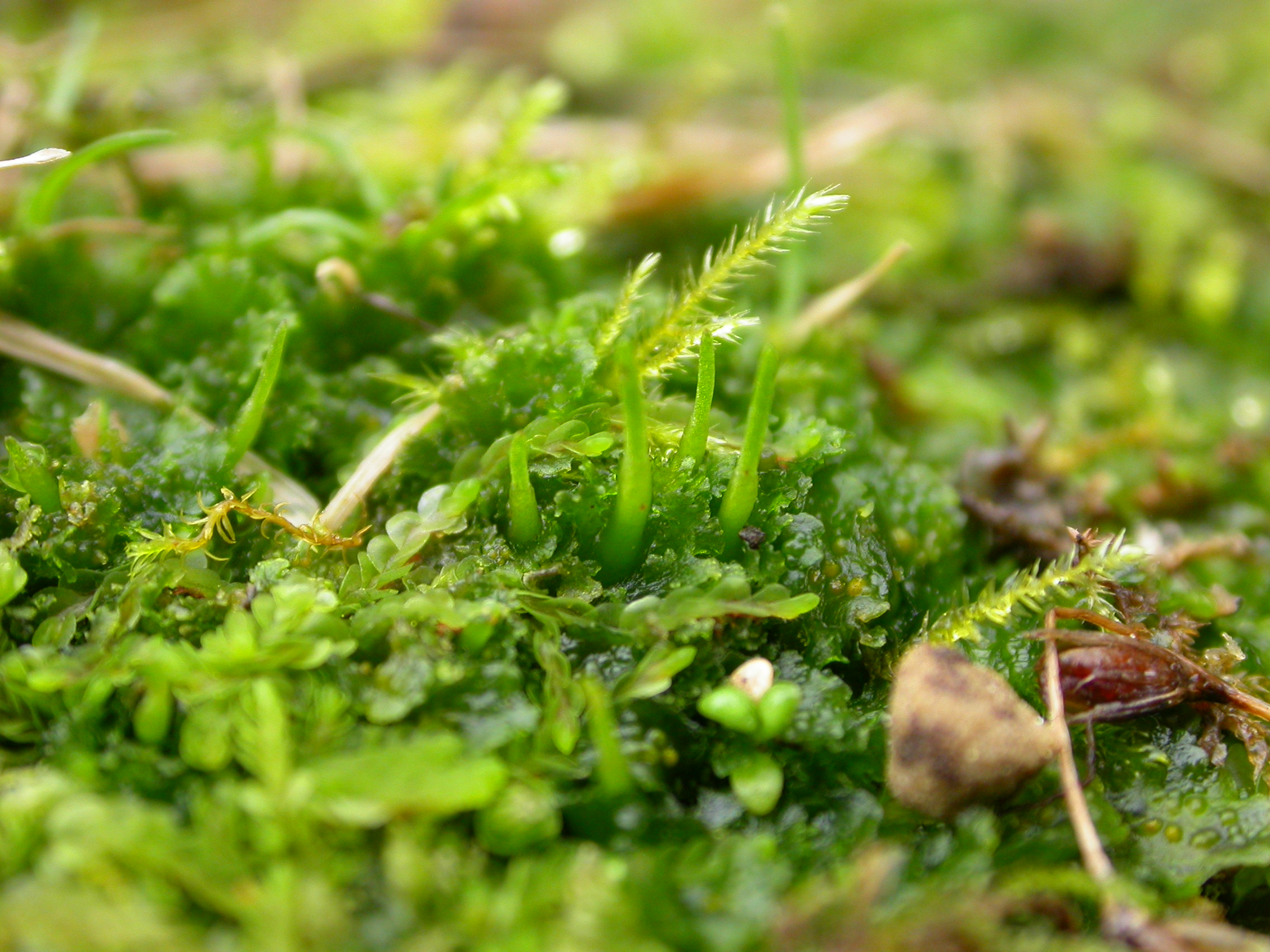
The second Dillenius record in the 1741 volume is of a hornwort, which he called ‘Anthoceros foliis minoribus, magis laciniatis’ (p. 476) and notes that this was found by himself and Manningham at Fernhurst: ‘beside the road called Farnhurst Lane in a shady and boggy place, where they were densely sprouting on pedicels similar in appearance to fresh shoots of grass’1. The specimens in the Dillenian herbarium at Oxford are now labelled Anthocerus punctatus, though as none of them have their provenance indicated it is possible that the Sussex plant isn’t even there. Though there are a few subsequent hornwort records in the county, these are really scarce plants; Ron Boniface recorded this species on Black Down in 1950.
Our last early eighteenth century bryophyte is even more interesting. This is ‘Lichenastrum Trichomanis facie, e basi et medio florens’ (‘The Trichomanes-like Lichenastrum, with Flowers from the Middle and Bottom’) which Dillenius saw in copious quantities near Slinfold, presumably with Thomas Manningham. This unambiguously corresponds to the Linnaean Jungermannia viticulosa which is our Saccogyna viticulosa, and the specimen in the Dillenian herbarium could plausibly be that from Slinfold. So where could it have been? This is the only West Sussex record ever for this plant. Tom Ottley notes that it is ‘Very rare on damp shaded sandstone rocks in humid valleys with probably just two remaining colonies in SE England. A western species in Britain.’
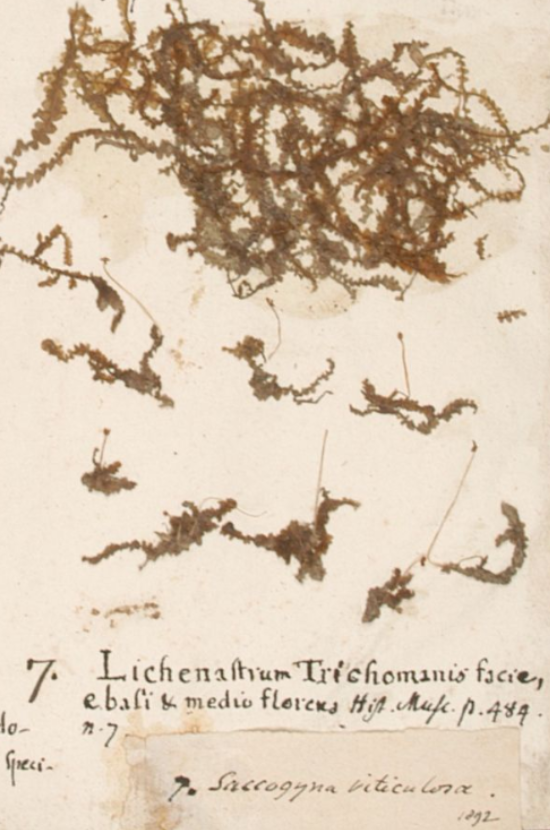
It seems extraordinary that we have these ten bryophyte records from Sussex from 300 years ago, and that many are noteworthy plants, though it is even more extraordinary that Dillenius had described somewhere between 200 and 240 bryophyte species by 1741. The study of the cryptogams was lagging behind that of the vascular plants, but it is remarkable how much of the national flora was known by the time of Dillenius’ death in 1747.
Note
1. Thanks to Nick Sturt for the translation.
References
Abraham, F. et al. (eds) (2018) The Flora of Sussex. Newbury: Pisces.
Atherton, I. et al. (2010) Mosses and liverworts of Britain and Ireland : a field guide. British Bryological Society.
Boulger, G. S. (2004) ‘Dillenius, Johann Jakob (1687–1747), botanist’, in Oxford Dictionary of National Biography. Oxford: Oxford University Press.
Dillenius, J. J. (1741) Historia muscorum. Oxford.
Giseke, P. D. (1779) Index Linnaeanus in Leonhardi Plukenetii … Opera Botanica / Index Linnaeanus in Joannis Jacobi Dillenii Historiam Muscorum. Hamburg.
Kippis, A. (1778–1793) Biographia Britannica. London.
Pearman, David. (2017) The discovery of the native flora of Britain & Ireland. Bristol: Botanical Society of Britain and Ireland.
Ray, J. (1724) Joannis Raii Synopsis methodica stirpium Britannicarum. 3rd edn. Edited by Dillenius. London.