
Mayfield College Estate
Meeting date: 11 May 2025
Leaders: Peter Smith & Helen Proctor
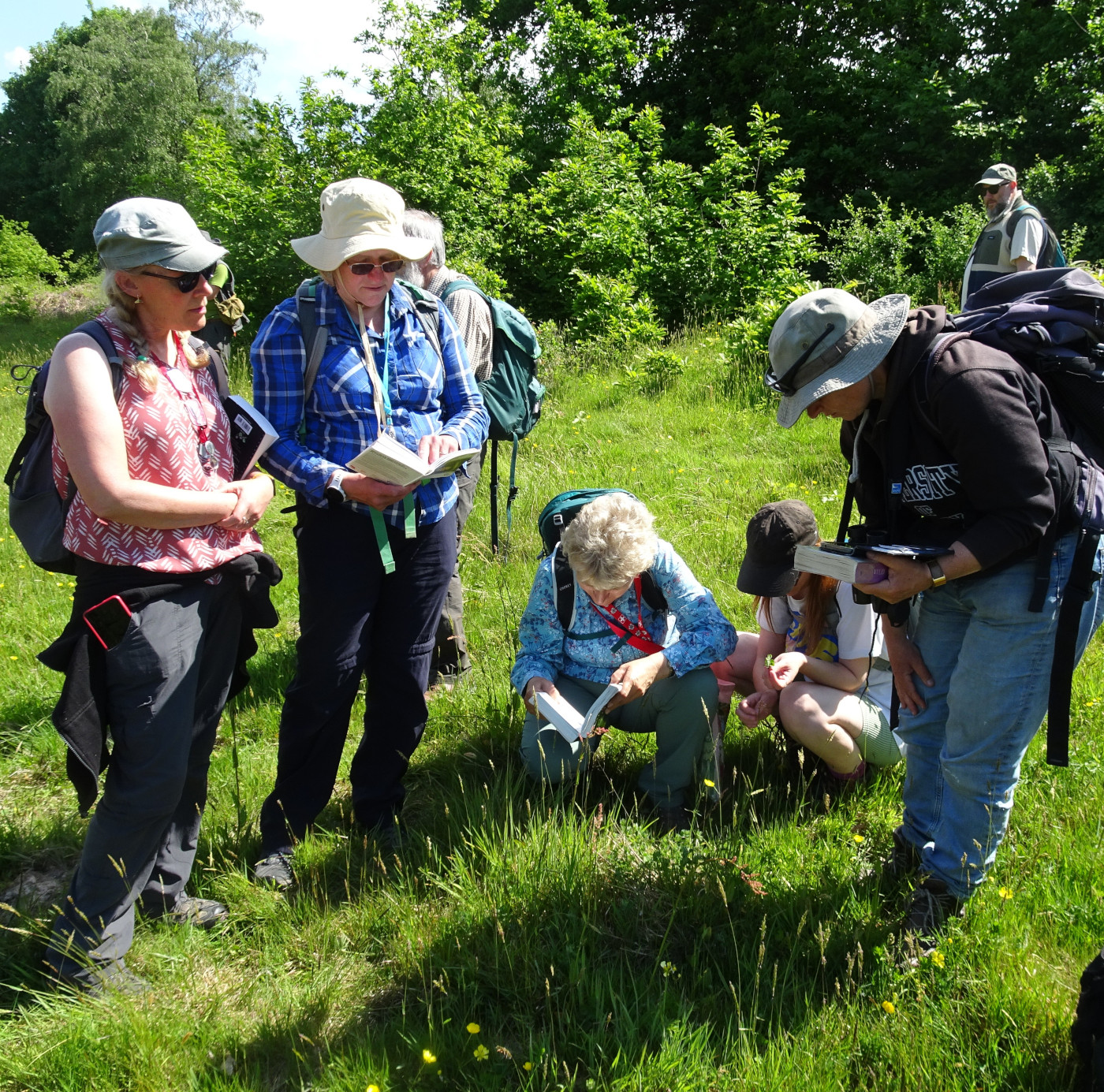
Seventeen members assembled in the Memorial car park at Mayfield on a warm, dry and sunny day with a gentle breeze. Our route took us downhill where the very short mown grass challenged our skills to spot microscopic plants. Sharp eyes identified the basal leaves of Gnaphalium uliginosum (Marsh Cudwweed). We followed a narrow footpath before reaching a fenced pasture. This appeared to be semi-unimproved with Anthoxanthum odoratum (Sweet Vernal-Grass), Ranunculus acris (Meadow Buttercup) and Rumex acetosa (Common Sorrel). Further on, the footpath was lined with quantities of Rubus spectabilis (Salmonberry) in flower, a neophyte-naturalised Bramble.
Below us was the first of many meadows managed by the Wadhurst Park Estate. This was an ideal place to familiarize ourselves with some of the more common species such as Hypericum tetrapterum (Square-stemmed St John’s Wort) and Lotus pedunculatus (Greater Bird’s-foot-trefoil) to benefit new members. A sign of an increasingly early spring season was the sight of orchid flowers soon to open on Dactylorihza fuchsii (Common Spotted-orchid).
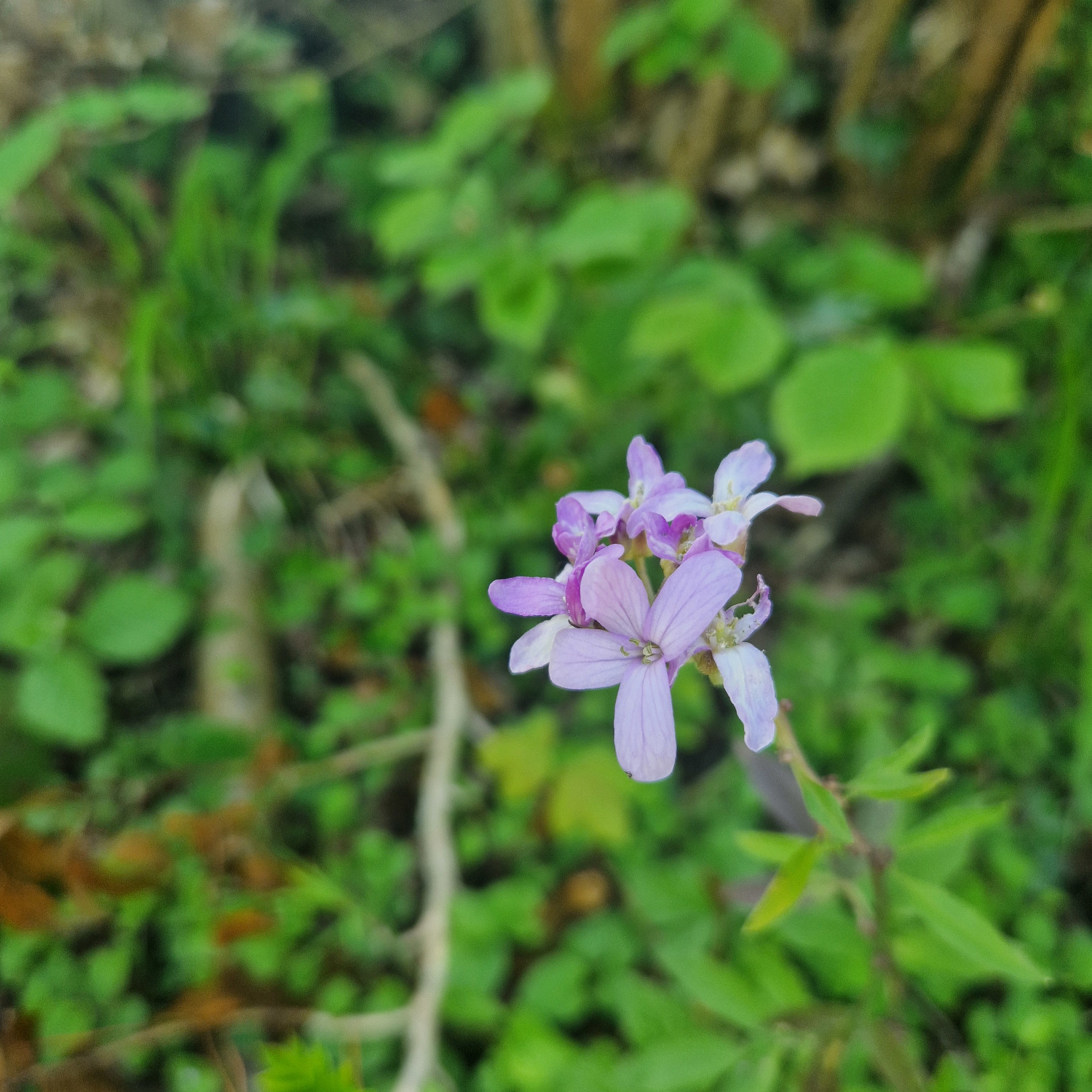
At the entrance to Vicarage Wood, a tree with large, light green, ovate leaves was identified as Amelanchier lamarckii (Juneberry), a neophyte-naturalised tree with small fruits now developing. Trevor found examples of Carex pilulifera (Pill Sedge) and C. strigosa (Thin-spiked Wood-sedge) and showed us Dryopteris affinis ssp. borreri. As we walked uphill out of the wood, we started seeing Cardamine bulbifera (Coralroot) on partly shaded banks of the tracks. These plants had mostly finished flowering and now displayed purple bulbils in the leaf axils and short seed capsules.
We then turned into a wet meadow where a small group of the plants were still flowering together with Cardamine pratensis (Cuckooflower) which generally needs more light and wetter ground than C. bulbifera. Further sedges seen included Carex pendula (Pendulous Sedge), C. pseudocyperus (Cyperus Sedge) and C. sylvatica (Wood Sedge).
We lunched on an open hillside where Genista tinctoria (Dyer’s Greenweed) formed dark green mats in the grassland. Other attractions included Dactylorhiza maculata (Heath Spotted-orchid) with flower spikes soon to open, and C. pallescens (Pale Sedge).
Thanks are due to Peter, Debbie and Judith for entering records for the three monads, TQ5827, TQ5927 and TQ5928. Overall, 264 records had been noted.