Chailey Commons
Meeting date: 21 July 2024
(Leaders: Michael Way & Jacqui Hutson)
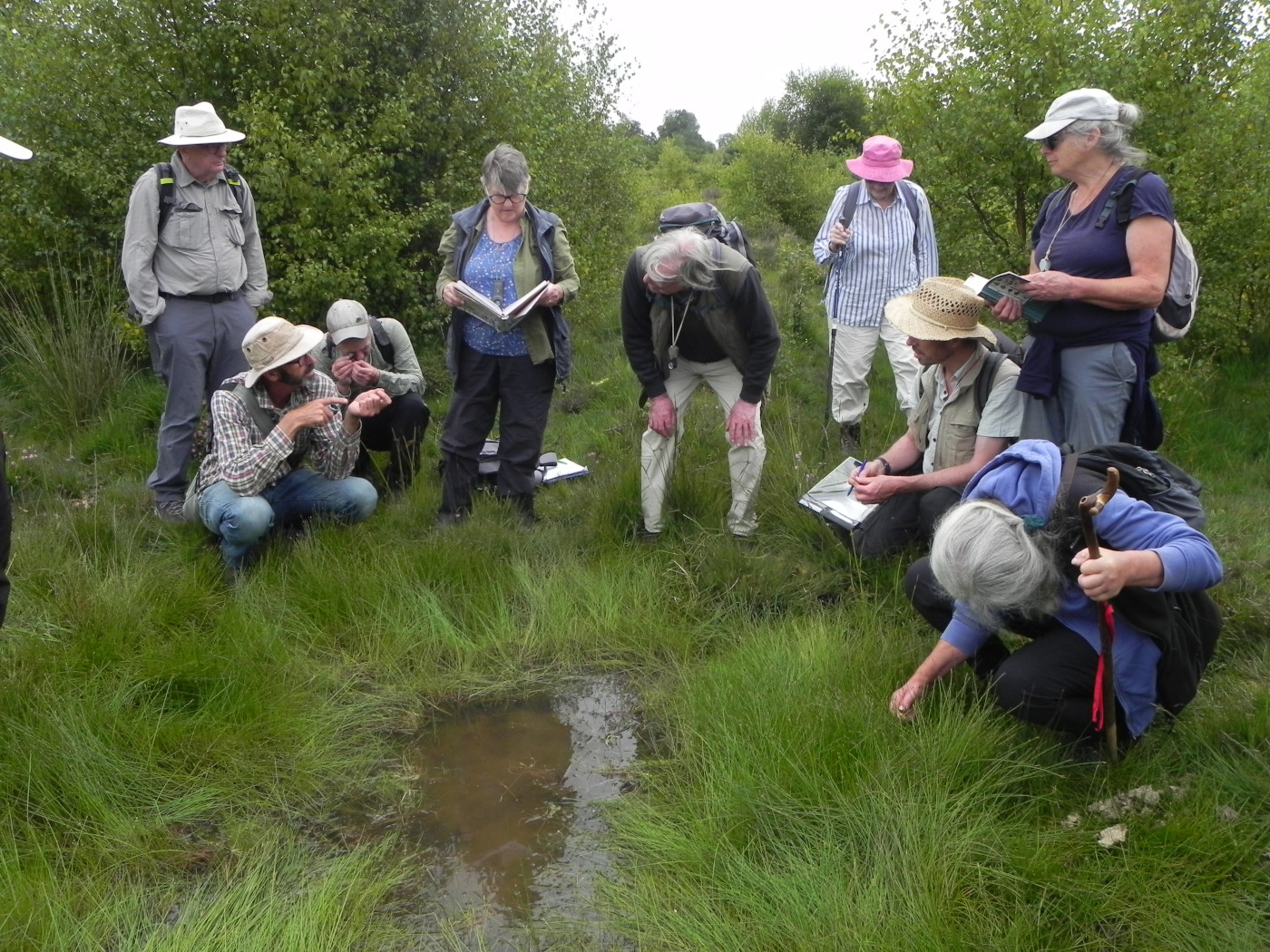
The heathland of Chailey Commons lies on Ashdown Sand at North Chailey, and has been managed as a Local Nature Reserve since 1966. The name is derived from Saxon ‘Chag-ley’ (a clearing in gorse), and the battle to control birch, bracken and gorse has continued ever since the inaugural Sussex Wildlife Trust scrub clearance task after its launch in 1961, recalled by David Streeter. The group of thirteen members crossed several restored heathland areas totalling around three miles.
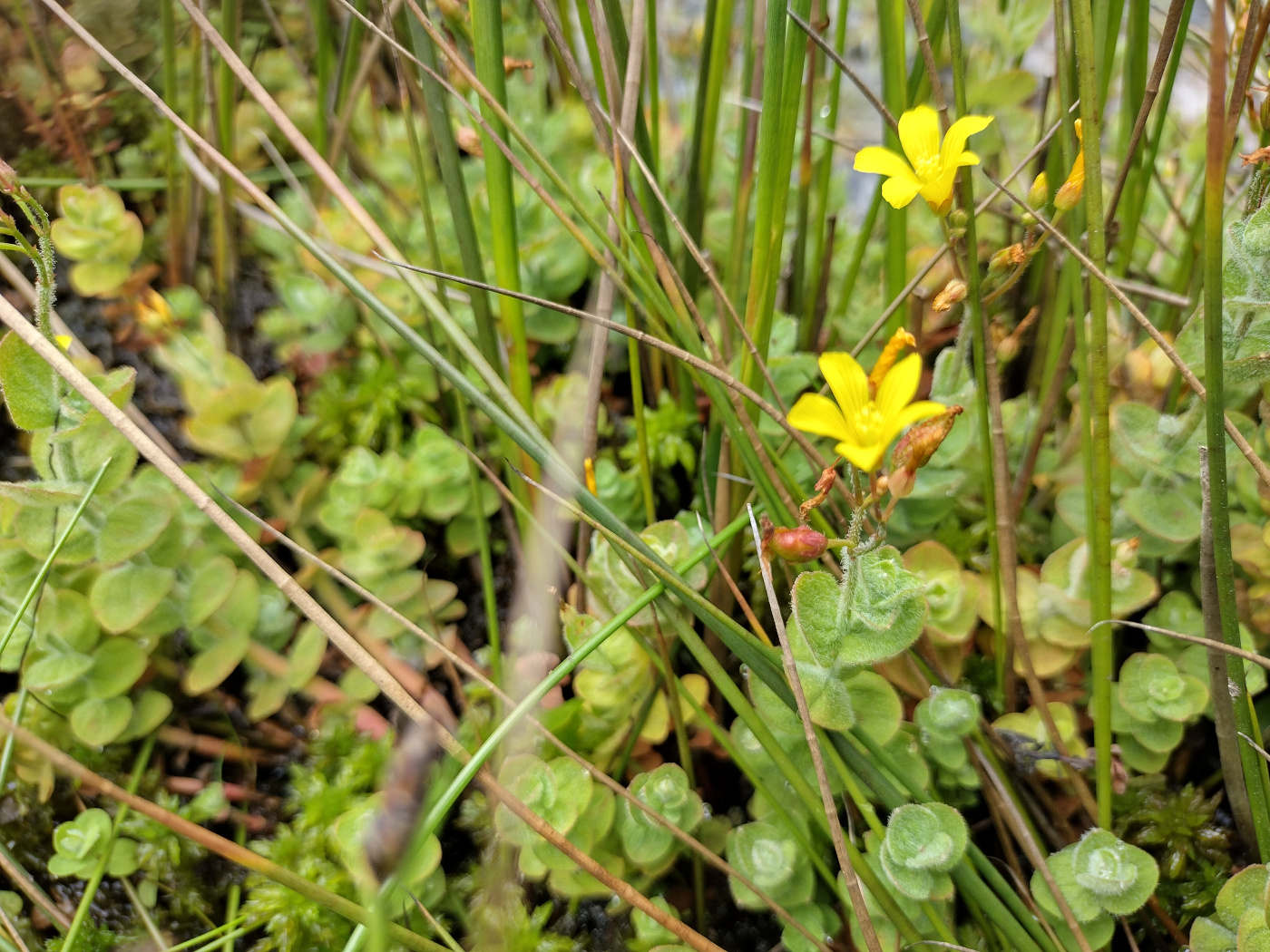
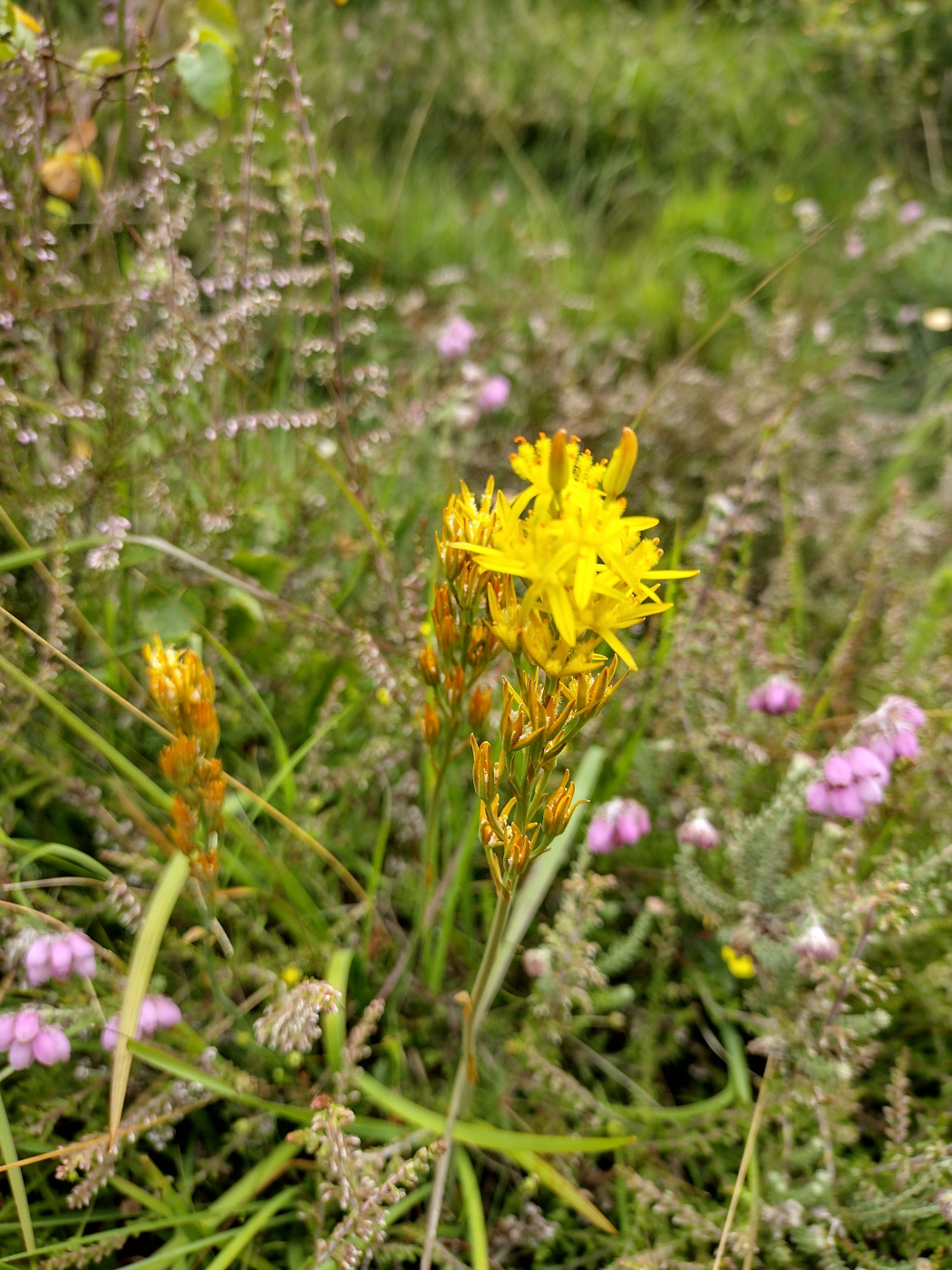
Descending from Romany Ridge car park we quickly found Polygala serpyllifolia (Heath Milkwort) and a tiny specimen of Serratula tinctoria (Saw-wort) in fine rabbit-grazed turf. Continuing to the south of this common the mire has benefitted from willow coppicing and higher water levels. Although Drosera (Sundew) appears to have been lost we enjoyed patches of Narthecium ossifragum (Bog Ashodel), and Eleocharis multicaulis (Many-stalked Spike-rush) and David pointed out Sphagnum palustre, S. nitens and S. capillaris. Extensive Hydrocotyle vulgaris (Marsh Pennywort) kept up motivation as we crossed the road to enter Pound Common and record a good patch of Hypericum elodes (Marsh St John’s-wort) in two small excavated ponds and Eleogiton fluitans (Floating Club-rush), recognised by Ben Benatt. We completed morning surveying with some flowering Cirsium dissectum (Meadow Thistle) frequent in a peaty hollow, before a delightful lunch on birch logs near to the small Gentiana pneumonanthe (Marsh Gentian) population (which was not yet attempting to flower).
Continuing across the recently rolled bracken of Pound Common we recorded Myosotis secunda (Creeping Forget-me-not) and Ranunculus peltatus (Pond Water-crowfoot) at the large eastern pond before checking on Viola lactea (Pale Dog-violet), which had been rediscovered by Jacqui Hutson in 2021. Crossing Beggars Wood Road, where Liz Sturt identified Callitriche brutia ssp. brutia (Pedunculate Water-starwort) beside the small stream, the birch carr revealed extensive Carex remota (Remote Sedge) with patches of Sphagnum denticulata and Dryopteris affinis (Golden-scaled Male-fern). There was just time to complete our circuit via the southern banks of Red House Common (for more Viola lactea in low bramble), and return along the western edge of Pound Common, with Succisa pratensis (Devil’s-bit Scabious) in short turf to end an excellent day’s surveying.