East Head
Meeting date: 1 July 2024
(Leader: Nick Sturt)
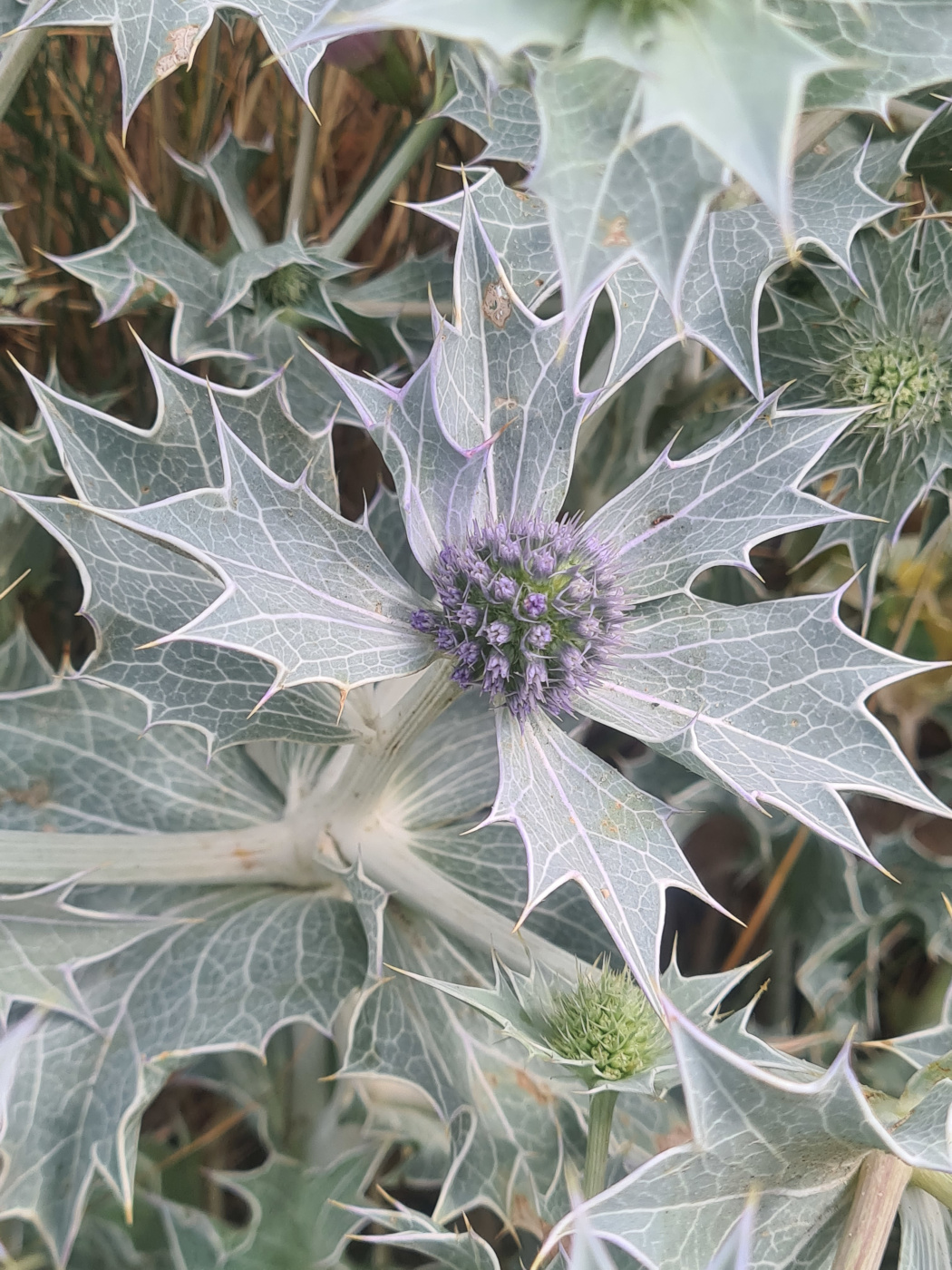
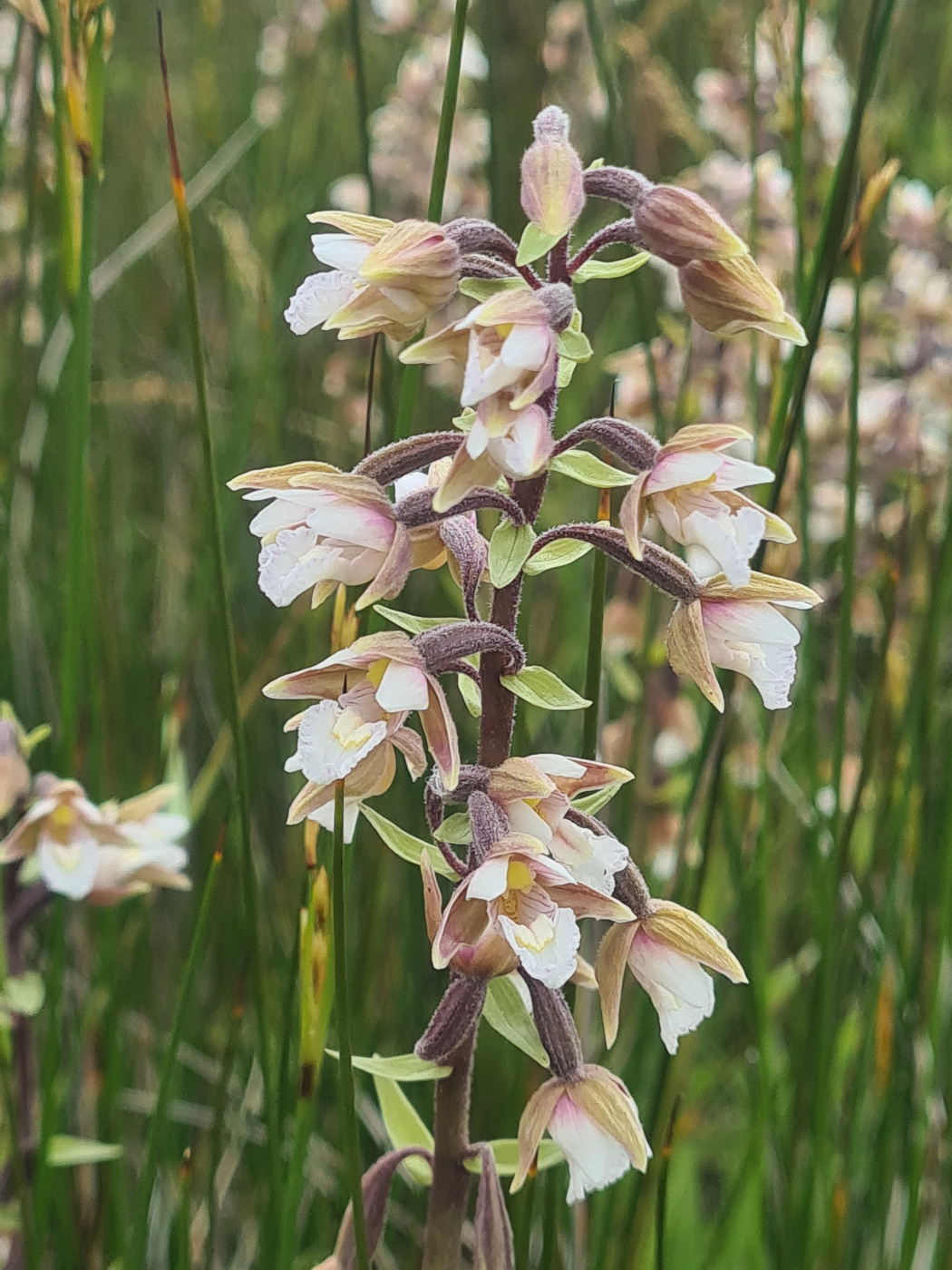
Shepherding 22 independently-minded SBRS members around East Head was always going to be a task qualifying for inclusion on Hercules’ shortlist for his Thirteenth Labour, and so it proved. There was a great sense of relief for the leader when at about 1.15 he surveyed them all at their lunches in a small amphitheatre within the dune-slacks with views of stands of flowering Epipactis palustris (Marsh Helleborine) to keep them occupied. Not only that but the party could enjoy from the comfort of their perches specialities such Carex arenaria (Sand Sedge), C. distans (Distant Sedge) and C. extensa (Long-bracted Sedge) and the delightful Centaurium pulchellum (Lesser Centaury). At the beginning it was just the first few metres of the dunes at the Hinge which had detained the group for an hour as they studied the various coastal treasures on display – Honckenya peploides (Sea Sandwort), Calystegia soldanella (Sea Bindweed), Eryngium maritimum (Sea Holly) and so on. Eventually, we reached the seaward side of the dunes noting Elytrygia junceiformis (Sand Couch), Salsola kali (Prickly Saltwort) and Oenothera biennis (Small-flowered Evening-primrose). At last we reached the slacks with their mosaic of dry mounds and damp depressions. Here Euphorbia paralias (Sea Spurge) was greeted like an old friend, Phleum arenarium (Sand Timothy) saluted and Filago minima (Least Cudweed) fondled lovingly. In the willow-grown damp spots an array of different species was admired – Calamagrostis epigeios (Wood Small-reed) and a swathe of Dactylorhiza praetermissa (Southern Marsh Orchid). But arguably the connoisseur was most pleased to examine the quite abundant Juncus maritimus (Sea Rush) just coming into flower.
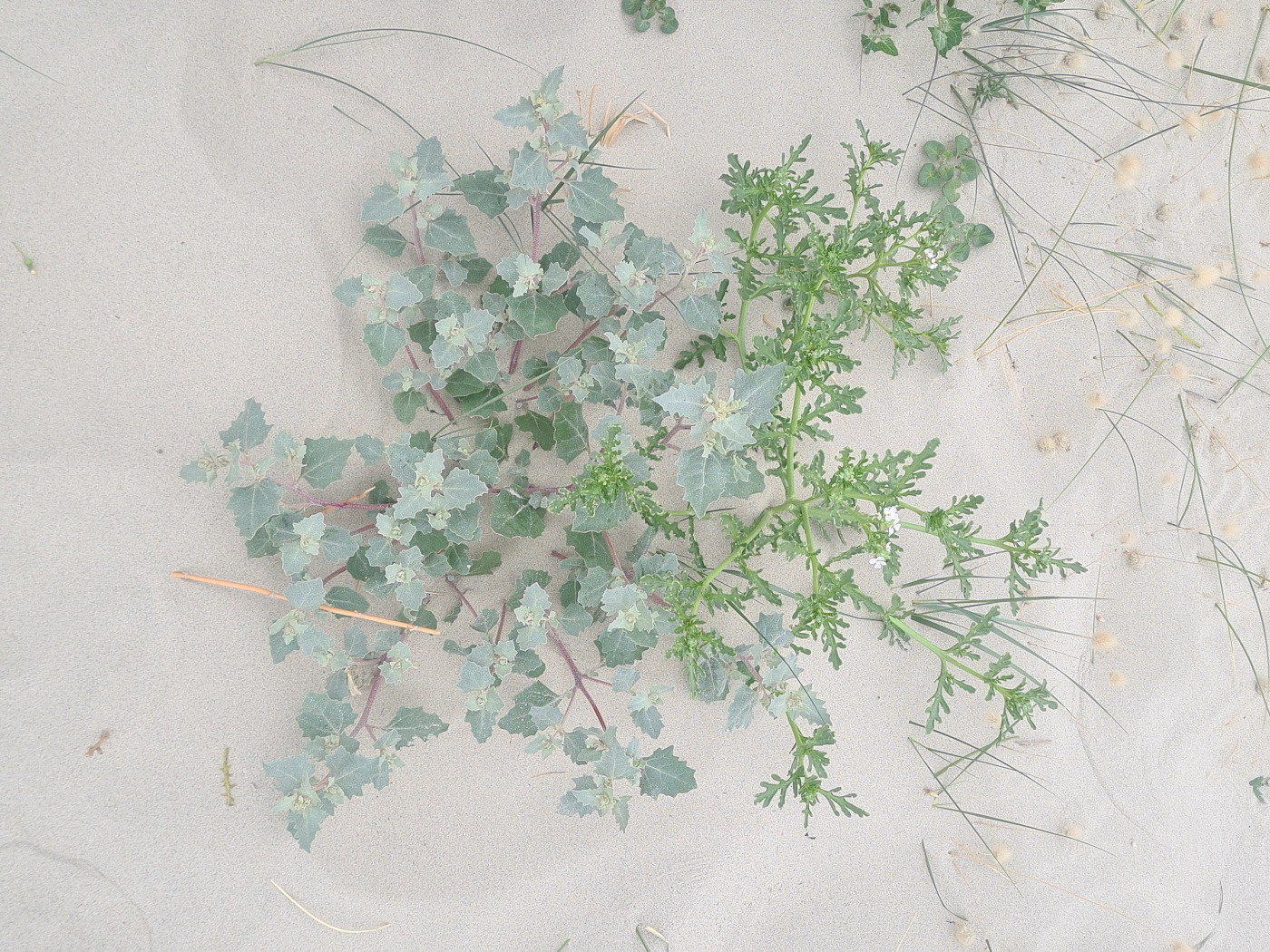
After lunch we achieved the tip of the spit, there to wonder at the amount of Cakile maritima (Sea Rocket) and identify conclusively Elymus arenarius. It was too early for the Knot-grasses but the pale grey foliage and pink stems of Atriplex laciniata (Frosted Orache) offered fair compensation. And so to the saltmarsh where Limonium vulgaris (Common Sea-lavender) was coming into flower and the President demonstrated its relation L. humile (Lax-flowered Sea-lavender) and their hybrid L. x neumannii). The next target was Frankenia laevis (Sea-heath), amongst a patch of which were spotted the quivering anthers of Parapholis strigosa (Hard-grass); three of the party even returned to the slacks to find a little Trifolium fragiferum (Strawberry Clover). And so at length we were back at the Hinge where we started. My favourite memory of the day was of David and Sue Denness with furrowed brows sitting down to key out some Vulpias: after a period of concentration which was almost visible as a dense cloud hovering over their heads, happily they both reached the same conclusion. Ahead of the meeting the leader had sent out a list of 29 species of interest including nineteen featuring on the RPR lists. Only four eluded the keen-eyed attendees. I should like to thank Helen for setting up another cracking meeting and our treasurer for his role as faithful sheepdog (and first rate field botanist) to the leader’s shepherd. I really must toss him a biscuit.