Castle Hill

Meeting date: 16 June 2024
(Leader: Nevil Hutchinson)
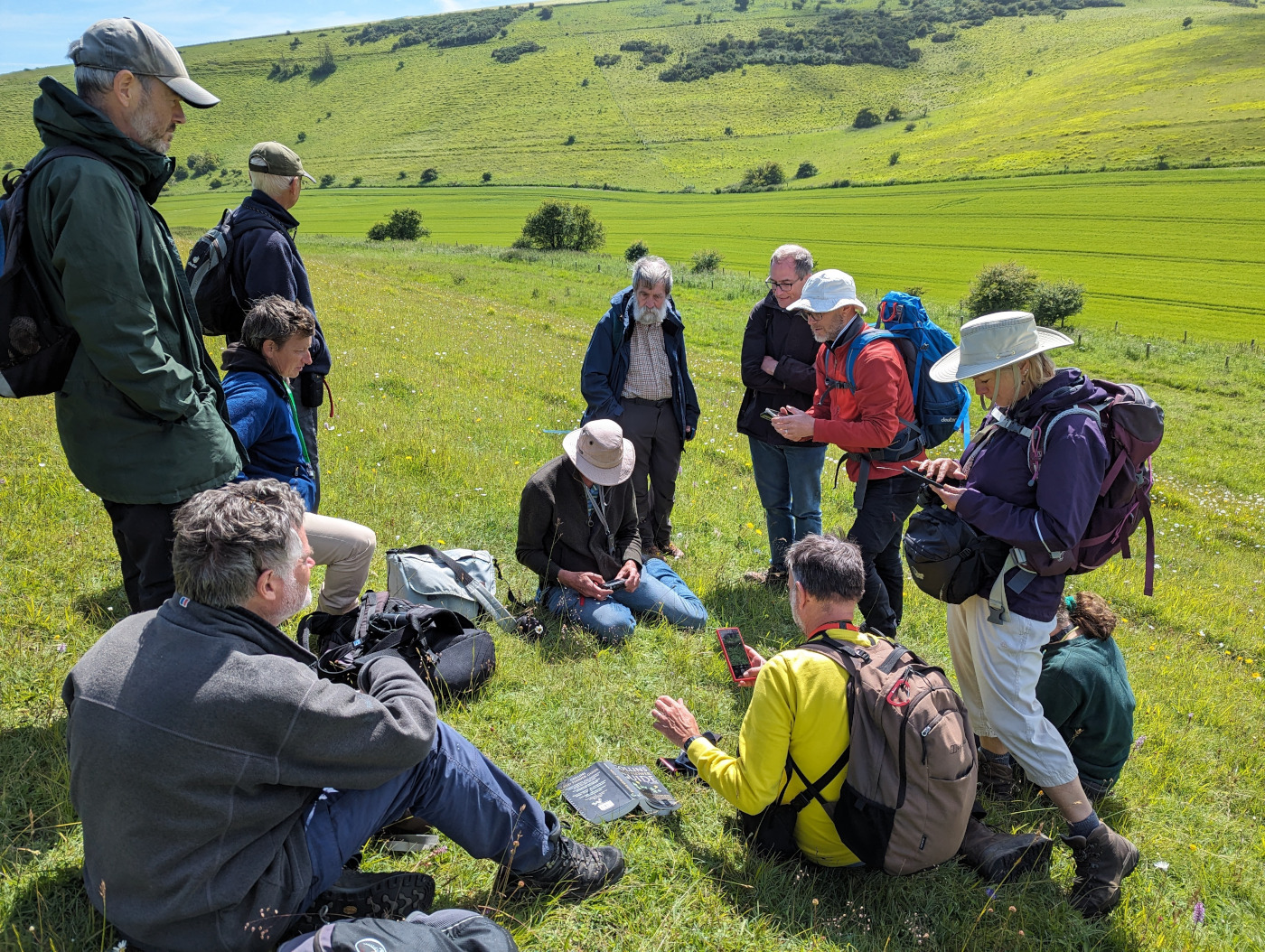
Fifteen of us made up the party. The leader succeeded in herding everyone to the gate of the open access land of Bullock Hill before anyone managed to look at a plant. Thereon it was all downhill to Balsdean and our entry into the National Nature Reserve. We recorded in two monads, TQ3606 and TQ3706, but produced two lists for the latter: one outside the NNR and one inside it. A total of 243 records were entered into iRecord as we went along, totalling 137 species.
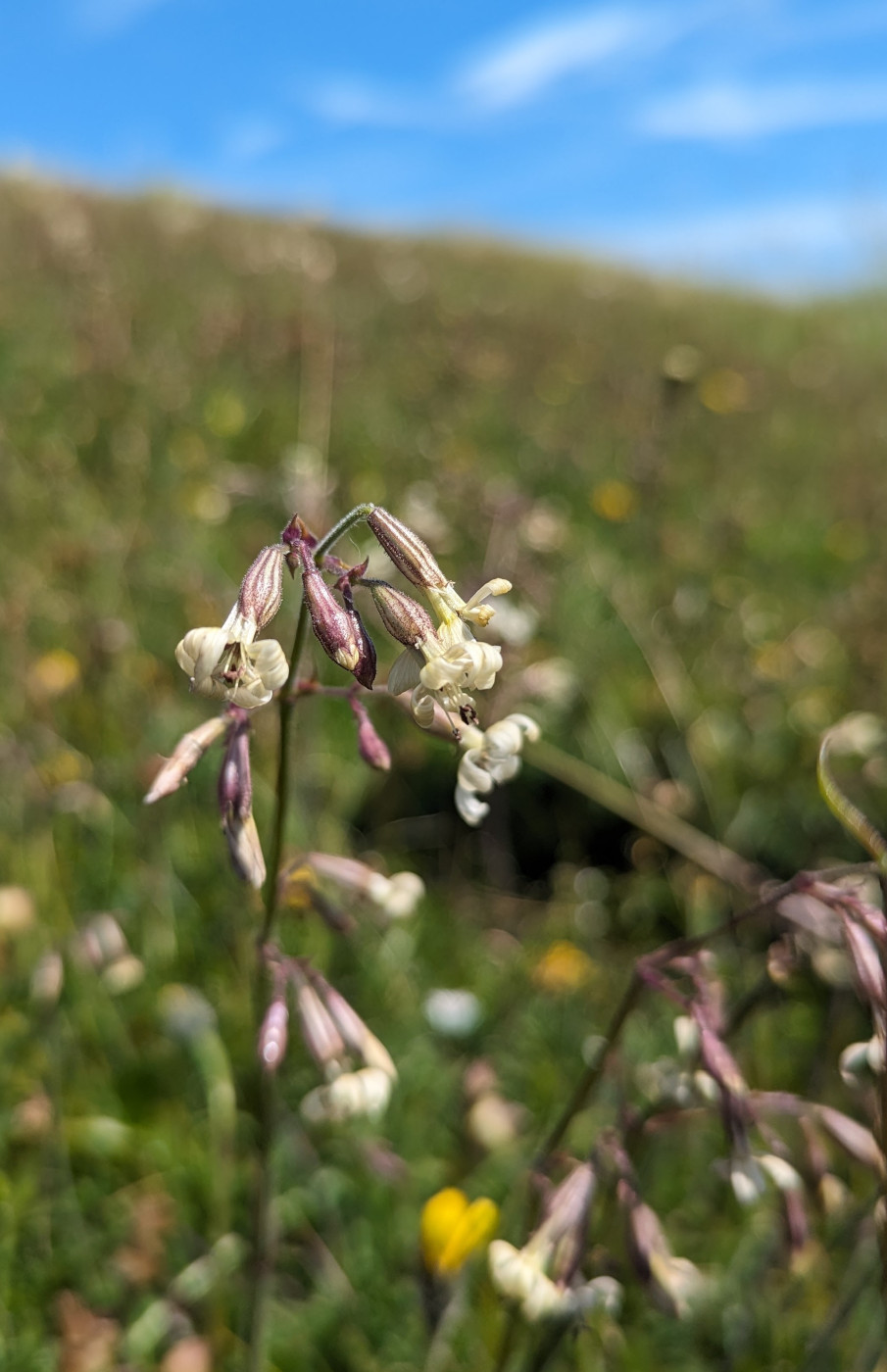
En route to the NNR we clocked up about 70 species, including fifteen grasses. We entered the reserve at its south-eastern gate shortly before lunch. This end of the reserve had most of the interesting historical records but appeared under-grazed. The usual chalk species were present: Briza media (Quaking-grass), Bromopsis erecta (Upright Brome), Koeleria macrantha (Crested Hair-grass), Helictochloa pratensis (Meadow Oat-grass), Avenula pubescens (Downy Oat-grass), Plantago media (Hoary Plantain), Phyteuma orbiculare (Round-headed Rampion), Cirsium acaule (Dwarf Thistle), Blackstonia perfoliata (Yellow-wort), Thymus drucei (Wild Thyme) and a small patch of Thesium humifusum (Bastard-toadflax). At least two groups of Silene nutans (Nottingham Catchfly) were found. The greatest effort was expended looking for Polygala calcarea (Chalk Milkwort), the leader having logged onto the database to get the most recent record locations. At one of these a rather depauperate specimen was found. There ensued a great deal of examination, review and speculation. We failed to reach a consensus, but subsequent reviews of photos from several people by Paul Harmes confirmed that it was (almost certainly) P. calcarea.
An interesting find was a pure white Phyteuma orbiculare, which nobody in the group had seen before. The orchids in flower were Anacamptis pyramidalis (Pyramidal Orchid), Dactylorhiza fuchsii (Common Spotted-orchid) and Gymnadenia conopsea (Chalk Fragrant-orchid). The Ophrys sphegodes (Early Spider-orchid) had all gone over, but a few were found with fruits. The Euphrasia was kindly reviewed by Elisabeth Sturt who determined it to be a hybrid from the nemorosa-arctica-confusa complex, a common finding on Sussex chalk, as confirmed by Chris Metherell from previous submissions.
It was a full day and on the way out we added Rosa squarrosa (Glandular Dog-rose) and a nice specimen of Lepidium campestre (Field Pepperwort).