
The Mountain, Hastings
Meeting date: 12 June 2024
(Leaders: Jacqueline Rose & Judy Clark)
A select group of seven gathered to survey The Mountain, a very steep and somewhat neglected area of acid grassland located between Hastings and Fairlight. In recent years it has been managed by rabbits so there is still plenty to see, but we did have to dodge the rabbit holes.
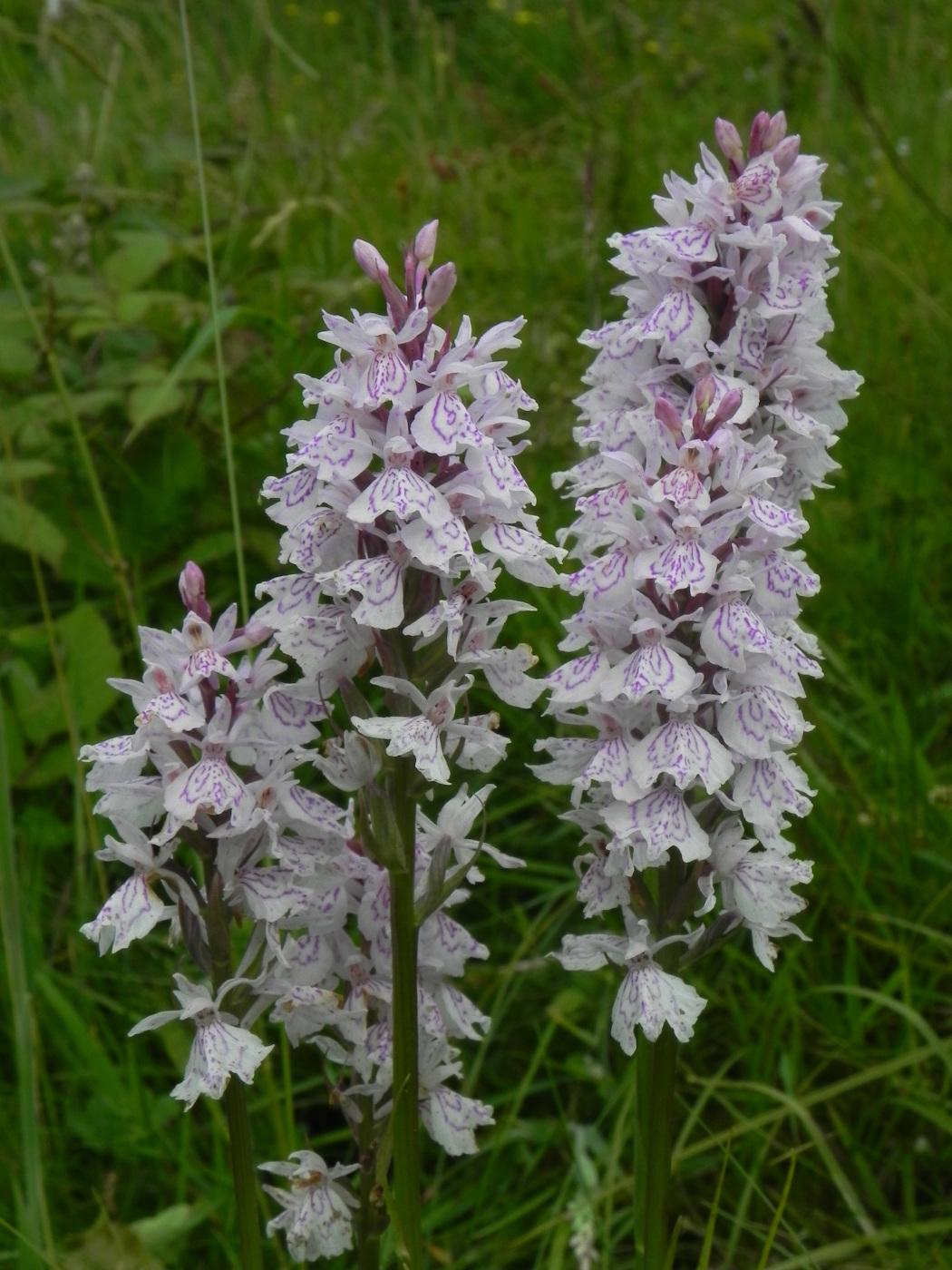
Dactylorhiza maculata subsp. ericetorum (Heath Spotted-orchid) was abundant, enabling us to observe how much this species can vary when it comes to colour, labellum lobes and markings. Fortunately Elisabeth was on hand for the eyebrights: Euphrasia nemorosa (Common Eyebright) plus glandular plants that had to be recorded as Euphrasia agg. There was Danthonia decumbens (Heath-grass) with its fat spikelets, and four species of sedge: Carex binervis (Green-ribbed Sedge), C. pilulifera (Pill Sedge), C. caryophyllea (Spring Sedge) and C. flacca (Glaucous Sedge).There could have been others – frustratingly there were large patches of sedge with not a single inflorescence where rabbits (presumably) had scoffed the lot.
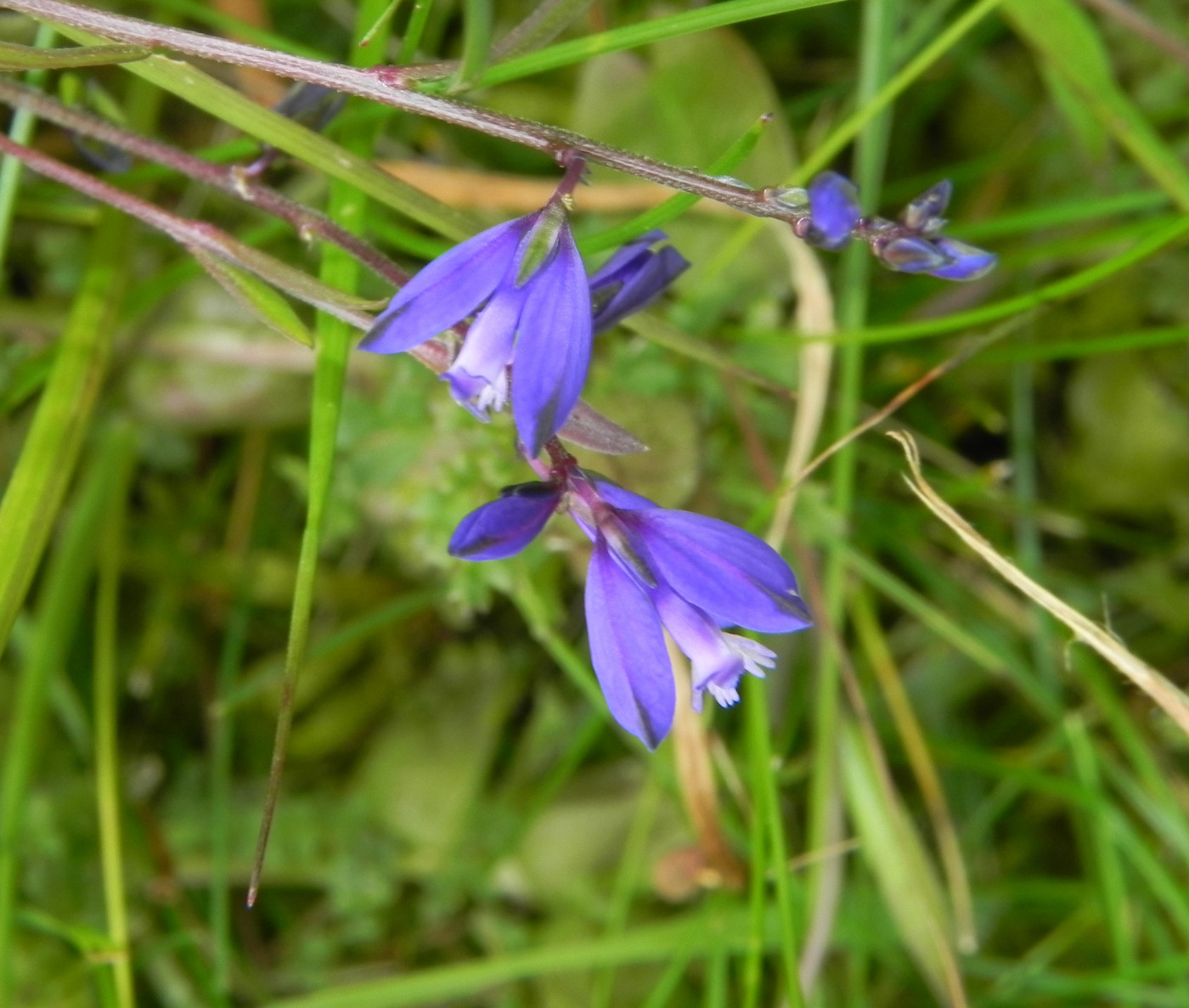
We pored over a bright blue Polygala, which proved to be P. serpyllifolia (Heath Milkwort). There were a few pink flowers of Pedicularis sylvatica (Common Lousewort), not at all common in the far east of Sussex, and good amounts of Galium saxatile (Heath Bedstraw) and Potentilla erecta (Tormentil), both of which prefer very acid soil. It was too early for Succisa pratensis (Devil’s-bit Scabious) to be in flower but its basal leaves were much in evidence, enabling comparison with those of Centaurea nigra (Common Knapweed).
We recorded 75 species. It didn’t rain; no one tripped on a rabbit hole; and, in the words of chairman Nick, there was never a dull moment.