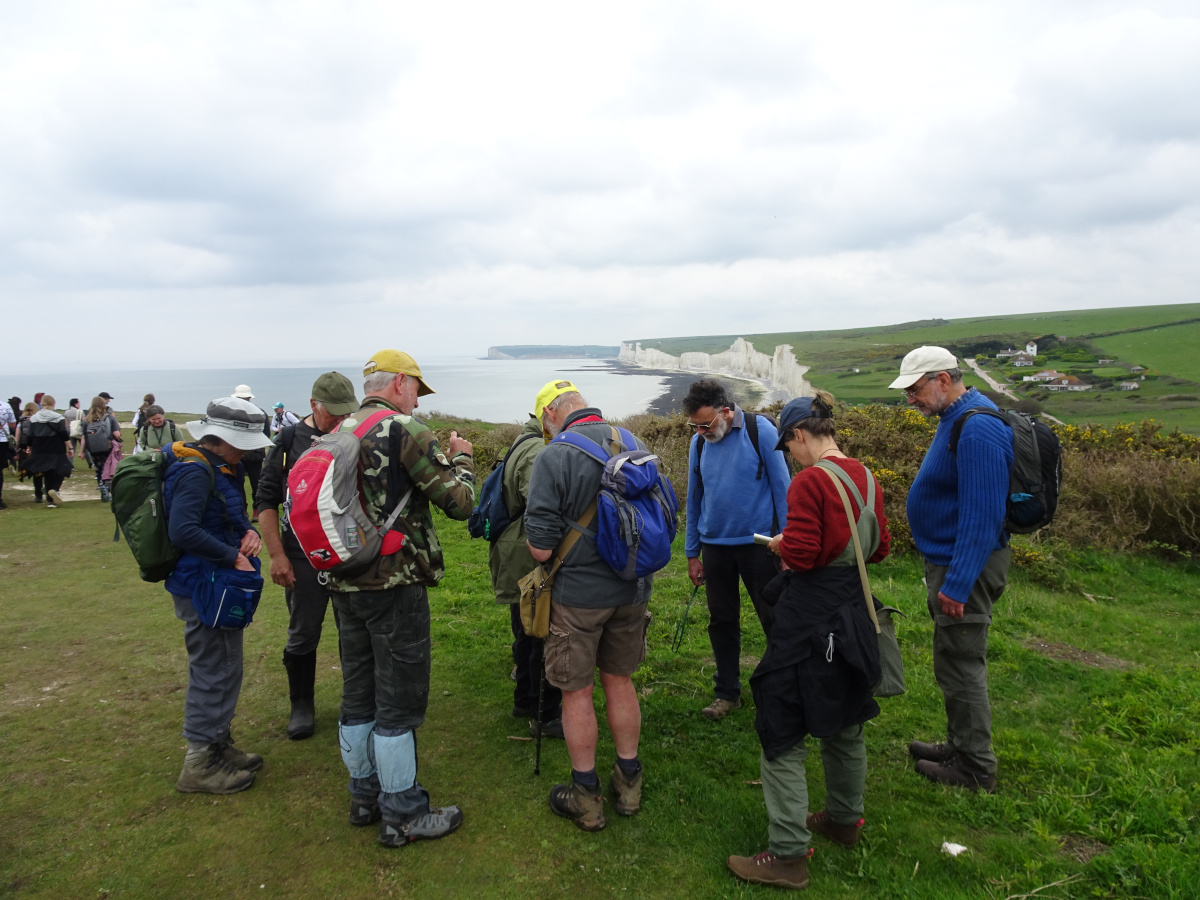
Birling Gap and Belle Tout
Meeting date: 1 May 2024
(Leaders: Chris Brewer & David Burton)
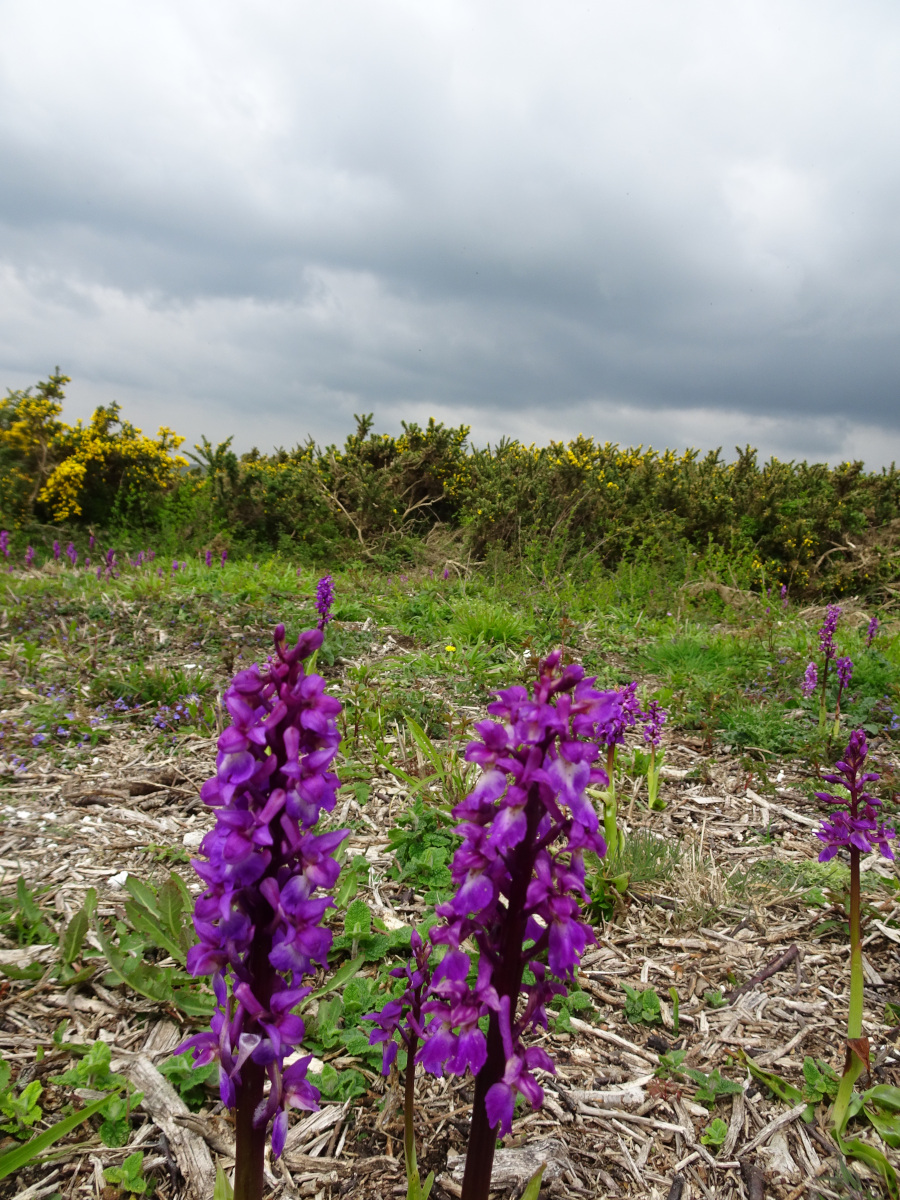
Eighteen of us met in the Birling Gap car park. We moved east and soon came across Saponaria officinalis (Soapwort) and various chalk grassland species. We turned south up the hill toward the upper path but first looked at a large patch of Orchis mascula (Early-purple Orchid). At the top of the hill the habitat changed from chalk grassland to chalk heath, a very rare habitat, and the species we found reflected that. The vegetation structure of chalk heath resembles grass heath, being short grassy vegetation with Calluna vulgaris (Heather) growing up through it. Potentilla erecta (Tormentil) was noted occasionally, and we continued to record grassland species such as Anthyllis vulneraria (Kidney Vetch), Hippocrepis comosa (Horseshoe Vetch), and Filipendula vulgaris (Dropwort).
Lunch was taken at the top of the hill. During the break we had a visit from an Adder which tried to find a hiding place amongst us all. Following this excitement we continued towards Belle Tout. We were a few weeks too early for the Tephroseris integrifolia (Field Fleawort), so proceeded down the slope to the bottom of the lighthouse access road. We made our way to known locations of a single spike of Orchis purpurea (Lady Orchid) and a few rosettes of Himantoglossum hircinum (Lizard Orchid).
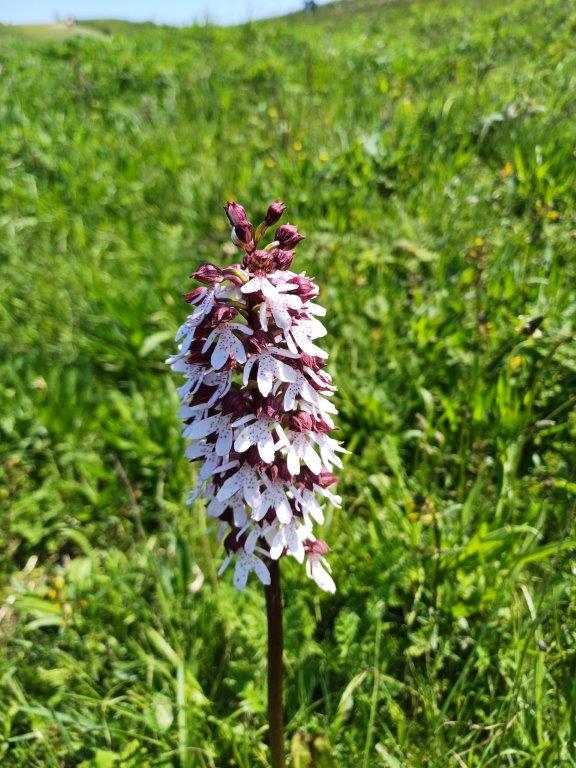
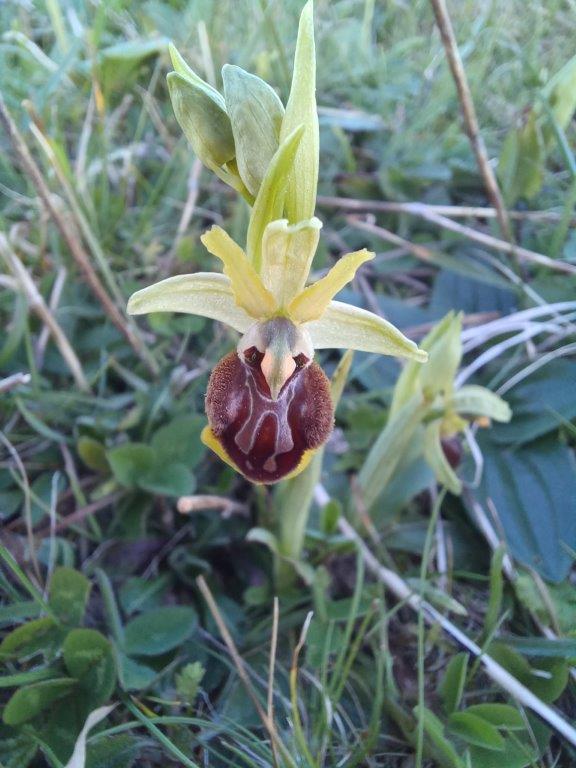
We then crossed the road to check the meadow on the Hodcombe Farm side. This area is well known for a variety of grassland species, and a detailed look revealed Orobanche minor (Common Broomrape), the beautiful Ornithogalum umbellatum (Star-of-Bethlehem), Centaurea scabiosa (Greater Knapweed) and Linum usitatissimum (Flax) among others. Crossing the road again, we searched for Ophrys sphegodes (Early Spider-Orchid) and were rewarded with a number of admittedly small specimens on the short grass below the lighthouse between the path and road. After this excitement, we went through Horseshoe Plantation wood and found Iris foetidissima (Stinking Iris) and Medicago arabica (Spotted Medick).
Our walk finished with a stroll along the lower path back to the car park at Birling Gap, having recorded over 130 species of vascular plants.