Danehill Meadows
Meeting date: 25 June 2023
(Leader: Ben Benatt)
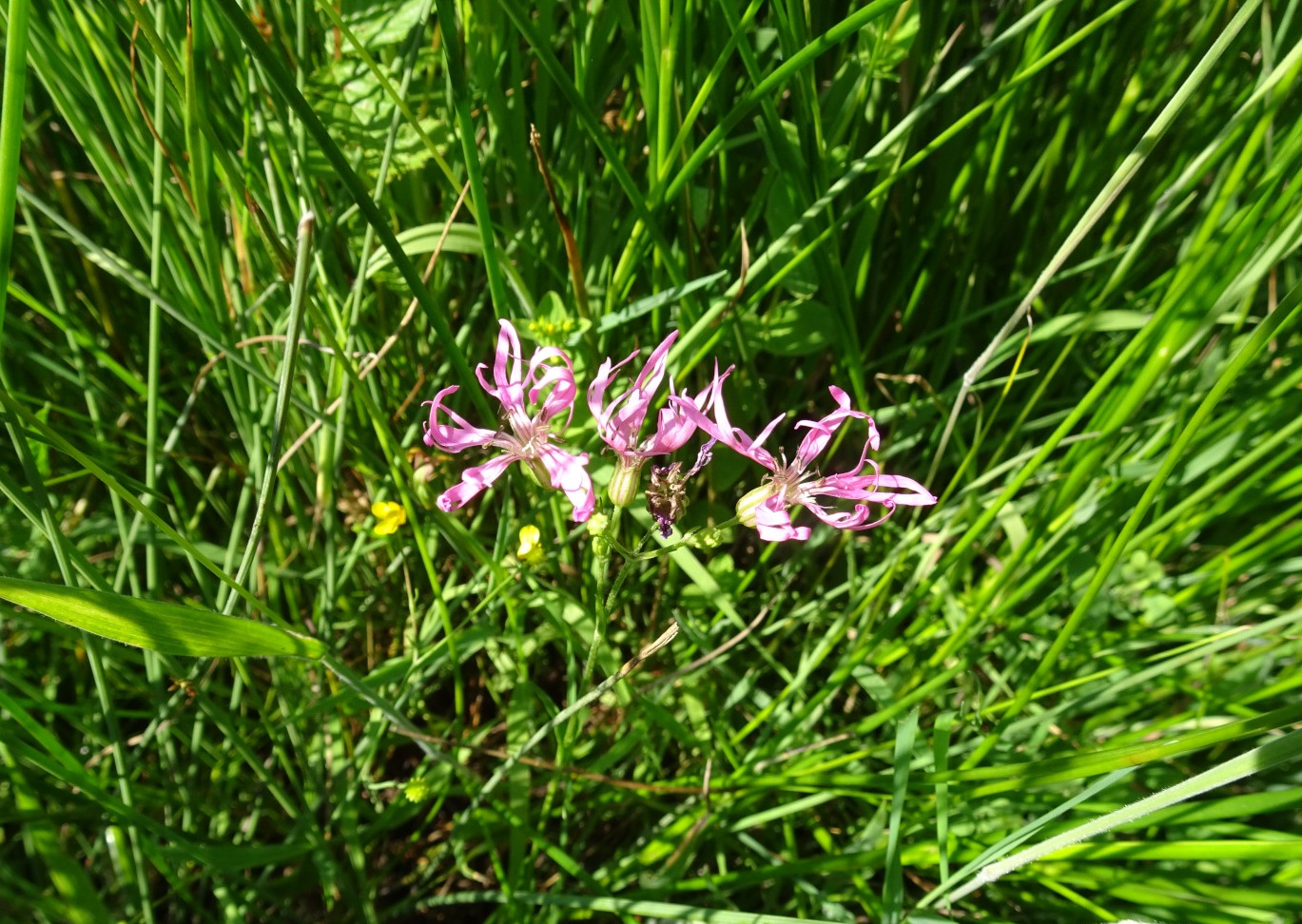
We explored three locations within the Danehill meadows complex aiming to identify any areas that still possess species-rich grassland. In his book Land of the Brighton Line (2018), David Bangs identifies a number of sites supporting old wet meadow species such as Silene flos-cuculi (Ragged-Robin), Succisa pratensis (Devil’s-bit Scabious), Conopodium majus (Pignut) and Carex pallescens (Pale Sedge) and it was hoped to re-find this suite of species. The meadows are owned by a number of different landowners and are not subject to any protection. Reconnaissance visits prior to the field meeting suggested that many areas have been seriously degraded even in the last decade or so.
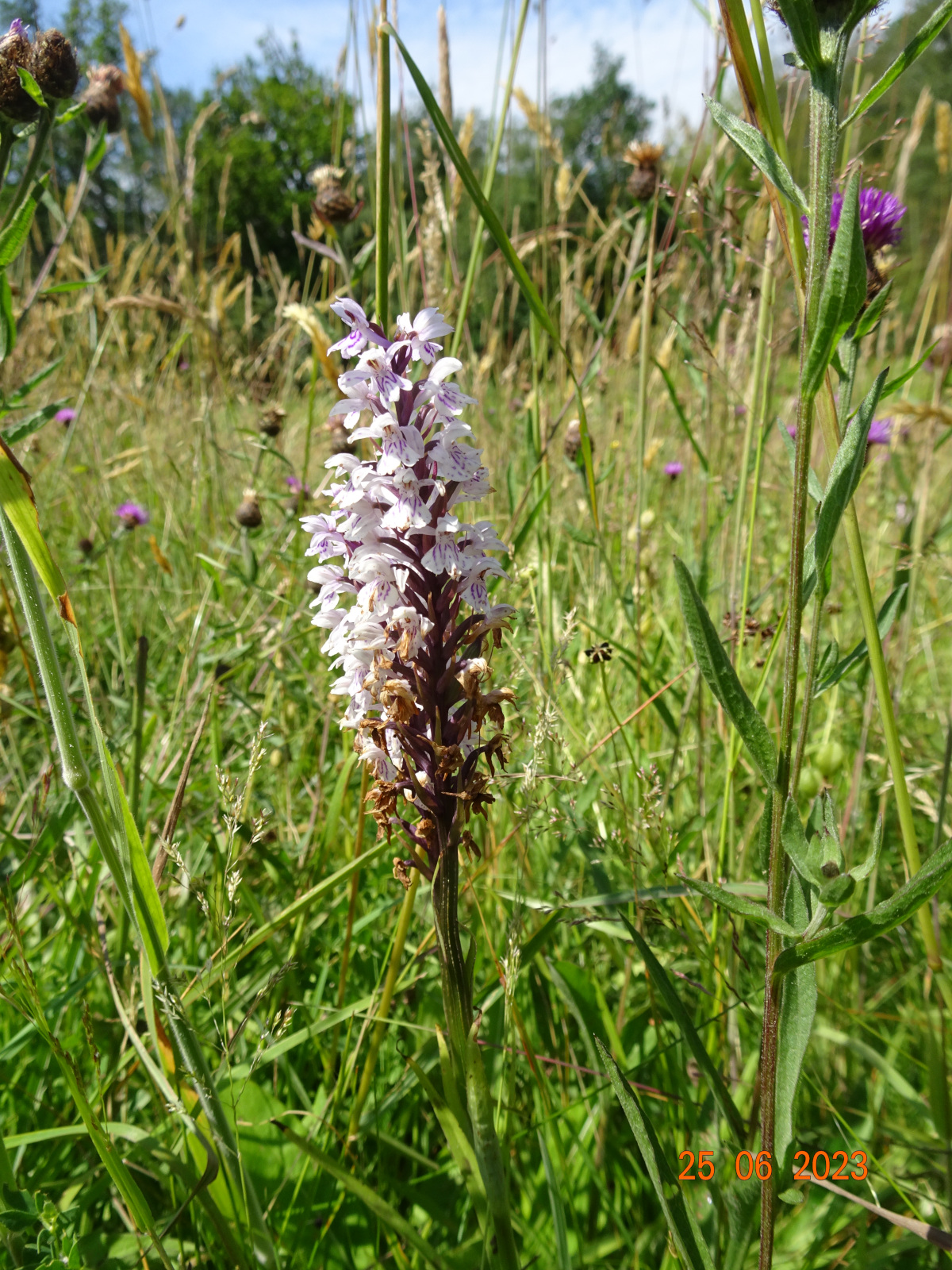
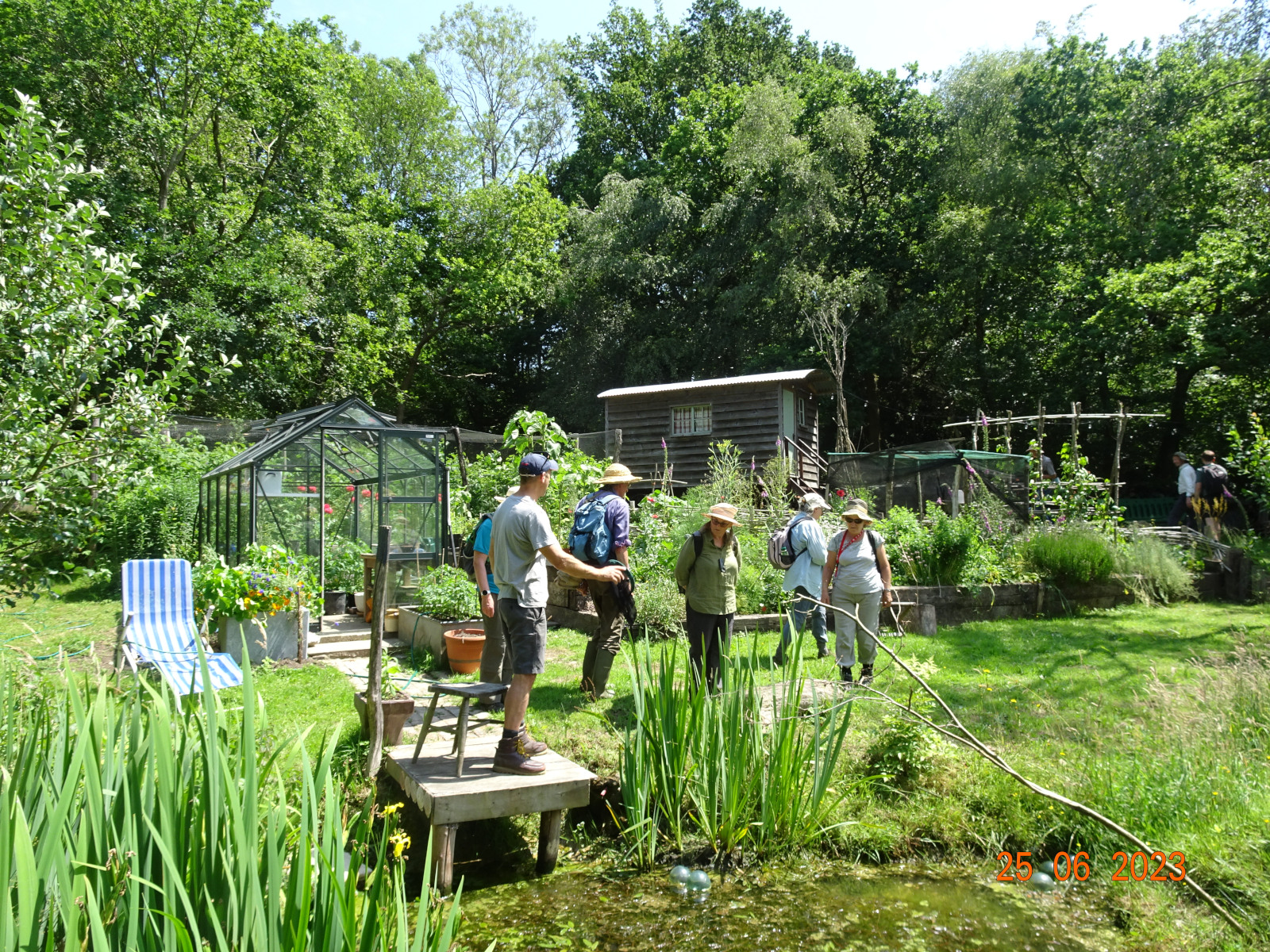
We started in meadows east of Danehill school where Carex caryophyllea (Spring Sedge), Betonica officinalis (Betony), Briza media (Quaking-grass) and Succisa pratensis were found in quantity along with some Potentilla anglica (Trailing Tormentil) (det. BSBI referee Dr Brenda Harold) in the very fine ancient meadow here. Subsequently we were hosted at Allins Farm for a picnic lunch in picturesque surroundings followed by a tour of the meadows and valley woodland north of the farm, where we saw a large colony of Conopodium majus as well as the uncommon Chimney Sweeper moth Odezia atrata, which feeds exclusively on this plant and which has its Sussex stronghold in this area.
Finally, we visited the flood meadow either side of the stream to the north of Latchett lakes. Here we found a fine sedge swamp community in the lower-lying parts of the field, which supported a good range of species including Carex pallescens and Silene flos-cuculi. Drier parts of the field held further Potentilla anglica and a single piece of a very highly branched Potentilla which was subsequently determined as P. x suberecta by Dr Brenda Harold. The latter is the hybrid between P. erecta (Tormentil) and P. anglica. Some useful connections were made between the landowners and Society members and it is hoped that through this it will be possible to ensure that useful advice will be disseminated to the landowners on how best to manage their land.