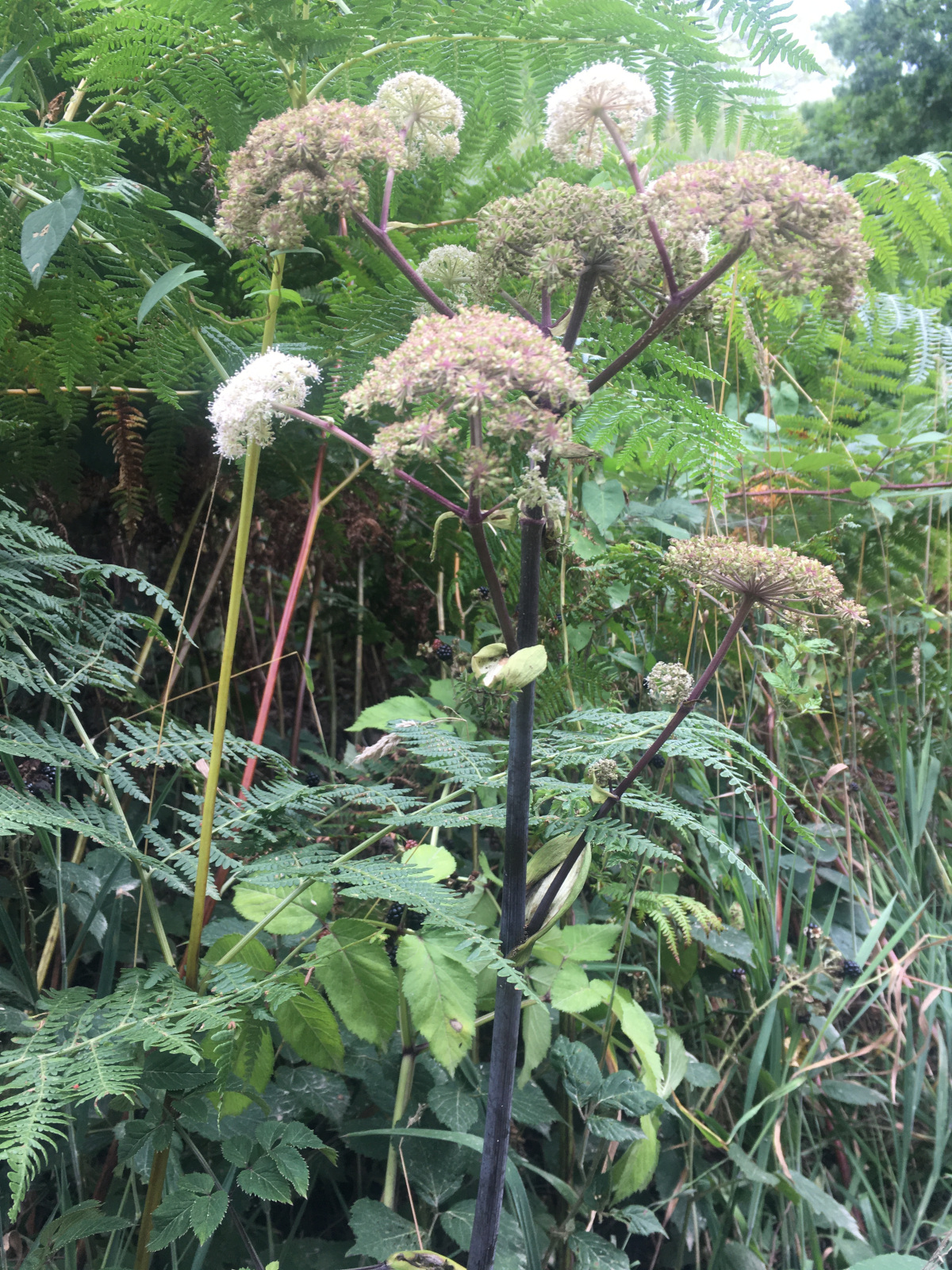
Hastings Country Park Nature Reserve
Meeting date: 27 August 2022
(Leaders: Jacqueline Rose & Judy Clark)
The venue had been changed from Pett Level due to the deterioration of the habitat. So, ten people, including three prospective members, met at the Barley Lane car park at Hastings. The day was humid, with some sunshine, but mostly cloudy. We walked through Ecclesbourne Glen, admiring the ferns growing on the banks of the ghyll. Through a field, we then reached Barn Pond. It was a farm pond but the barn had been removed during WW2. Myriophyllum aquaticum (Parrot’s-feather) has been an ongoing problem, and still covered more than half of the pond despite much of it being cleared three years ago. However we found a number of common fresh water species – Alisma plantago-aquatica (Water-plantain), Sparganium erectum (Branched Bur-reed), Iris pseudacorus (Yellow Iris), and at the water’s edge Myosotis scorpioides (Water Forget-me-not) and Eleocharis palustris (Common Spike-rush), which were a good introduction for the less experienced botanists. Lys went rummaging among the tall plants, and emerged with a minute portion of Ceratophyllum demersum (Rigid Hornwort).
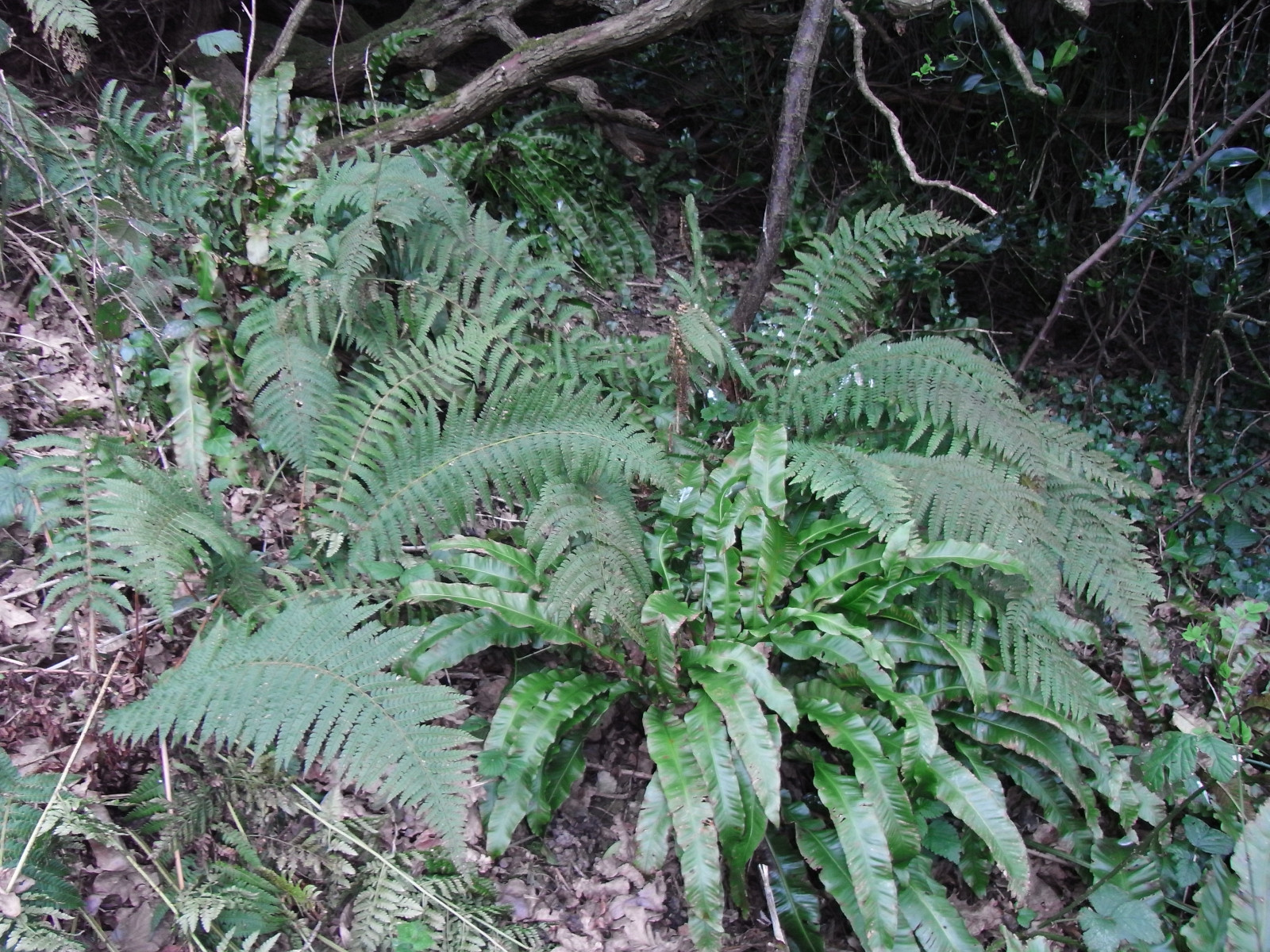
We then walked through farm fields, with views of sea and cliffs, to Fairlight Glen. It is considered one of the best sites for ferns in the south-east, but they were looking the worse for the prolonged dry conditions. We were able nevertheless to compare Dryopteris dilatata (Broad Buckler-fern), D. affinis subsp affinis (Golden-scaled Male-fern), Athyrium filix-femina (Lady Fern), Blechnum spicant (Hard Fern) and, the most frequent, Polystichum setiferum (Soft Shield-fern). Hiding under one fern was a single fruiting spike of Epipactis purpurea (Violet Helleborine), which is one of the plants noted in the SSSI citation for what is now the Hastings Cliffs to Pett Beach SSSI. It seems to be a poor year for this orchid. We also confidently viewed Dumortiera hirsuta (Dumortier’s Liverwort) thanks to Sue Rubinstein. It has been known from Fairlight Glen since 1883, nearly 140 years, and the Dripping Well here supports the best population in England.