Tilgate Country Park
Meeting date: 12 March 2022
(Leader: Owen Johnson)
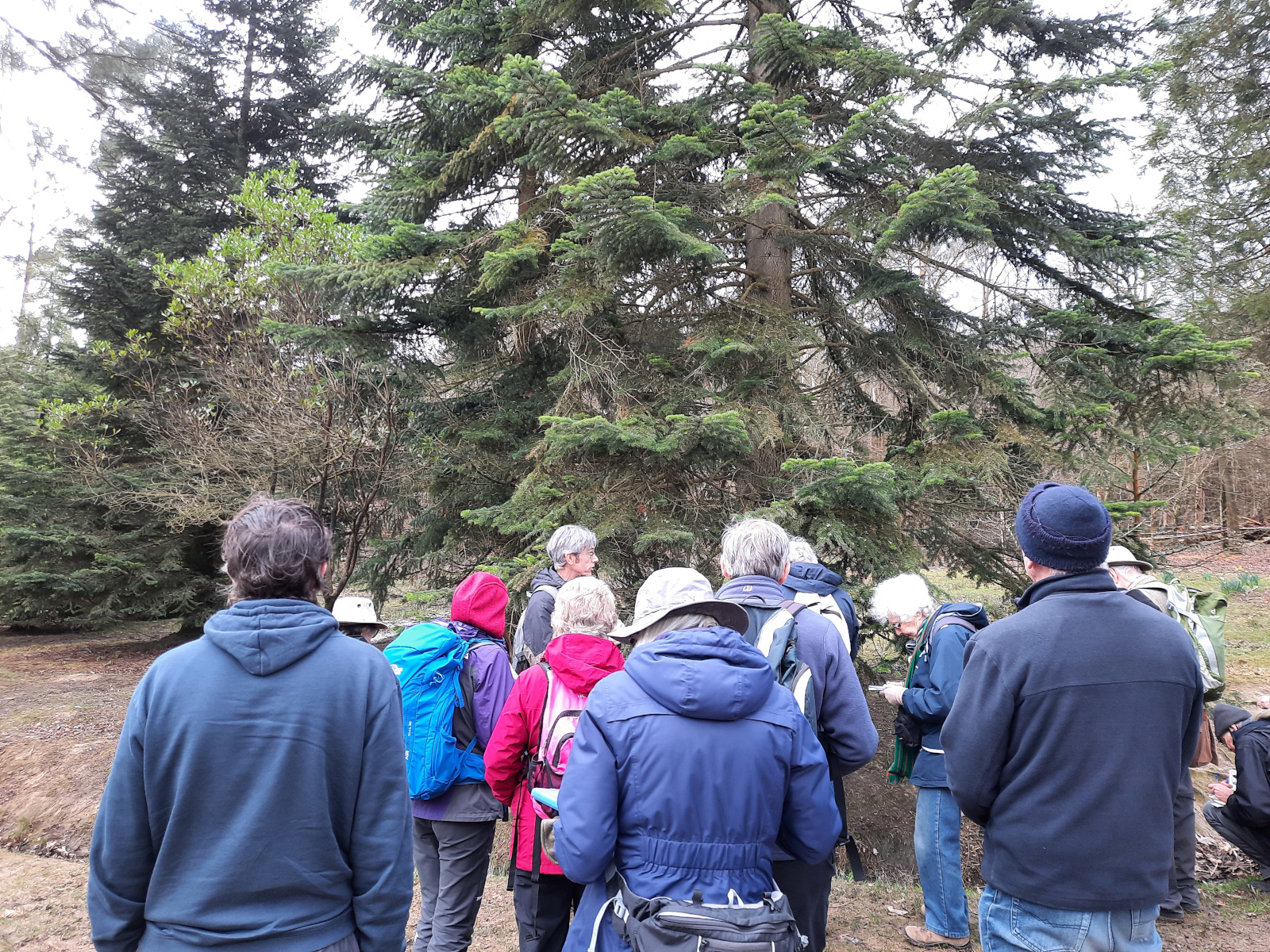
Nineteen members assembled for Owen Johnson’s rapid-fire identification of the main conifer types – he of the Sussex Tree Book and the magisterial Collins Tree Guide. Owen sat at the feet of the legendary tree guru, Alan Mitchell, to become one of a rare breed – a generalist dendrologist. Tilgate Country Park at Crawley proved ideal, centred on old late-Victorian and Edwardian gardens and parkland, including a small pinetum and a lovely heather garden.
Owen intoduced us to over 30 tree species. We saw berried yews, a plum yew (Cephalotaxus harringtonia), and the related New Zealand Podocarpus totara (Totara); a group of beautiful Cryptomeria was striking. Then great arrays of cypresses, including Thujopsis and Thuja; and the Pinaceae (firs, cedars, larches, spruces, pines, Tsugas and Pseudotsugas – including the very rare Larix laricina (Tamarack). Finally, Sciadopitys verticillata (Japanese Umbrella Pine) and the Taxodian Sequoias, including Sequoiadendron giganteum (Wellingtonia).
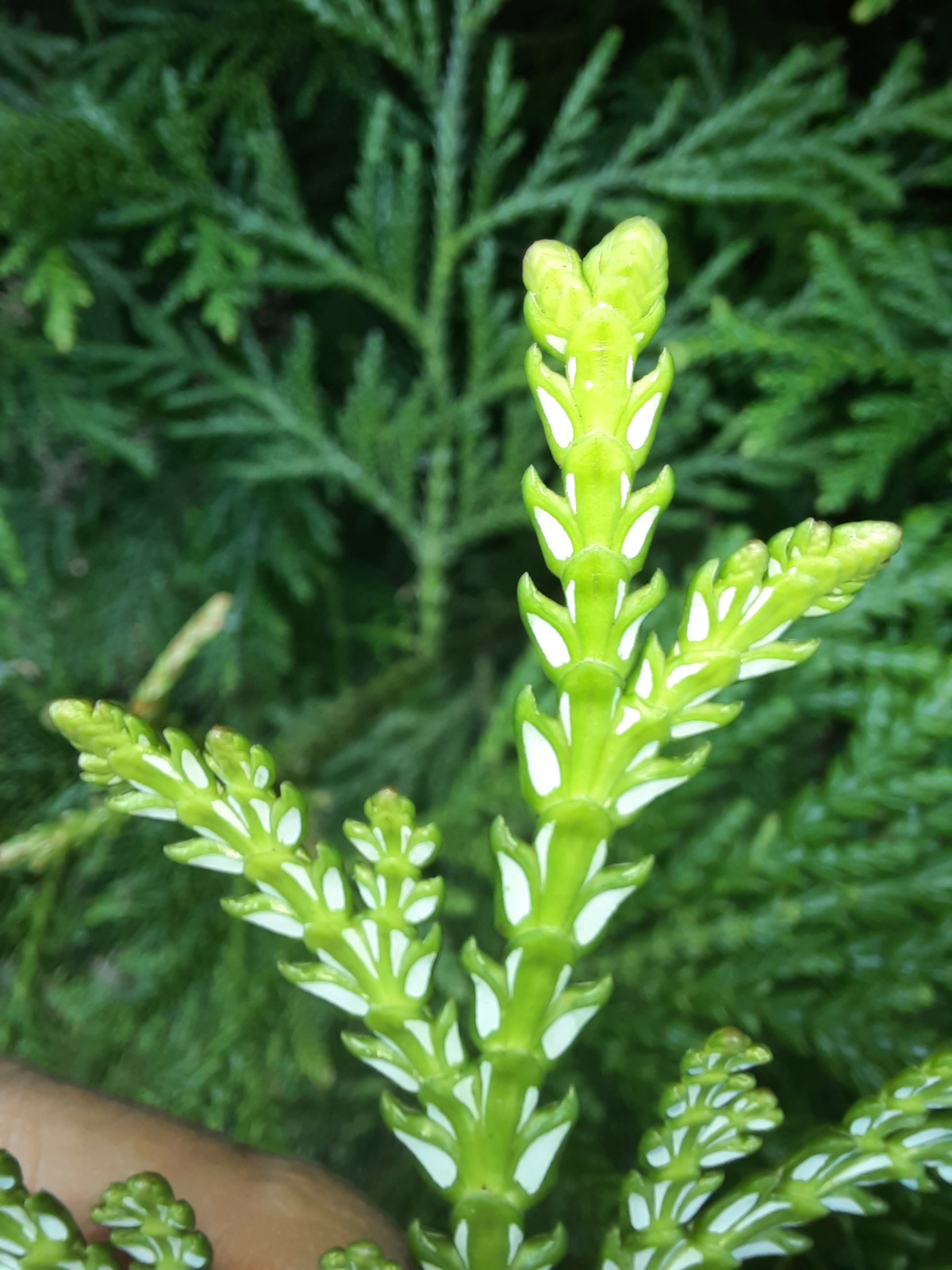
Conifers often shed lower branches to a considerable height, making identification difficult; use of binoculars or rooting around in the litter under the tree for leaves and cones are often the only means of identifying them. Identification tips were based on twig types (green, woody); leaf characteristics and arrangements (fully flattened sprays, mixed sprays, and a panoply of needles, in bundles and rosettes); and leaf fastenings (an array of pegs, spurs and suckers). The fascinating Pinus patula (Jelecote Pine) from Mexico has needles in drooping ponytails, to discourage mistletoe formation! Owen’s descriptions were often quite poetic, his description of the striking, white pore striations on Thyujopsis dolabrata (Hiba): ‘quite beautiful, like a green lizard’.
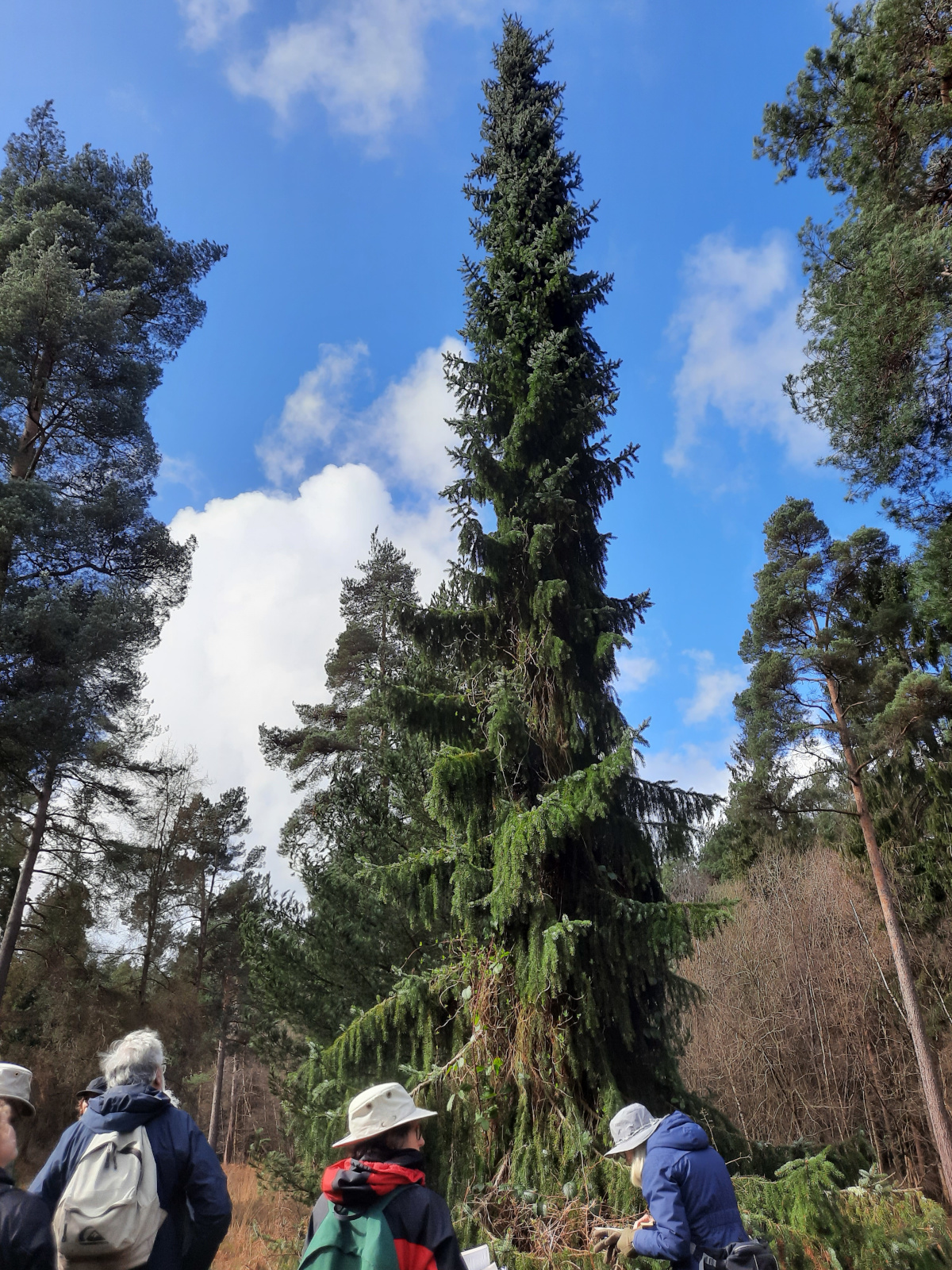
Bark was also considered, and the great variety in fruiting forms, from fleshy yew arils and juniper berries to cones – from the bobbles and compact balls of cypress, to the pendulous, tightly woven, and the decorative – notably the snake’s head bracts of Pseudotsuga menziesii (Douglas Fir). Smells also came into play, however subjective. We saw all sorts of shapes: most striking in its extremely narrow, fairy-tale, drooping growth was Picea omorika (Serbian Pine), a form designed to slough off snow. Owen’s considerable knowledge extended to growing conditions, including water needs and soil type, noting the versatility of the Hastings Beds clays and sands at Tilgate. We concluded with another big tree – an immense Sequoia sempervirens (Coast Redwood), only 55 years-old. Finally ‘down Constable Road, at the garages’, the world’s greatest girthed Cratageus monogyna (Hawthorn), which some visited. Our heartfelt thanks to Owen for a revelatory day: we could do with more!