
Wahlenbergia hederacea (Ivy-leaved Bellflower)
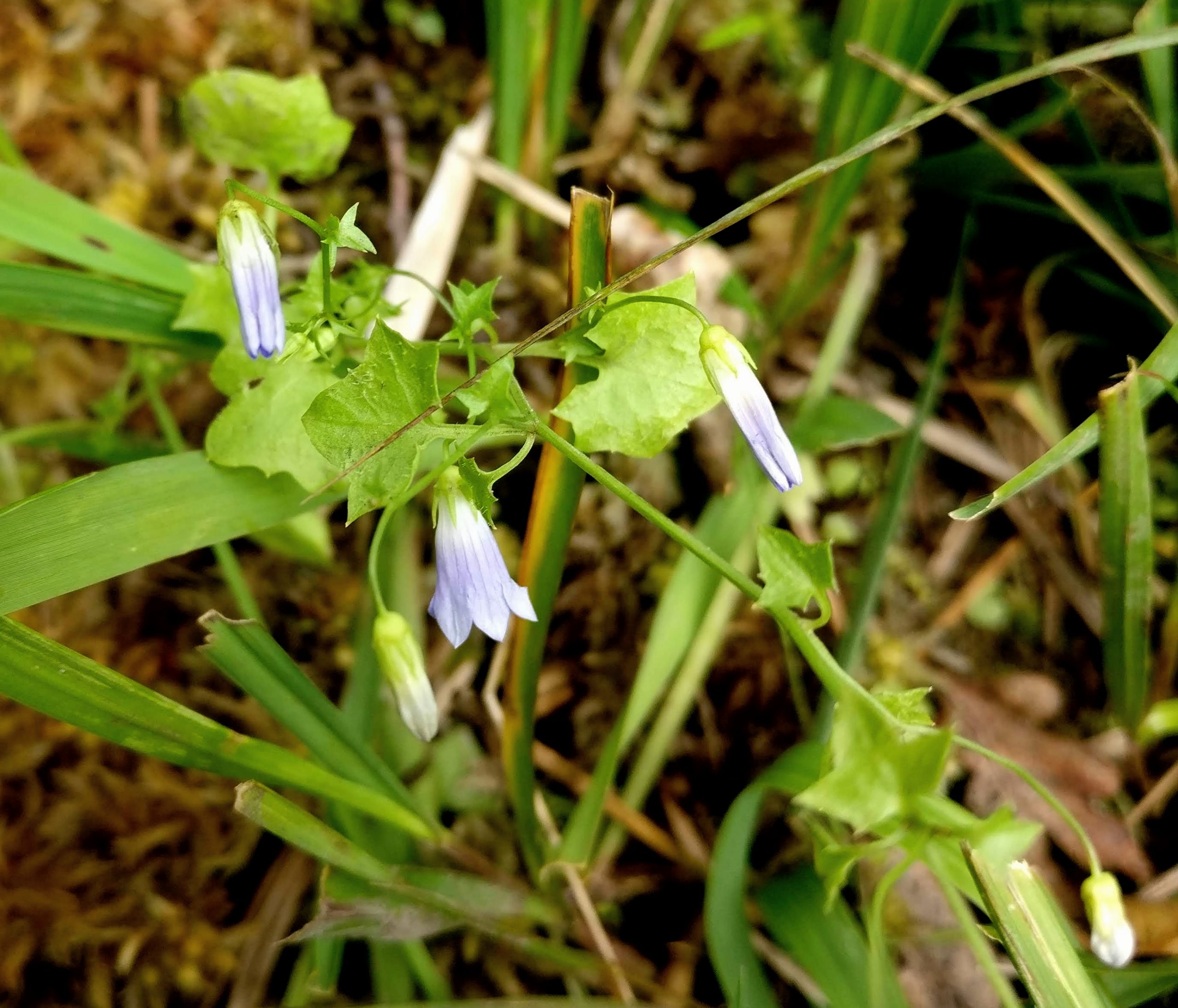
Last week’s Sussex Plant of the Week (#SxPOTW) was a widespread heathland species which is easy to see when you wander around. In stark contrast, this week’s plant, whilst also being a heathland species, is neither widespread nor easy to see. In fact this plant was part of a transect which I’d been surveying for two years before I noticed it, largely because it wasn’t in flower during my usual visiting time. It usually flowers from late June to August.
It is, like many plants with particular habitat requirements, declining as habitats are lost or degraded. Stace gives it an R rarity rating, meaning that it has been recorded in fewer than 250 hectads (Ordnance Survey 10km x 10km squares) but more than 100.
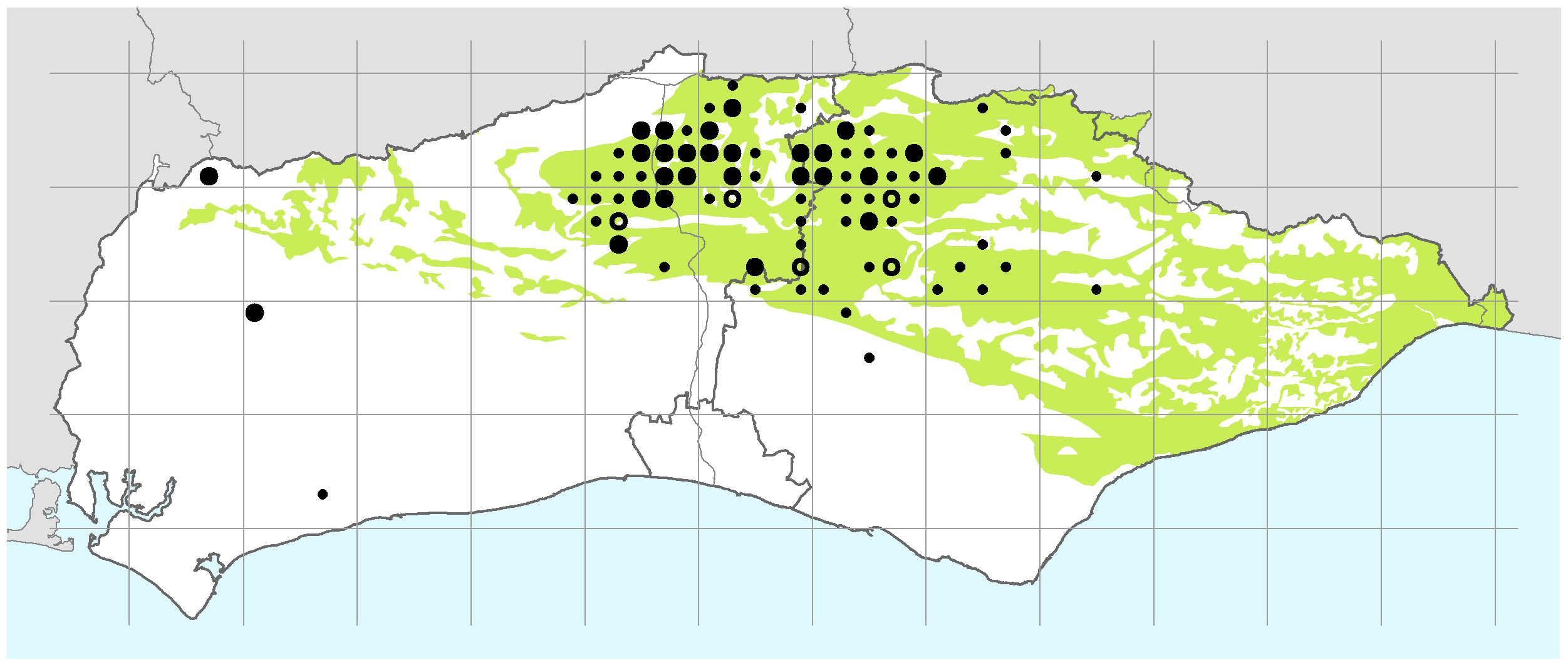
Native. Sx: scarce, very locally fairly frequent. RDL: Near Threatened. Woodland rides; wet flushes; by springs and streams; damp heathy grassland. On acid peaty or mineral soils, usually in short vegetation in light shade. It occurs mainly on the Ashdown and Tunbridge Wells Sands of the High Weald and is most frequent in and near the large central forests: St Leonard’s Forest, Tilgate Forest, Brantridge Forest, Worth Forest and Ashdown Forest. It formerly had a wider distribution, with early records from, for example, Amberley Wild Brooks and Coates in WSx, and Uckfield, Waldron Down, Dallington Forest and Fairlight in ESx. It is known to have been introduced near Ambersham Common, where it was recorded in 1909 from the roadside near a railway arch by Guermonprez, who said that it had been planted with material from Devon (SU91E); it persisted at least until 2010 but may now have gone. It still occurs on the Lower Greensand on the edge of Linchmere Common, and in 1994 carpeted the lawn of an adjacent cottage (SU83Q). Other open heathy grassland sites include Haywards Heath Cemetery (TQ32L). In more typical habitats along damp woodland tracks it can be abundant, as at Leonardslee (TQ22H & I) and in parts of Brantridge Forest (TQ23V & W). In general, however, it has clearly declined: already in 1937 W-Dod said that it was decreasing in some stations because of drainage of the Forests. Conifer plantation and heathland neglect are probably factors in its subsequent decline. It could also be under-recorded, as populations may flourish for a few years after woodland clearance but disappear as trees grow back and shade increases. The Sx populations are the most eastern in the BI. An Atlantic species, it is most frequent in the wetter and more humid climate of Wales and the West Country: the closest sites to Sx are the grazed boggy lawns of the New Forest.
Source: Wahlenbergia hederacea (L.) Rchb. Ivy-leaved Bellflower, The Flora of Sussex (2018)
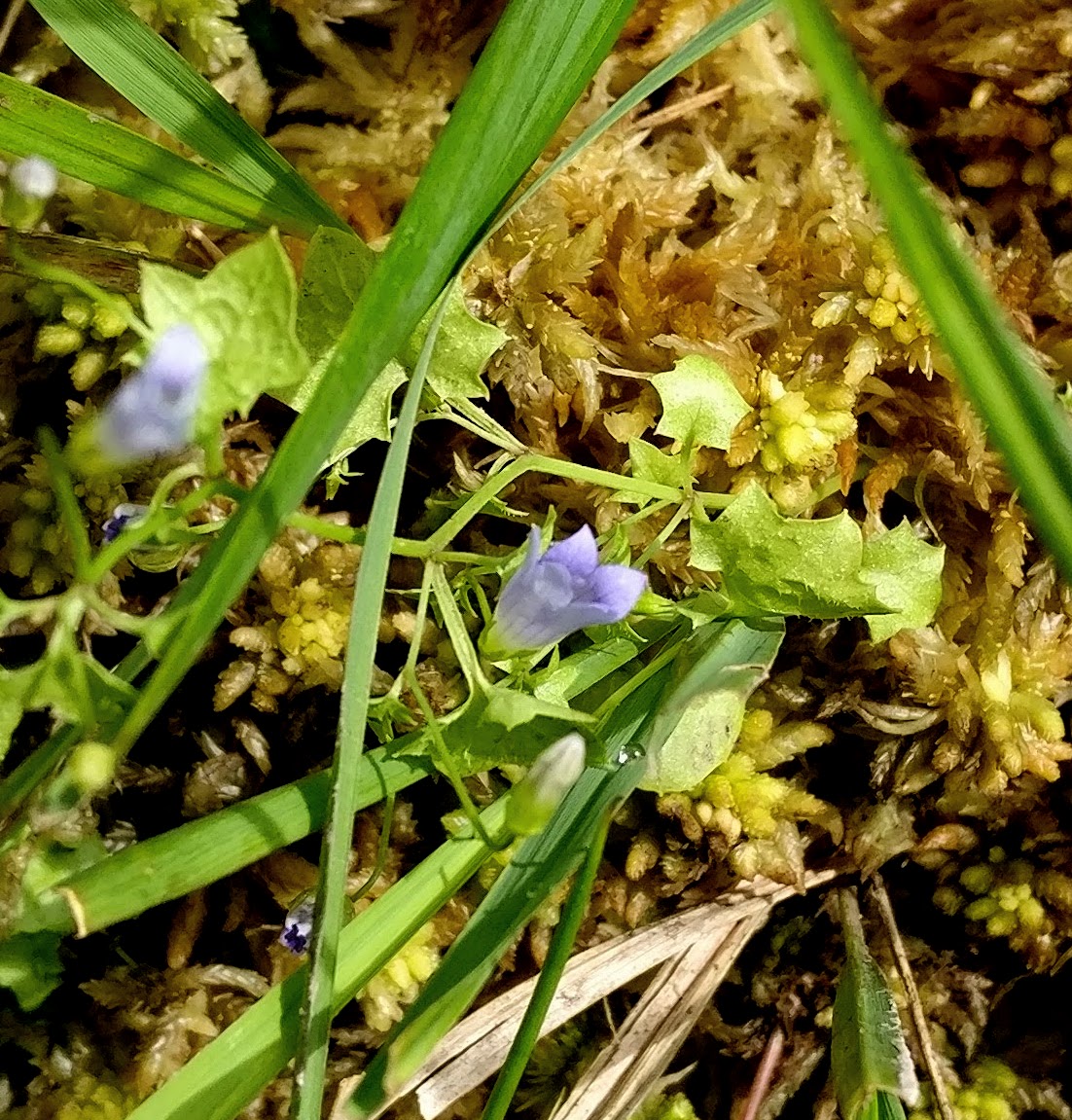
Being small, and often growing in shady, damp places, it is not easy to photograph well. Of course there are exquisite photographs out there on the interweb, and I’ve not found any better than these.
It is, as its name suggests, a member of the Campanulaceae or Bellflower family, and the flowers are remarkably similar to the more familiar Campanula rotundifolia (Harebell). If you search for it online you’ll find it on Wikipedia as Hesperocodon hederaceus (L.) Eddie & Cupido. This is the result of genetic work which shows that if the plant remains in Wahlenbergia, the genus is polyphyletic. The naming of plants is interesting and complex. One of the most enjoyable stories about the naming of names is found in Anna Pavord’s book of the same name. In many ways it is the story of science told through the consideration of one discipline.
In this case the change came following the acceptance for publication of a scientific paper (Eddie, William & Cupido, Christopher. (2014). Hesperocodon, a new generic name for Wahlenbergia hederacea (Campanulaceae): phylogeny and capsule dehiscence. Edinburgh Journal of Botany. 71. 63-74. 10.1017/S0960428613000310), but you will find that acceptance of change is not obligatory. The percolation into ‘standard texts’ may take many many years. And the percolation into field botanists’ minds may take even longer.
One thought on “Wahlenbergia hederacea (Ivy-leaved Bellflower)”
An excellent choice this week! As you say, not easy to find. I was given details of where to find Wahlenbergia on the New Forest. We searched a boggy area for far too long and as we were driving away I decided to have one last look at a bog by the roadside and there they were! Trailing all over boggy hummocks. Much smaller than I thought and very enchanting! Thank you!
Comments are closed.