
Prunus cerasifera (Cherry Plum)
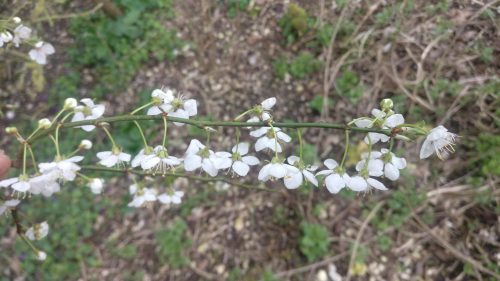
If you are outside at this time of the year, in the countryside or town, you will see the odd splash of white along the hedgerows amongst the bare branches, and the occasional street tree full of blossom. If the sun is out and the specimen large, it can be quite spectacular. In all likelihood it’s this week’s #SxPOTW – Prunus cerasifera (Cherry Plum), one of the first European trees to come into flower. Although not a native in the UK, coming from south-eastern Europe and western Asia, it is long established as a street and hedgerow tree. The former are often cultivars such as ‘Pissardii’ and ‘Nigra’ with purple foliage.
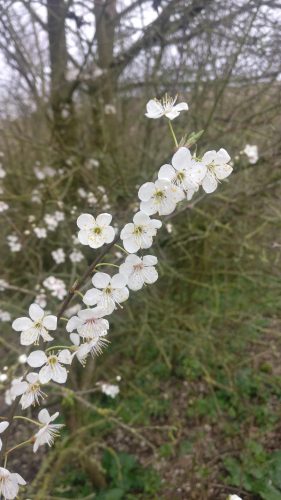
Many people, who are yet to be botanically enlightened, mistake these outbursts of early blossom for the closely related Prunus spinosa (Blackthorn). But there are some key differences that allow us to tell them apart.
The early flowering itself is the first clue, with P. spinosa generally flowering a month later. It is said that the flowers of P. cerasifera are pure white as opposed to the creamy white of P. spinosa but there are better discriminating features. These include the reflexed (bent backwards) and blunt, tongue-shaped sepals of P. cerasifera; and the colour of the flowering branches, which are usually at least partly green and glabrous (not hairy) in P. cerasifera.
Kevin Widdowson is another one of those remarkable people who give so much of their expertise and time on social media platforms such as Twitter and Facebook. He is a master of photography, producing exquisite ‘exploded’ views of plants that can usually only be achieved by drawn illustrations. Two such in his series over the years happen to be of P. cerasifera and P. spinosa, and he kindly sent me them to use here.
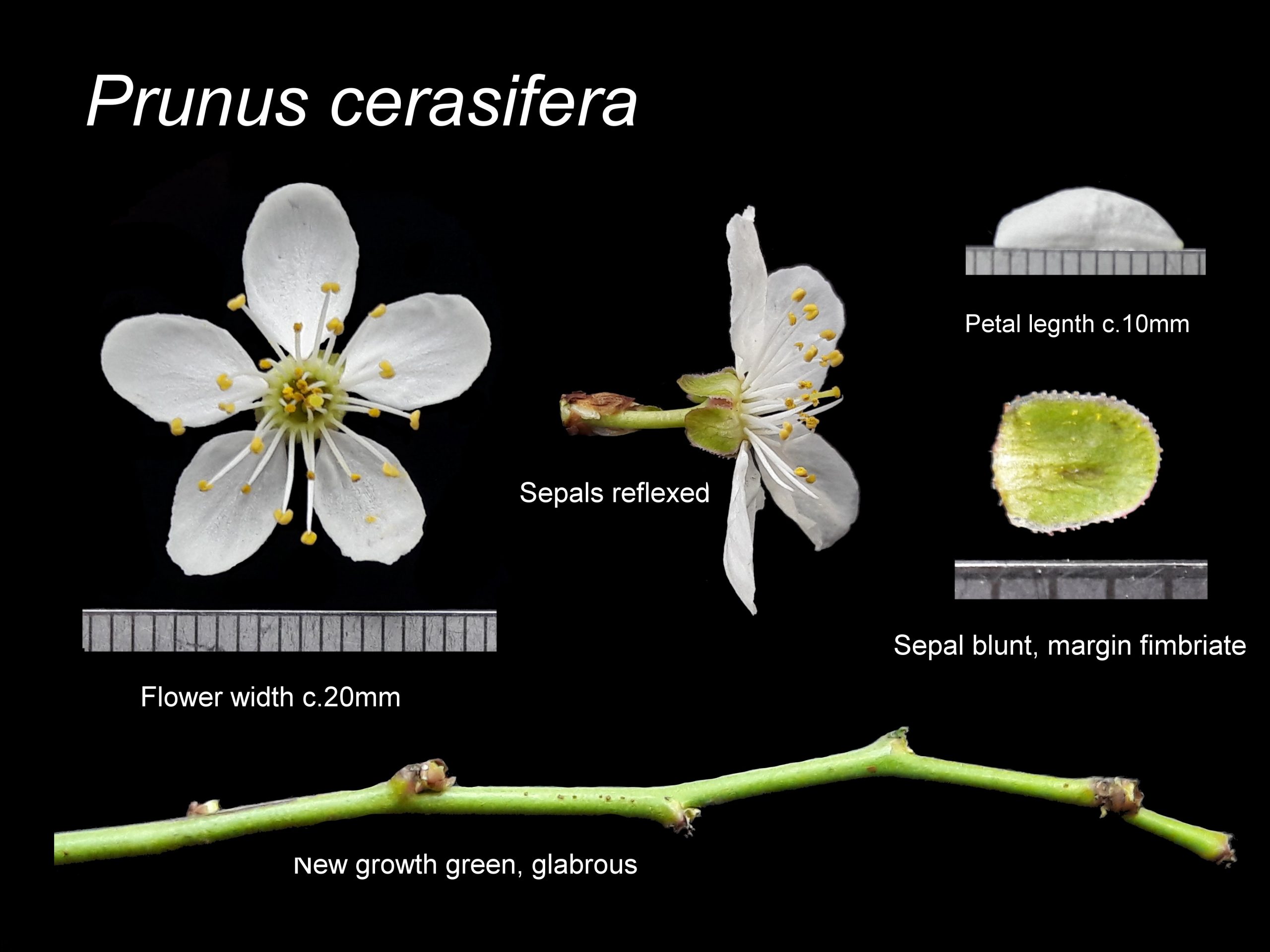
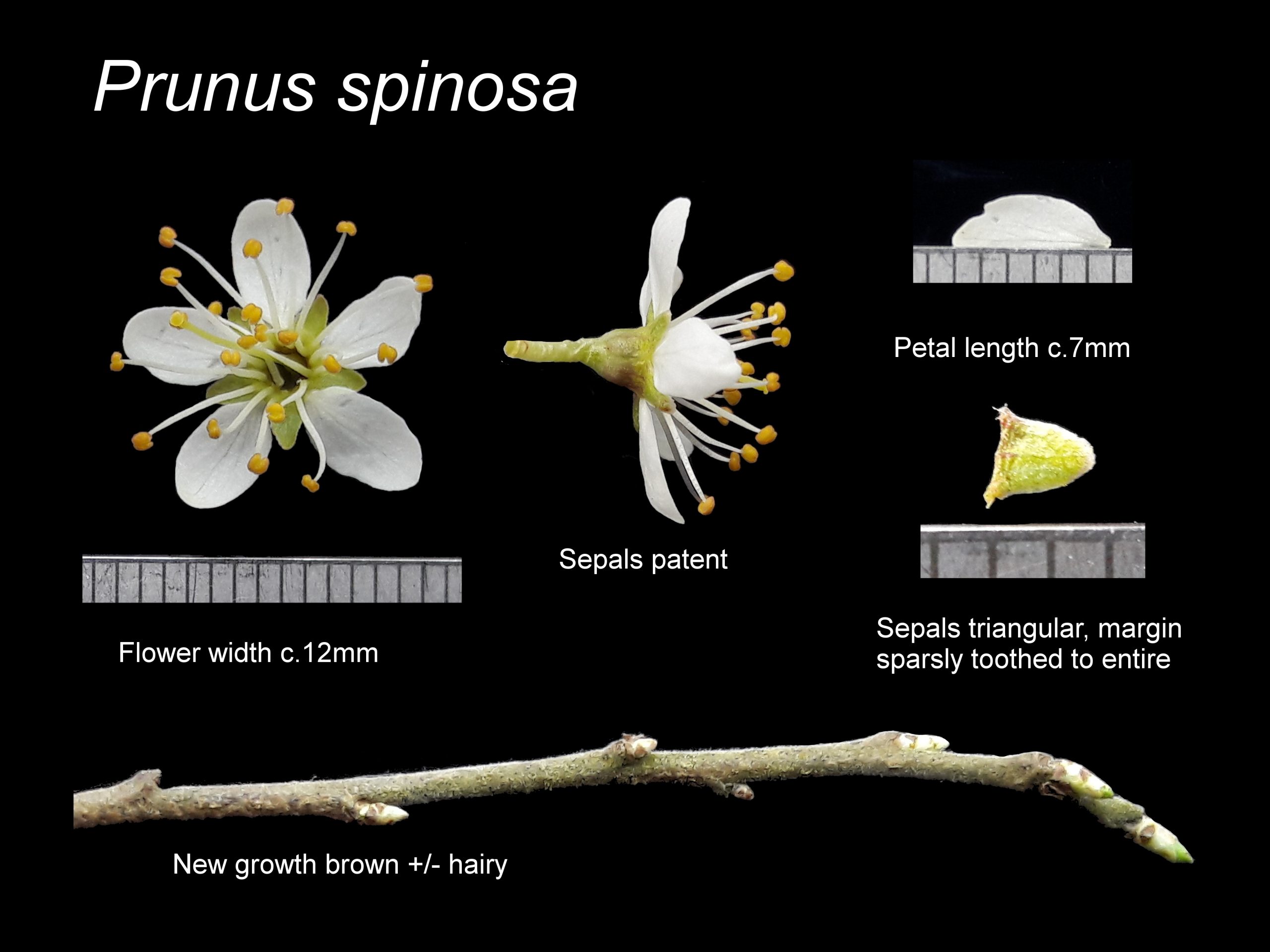
Kevin works for Lincolnshire Wildlife Trust and runs the Facebook Group ‘Botanical Keys and How to Use Them’ which I urge you to join. There are lots of his amazing photographs and it’s the perfect place to find out about using plant keys.
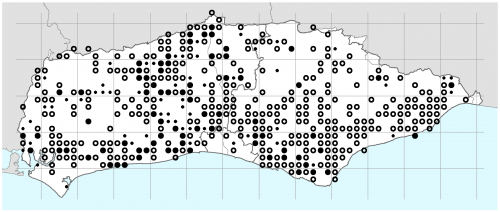
Introduced. Sx: frequent.
Source: P. cerasifera Ehrh. Cherry Plum, The Flora of Sussex (2018)
Hedgerows; woodland. First recorded in 1954 in hedges at Black Hill, Lindfield (RCP, OXF). It is widely planted in hedges and elsewhere and naturalises readily: there have been many more records recently than are shown in Hall (1980). The status is often unclear and the map includes a proportion of planted specimens. Var. pissardii has been identified in several locations.
As you can see from the Flora entry, it is widespread throughout Sussex where it has become naturalised. In the Chilterns and Vale of Aylesbury there are pure hedges of P. cerasifera planted by the Rothschild family on their estates in the nineteenth and early twentieth century. It is also used in Bach Flower remedies, including their famous ‘Rescue Remedy’. Apparently it is good in situations where “Desperation“, “Fear of losing control of the mind” and “Dread of doing some frightful thing” are a concern.
The fruits look enticing but rarely ripen to sweetness. They can be baked in tarts although I have not tried this. The old ‘Pissardii’ in our garden succumbed to honey-fungus a few years ago, but some of the fruit used as missiles by our children (when younger) have given birth to the next generation.
2 comments
Is this what I have been seeing long the M4 and M23 motorways?
Thank you.
Very likely!
Comments are closed.