
New Year Plant Hunt 2020
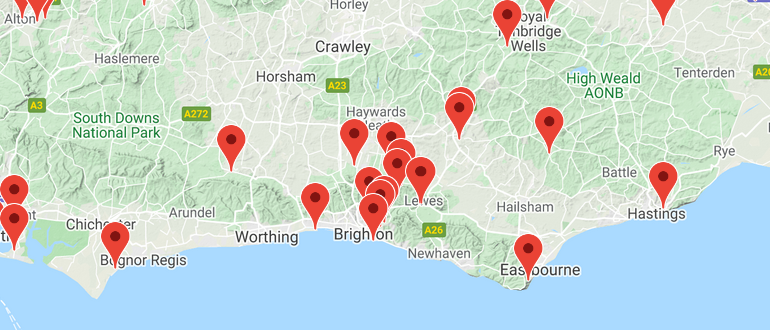
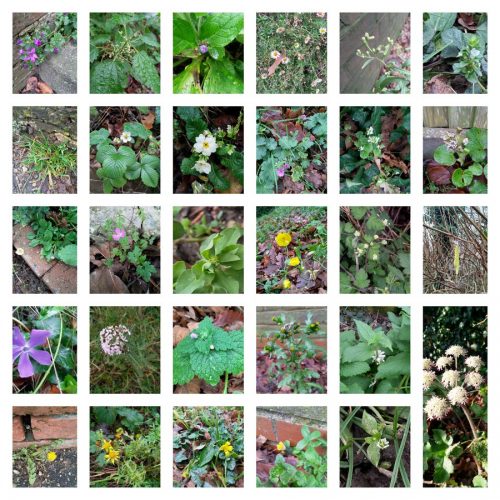
The ninth BSBI New Year Plant Hunt took place between 1 and 4 January, and SBRS members were out in force recording throughout the county. In all, there were 17 lists submitted for the county, which is exactly the same number as last year, though the number of lists and records for the country as a whole was much increased. I asked members to send a short account of their trips, and this is the result.
Peter Smith and Helen Proctor
Helen and I did the New Year Plant Hunt on 4 January this year around Kemptown in Brighton. We identified 59 species in flower. Interesting species that we found included Sagina maritima (Sea Pearlwort), Galinsoga quadriradiata (Shaggy Soldier), Senecio cineraria (Silver Ragwort), Tripleurospermum inodorum (possibly maritimum) (Scentless/Sea Mayweed), Helminthotheca echioides (Bristly Oxtongue), Geum urbanum (Wood Avens) and Dactylis glomerata (Cock’s-foot).
The Hastings Hunt
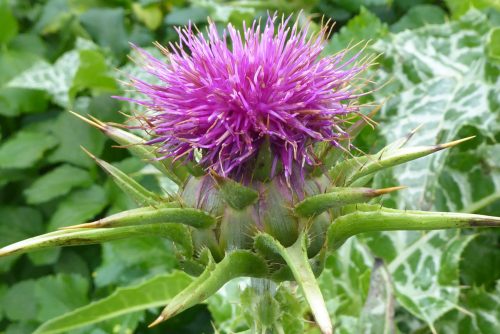
On 3 January, we followed the same route as last year, allotments then residential streets on the West Hill. Totals were similar, 62 in 2019, 60 in 2020, but there was a 15-species difference. The street flora was much the same, but the allotments produced a few surprises, some escaped and some self-seeded. The very wet weather may have contributed, but you would expect some difference with the disturbance and change on allotments. This splendid Silybum marianum (Milk Thistle) had found a snug shelter among the Smyrnium olusatrum (Alexanders).
Kate Gold
The first outing, on 2 January was around my usual NYPH route, taking in the veg fields at Ashurst Organics, St Michael’s Church and the grounds of Plumpton College, then along the footpath at the bottom of the Downs until Novington Lane which I followed until East Chiltington, then headed east to East Chiltington church and back to my starting point at Ashurst Organics.
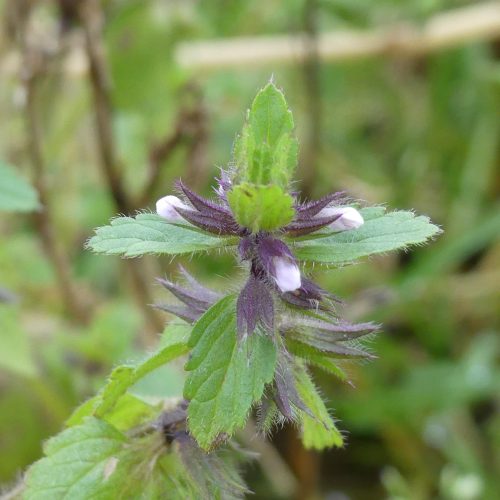
I was particularly pleased to find Stachys arvensis (Field Woundwort) in flower at Ashurst. I have seen it in another field on the farm, but this was the first time I’d seen it in the fields NW of the farmhouse (in fact I don’t think it has been recorded in TQ31M or TQ31S before). Spergula arvensis (Corn Spurrey), another threatened arable weed was also in flower at Ashurst. The rest of the 30 species were pretty much as expected, based on previous year’s findings. But I was surprised to find a fresh-looking Succisa pratensis (Devil’s-bit Scabious) on the verge beside Novington Lane.
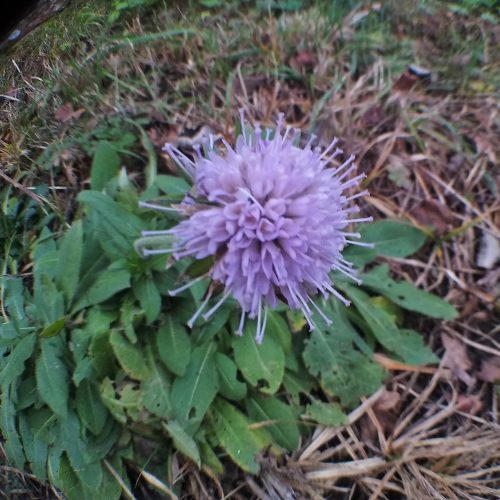
My second list was recorded during a walk on the Downs on 3 January, with my husband and two friends, from Plumpton to Lewes and back. Only a few phone pics as I didn’t intend to do another NYPH. We saw 14 species, including Echium vulgare (Viper’s-bugloss) and Carduus nutans (Musk Thistle).
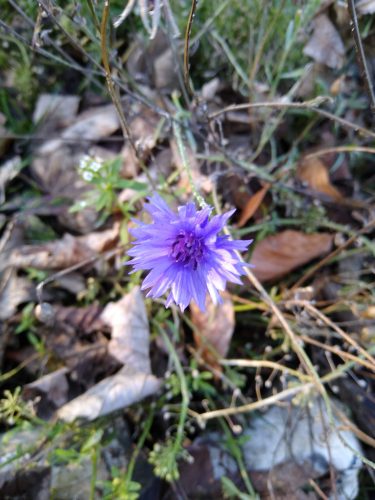
The next day, Saturday 4 January, I had planned to walk over the Downs from Plumpton to Rottingdean, via Black Cap and Castle Hill LNR, as part of my training for a series of long distance charity walks later in the year. Again, I didn’t intend to do a NYPH, but started to see a few flowers so took quick phone snaps as I went along. The main purpose was the walk, so I didn’t linger anywhere, just snapped what I saw at the side of the track. I saw 30 species in flower, including many of the usual NYPH suspects. The only surprise was a bright blue Centaurea cyanus (Cornflower) on a verge on the outskirts of Rottingdean.
Wendy Tagg
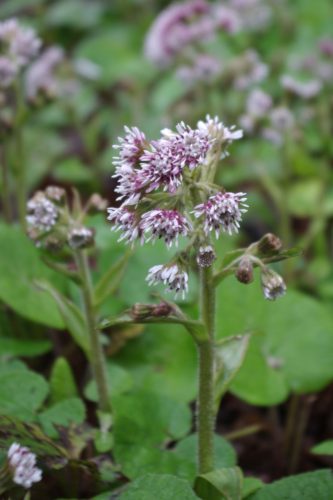
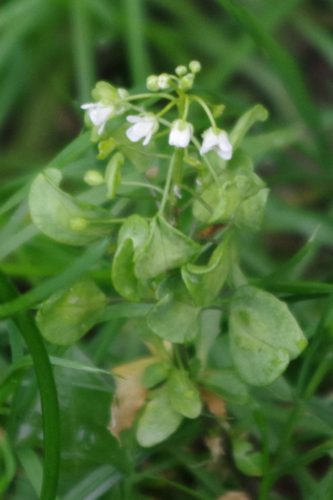
This year, I did two Uckfield New Year Plant Hunts. On the first day of the year, I did my usual hunt, which focusses on the housing and industrial areas North of the river. I found 36 species of wild and naturalised plants in bloom, compared to last year’s 45. My favourite find was Petasites fragrans (Winter Heliotrope), which was growing in a 30 metre long strip between the London Road and our housing estate. One of my best hunting grounds was the Bellbrook Industrial Estate. In the grassy area just outside Barney’s Play I was surprised to find Daucus carota (Wild Carrot) and Thlaspi arvense (Field Penny-cress). When I checked the Flora, I was thrilled to see that there was no record for the latter in Uckfield’s tetrad making mine the first!
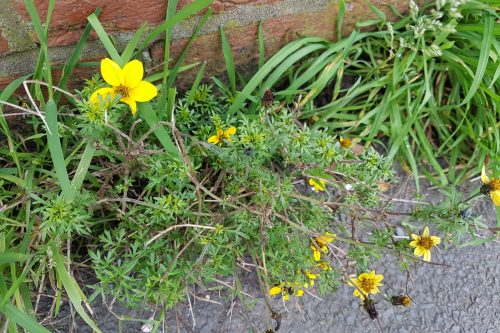
After two days back at work, my second hunt took me south of the river. Between the hunts, the Corylus avellana (Hazel) catkins on the South bank of the river had lengthened and were glowing yellow with pollen. Plants at the feet of the old, south-facing brick walls included Myosotis arvensis (Field Forget-me-not) and a stray Bidens ferulifolia (Fern-leaved Beggarticks). In the end, I found a total of 26 species in flower.
See also Wendy’s blog on her first Uckfield excursion.
Sue Denness
On the third day of the hunt I went out with two local friends on my home patch in Storrington. We found a total of 47 species in flower including 18 of the 20 most frequently recorded species in the NYPH nationally, e.g. Geranium robertianum (Herb Robert) and Cymbalaria muralis (Ivy-leaved Toadflax). Starting out from my house, our first find was Viola tricolor (Wild Pansy) on the sandy soil of the grass verge. We noted several weedy species e.g. Veronica persica (Common Field-speedwell) and then Vinca major var. ‘oxyloba’ which had established along a twitten. By the churchyard wall was Persicaria maculosa (Redshank) followed by a well established clump of Oxalis articulata (Pink-sorrel). Polygonum vividis (Water Bent), common in the high street, was still in flower as was Hordeum murinum (Wall Barley) on the verge. In the main carpark Medicago arabica (Spotted Medick) was just in flower in sunny corner and, at base of another old wall, was a very floriferous M. lupulina (Black Medick). We finished the hunt with a few early flowerers: Viola odorata (Sweet Violet), Corylus avellana (Hazel) and Petasites fragrans (Winter Heliotrope) bringing our total to 47. This was less than in 2019 (63 spp.) partly perhaps because we no longer had access to the allotments but was similar to the totals found in 2018 (52 spp.) and 2017 (42 spp.).
Sue Denness and Jacky Woolcock
On 4 January Jacky and I found a total of 48 species in flower on the vegetated shingle of Shoreham Beach and the adjacent roads and verges. We started our hunt around the walls of the old fort noting Parietaria judaica (Pellitory-of-the-wall), Veronica polita (Grey Field-speedwell) and Lepidium coronopus (Bucks-horn Plantain). Going towards the lighthouse we saw Tripleurospermum inodorum (Scentless Mayweed) and Helminthotheca echioides (Bristly Oxtongue). We then walked along the beach near the boundary with the adjoining gardens. This yielded several garden escapes: Borago officinalis (Borage), Calendula officinalis (Pot Marigold), Erigeron glaucus (Seaside Daisy) and Euphorbia characias subsp. veneta (Mediterranean Spurge). The invasive species Senecio cineraria (Silver Ragwort) and Centranthus ruber (Red Valerian) were also in flower. Leaving the beach, Symphytum orientale (White Comfrey) was flowering on the verge followed by Lobularia maritima (Sweet Alison) on the pavement. Garden borders gave us Veronica serpyllifolia (Thyme-leaved Speedwell) and Oxalis corniculata (Procumbent Yellow-sorrel). We returned to the fort past the sailing club, adding several more plants including Rumex obtusifolius (Broad-leaved Dock) and Hypochaeris radicata (Cat’s-ear). Due to Jacky’s local knowledge, our total of 48 species was more than I found on my lone hunt at Shoreham in 2018 (34 species).
Georgina Judd
Hurstpierpoint to Hassocks, 1 January.
Jill Oakley, Sue Denness, Helen Dignum and Dawn Nelson
Jill, Sue, Helen (the author of this section) and Dawn met on 2 January to see what could be found at Pagham Shore, a location we know well. Pagham Shore includes a number of diverse habitats: vegetated shingle, former sand dunes, saltmarsh and waste ground. The car park yielded the usual common finds, but also included Foeniculum vulgare (Fennel) and Ceratochloa cathartica (Rescue Brome). Gnaphalium luteoalbum (Jersey Cudweed) obliged in its usual location on the pavement edge on the way to the beach. Our tally of fleabanes included Erigeron karvinskianus, Conyza sumatrensis, C. floribunda (Mexican, Guernsey and Bilbao Fleabanes). Garden escapee interests along the beach and nearby road were Erysimum cheiri (Wallflower), Bergenia (Elephants’ ears), Escallonia rubra var. macrantha, Eleagnus x submacrophylla (Ebbinge’s Oleaster), Calendula officinalis (Pot Marigold) and Kniphofia uvaria (Red-hot-poker).
After a coffee break and consultation of the books, we set off east over the former sand dunes, picking up a straggly Helianthus annuus (Sunflower) and Helleborus argutifolius (Corsican Hellebore). Even a Verbascum thapsus (Great Mullein) obliged with an elderly flower. Sue managed to find a flower on a rare Sedum, previously identified as Sedum kimnachii (Lesser Mexican Stonecrop), at its known location on the old sand dunes. At the furthest point of our walk we found a Caryophyllaceae (carnation) and the surprise of Salvia verbenaca (Wild Clary) beside it on the shingle beach.
Our total was 76, putting us at 6th in the overall UK listings of 798 submissions.
We used the BSBI NYPH app for mobile phone for on-site recording, which simplified the recording and submission process. It automatically includes the grid-references. Once downloaded it can be used in the field without a phone signal or an internet connection, submitting the data on return home.
After our three hours were over, and we had finished recording we also saw Fumaria officinalis (Common Fumitory) in the Co-op car park flower beds.
PS We also ventured out of county the previous day, to botanise on Hayling Island. We visited the Oyster Beds and Beachlands, finding 57 flowering plants. Notable finds included Carpobrotus edulis (Hottentot Fig), Lonicera japonica (Japanese Honeysuckle), Euphorbia oblongata (Balkan Spurge), Crithmum maritumum (Rock Samphire) and Echium vulgare (Vipers Bugloss).