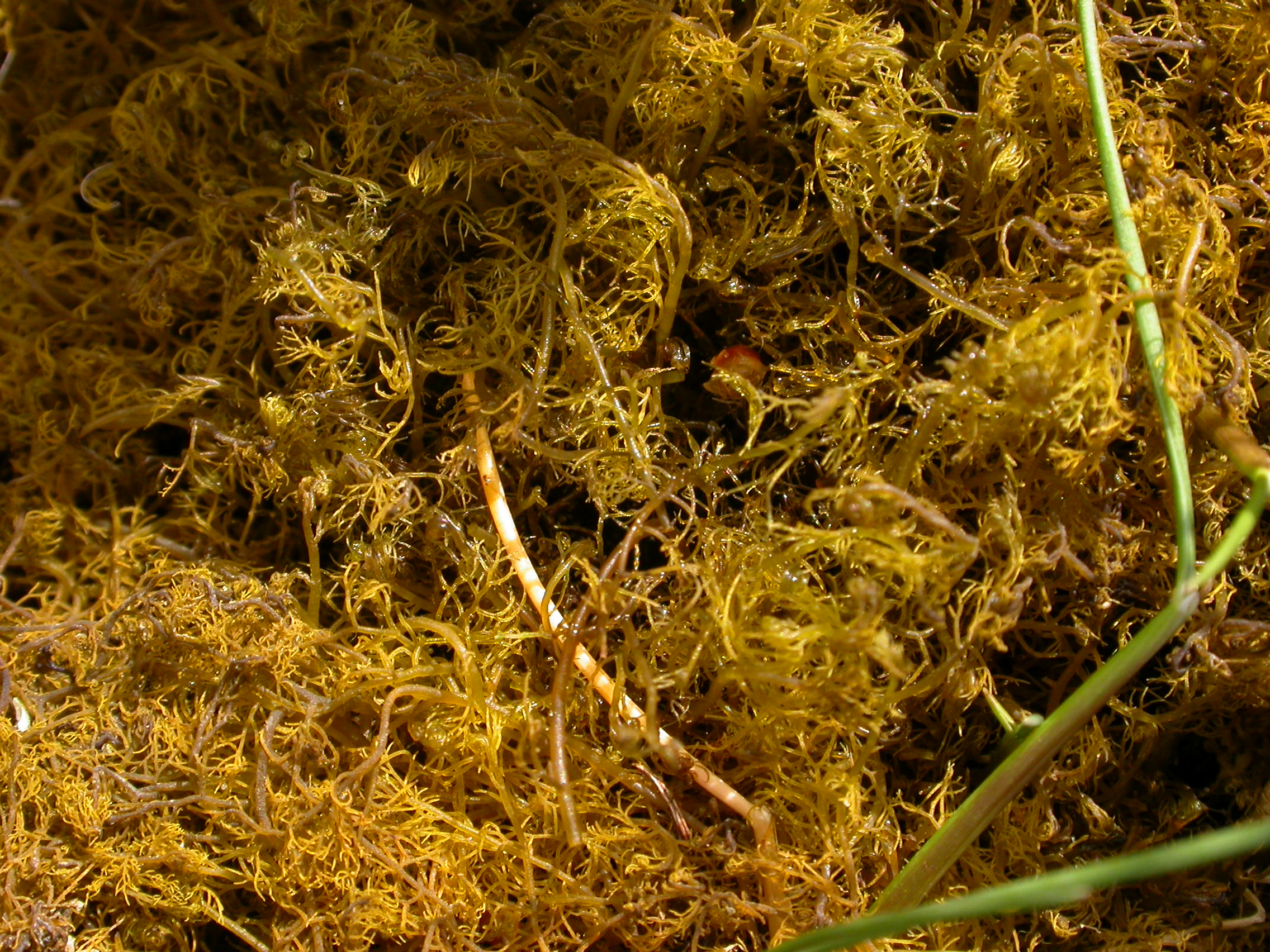
Seaweeds of the south east

A significant event that triggered my interest in the natural world was my A level Biology field trip. Growing up in Plymouth, an obvious place to visit was the fantastic marine environment at Wembury, where I first learned about zonation and became conscious of the amazing diversity of the shore. Moving on several decades, I went on the British Phycological Society macroalgae course at Plymouth earlier this year, which was a phenomenally useful and detailed overview of the biology and identification of the photosynthesizing organisms of our seas.
Back in Sussex, armed with the microscope, some of the key books and the course handouts, it has been fascinating to start to explore some of the sites nearby. However, I didn’t have a sense of what our local seaweed flora comprised, and what was rare or unusual, so it was a delight to discover that the Kent Field Club has recently published A New Atlas of the Seaweeds of Kent by Ian Tittley of the Natural History Museum. Tellingly, for those of us in the neighbouring county, the book’s subtitle is ‘The flora past and present with summaries for Essex, London, Sussex and Pas de Calais’, so its coverage is much wider than at first appears.
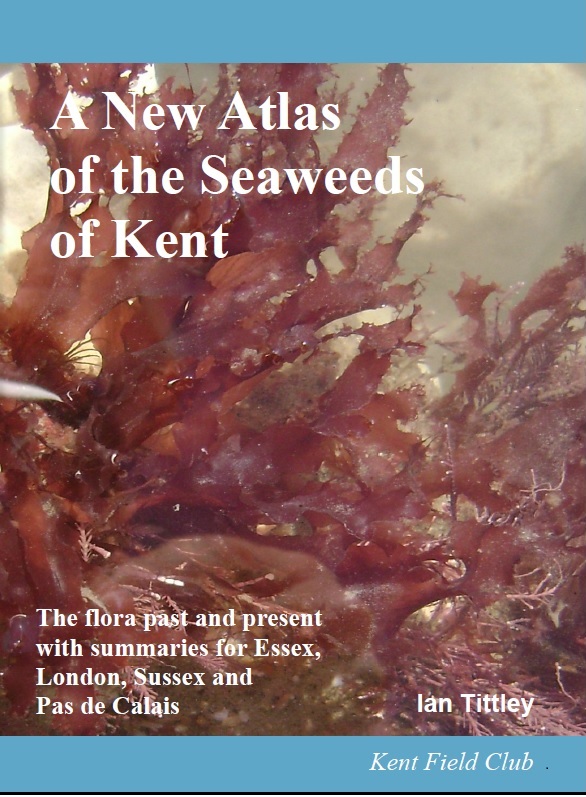
Though it does include more than just Kent, this book is of course a milestone in the history of the study of seaweeds of that county, and is the result of fifty years of study of Ian Tittley’s home county. Over the years he has walked the entire coastline, recording in just short of 400 monads to produce a remarkable, comprehensive account of the flora.

Prefaced with sections on the history of seaweed studies in Kent, a survey of the county coastline, its and its different habitats, the book also includes material on the changes in the seaweed flora and descriptions of the floras of the neighbouring areas, including Sussex. Prior to reading the introductions I had a sense that our macroalgal floras in the south east were very much smaller compared with those of Devon, Cornwall and Wales, for example. However, though there are fewer species here, I was surprised to discover that 279 species have been recorded in Kent and 282 in Sussex, compared with 371 in Devon and 389 in North Wales. So, even here we have 43.7% of the British flora, which is many more than I have found!
Printed throughout in colour, the Atlas itself may include up to four maps per species, three showing the distribution of the Kent records in the nineteenth, twentieth and twenty-first centuries, and the fourth, smaller map also showing the distributions in the neighbouring counties and Pas de Calais. The species accounts are useful summaries of the key features and habitat, and many are accompanied by simple line drawings as well. The main Kent maps are plotted at the tetrad level, but digital copies of the distribution maps at the monad level are included in a disk at the back of the book.
The Atlas has already inspired me to submit more of my Sussex seaweed records, including that of Bostrychia scorpioides, the red alga of which we found extensive mats in the saltmarsh on our East Head field meeting this year. One of the author’s hopes for this book, then, has already yielded fruit. I can’t wait to get to the coast again.